


👋 Welcome back
There are fast Saturdays. And then there are reflective Saturdays.
This weekend, as thousands of us lace up for long runs, steady miles and solo bike sessions, we tip our caps to a man who changed endurance sport not by shouting the loudest – but by making it more accessible, more human and, frankly, more sustainable.
Jeff Galloway didn’t just run fast (though as a former Olympian, he absolutely did). He helped generations of everyday athletes believe they could run. His run-walk method reshaped marathon training, extended careers, prevented injuries, and quietly dismantled the idea that suffering was the only route to success.
And if you are in need of some extra motivation this morning, why not let Jeff provide it, with these pearls of wisdom: “We are designed to run, and we increase our chance of daily happiness when we do so… when I finish a run, every part of me is smiling.”
Here’s what else we have lined up for you today…
LATEST: The endurance news headlines.
PREVIEW: Tokyo kicks off the 2026 marathon season.
CYCLING: Preview to the Omloop Het Nieuwsblad in Belgium
TIPS: Why sleep is the key to becoming a better athlete.

🏃🏼 Quick splits

Kristian Blummenfelt has announced he will run at Challenge Roth this year. [IRONMAN]
🙌 Pro Series duo eye Roth: The winners of last season’s IRONMAN Pro Series, Kat Matthews and Kristian Blummenfelt, have both announced they will be heading to Challenge Roth later this year. Read HERE
🏆 Taking the trophy: Olympic-distance triathlete Hugo Milner looks to have put his injury worries firmly behind him after securing his second career win at the English National Cross Country Championships. Read HERE.
🐐 GOAT Jornet sets targets: Ultrarunning legend Kilian Jornet has announced his 2026 schedule – and it includes the two biggest races on the calendar as he heads to Western States and the UTMB in Chamonix. Read HERE.
⏱️ Record breaker: The incredible Ashley Paulson has spoken of her delight after setting a new women’s world record for running 100 miles, explaining that it had been ‘a dream come true’ to achieve the milestone. Read HERE.
⚠️ Barkley bashed: American ultra running legend John Kelly has spoken for the first time about his failure at this year’s gruelling Barkley Marathons – which, for the second year running, did not have a single finisher. Read HERE.
🏁 Race news

Sutume Kebede is pictured after her impressive win in 2025 [Tokyo Marathon]
🎽 Tokyo Marathon
The 2026 Abbott World Marathon Majors series gets underway tomorrow with the Tokyo Marathon. It’s the first of what is now a seven-race schedule – although that could soon be bumped up to eight with the potential addition of Cape Town.
Elite racers head a field of 38,000 in the Japanese capital over 26.2 miles from the Tokyo Metropolitan Building to the Tokyo Station. It is a flat course, and both records – set in 2024 through Kenya’s Benson Kipruto (2:02:16) and Ethiopia’s Sutume Kebede (2:15:55) – could be under threat this year thanks to stellar fields.
Boosted by the return of both defending champions, Ethiopian pair Tadese Takele and Kebede, other big names lining up include the 2025 New York Marathon runner-up Alex Mutiso (KEN) and 2024 Berlin winner Milkesa Mengesha (ETH) in the men’s field, and Hawi Feysa (ETH) and Rosemary Wanjiru (KEN) in the women’s.
Mutiso has a marathon PB of 2:03:11 (from Valencia in 2023), won in London two years ago, and was narrowly denied a second Major win in New York late last year when Kipruto beat him in an incredible photo finish.
Kebede will be bidding for a third successive Tokyo Marathon win in the women’s race.
The Tokyo Marathon starts at 09:10 local time on Sunday, March 1, which is 1910 Eastern and 1610 Western (both Saturday). In Europe, that’s 00:10 in the UK and 01:10 CET. In Japan, the race will be broadcast on the Nippon Television Network, while it will also be aired in over 160 countries via Eurosport, Canal+, Flo Sports and ESPN International.
🐊 IRONMAN 70.3 Colombo
We know that Endurance athletes will go to almost any lengths to test themselves to the absolute limit, but not even IRONMAN were prepared to risk their athletes when it came to a potential swimming challenge with crocodiles in Sri Lanka.
Last Sunday’s 70.3 in Colombo was revised to a 90km ride and a 21.1km run after an announcement on Saturday morning warning that there had been ‘sightings of wildlife in the area’ and that it had been decided to scrap the swim section.
It didn’t detract from what turned out to be a real thriller, however, as Ireland’s Niall McCarthy pipped Olivier Godart (LUX) by just one second with a winning time of 3:38:28. Ling Er Choo (SGP) was the leading woman in a time of 4:04:35.
🚴♀️ News from the saddle
Mathieu van der Poel will rightly start as one of the favourites this weekend as he makes his debut at the Omloop Het Nieuwsblad – the first cobbled Classic of the season, and undoubtedly the best field to have raced yet in 2026.
The Dutchman, who has six wins across the Tour of Flanders and Paris-Roubaix and other leading cobbled classics, has been confirmed in the Alpecin-Premier Tech line-up alongside Jasper Philipsen.
Belgian star Wout van Aert misses out through illness, but his team Visma-Lease a Bike will still field a powerful line-up when the race gets underway today in the shape of Christophe Laporte (FRA) and Matthew Brennan (GBR).
Tom Pidcock (GBR) is also lined up to race for his Pinarello-Q36.5 team in the 207.6km one-day event, which starts in Ghent and finishes in Ninove, and includes eight cobbled sections as well as 12 hills.
🔍 The BIG issue: Jeff Galloway 1945-2026

Jeff Galloway inspired generations of people to take up running. [Alamy]
His impact on the sport of running is likely to live on forever; his advice, techniques and pure enthusiasm for endurance standing as testament to a true legend.
Jeff Galloway’s death this week at the age of 80 not only heralded the sad passing of a former Olympian, marathoner, and American road race record holder, but it also left a community of endurance athletes – from elite through to amateur – mourning their spiritual guru.
An inspiration to generations of people across the world, his legacy is such that there will be many runners taking to the streets or gym treadmills today, looking to implement his revolutionary run-walk-run concept without even knowing the identity of the man who invented it.
The majority of us, however, need no introduction to the man who opened up the sport to millions and made running more accessible through what is now commonly known as ‘jeffing’.
An all-American collegiate runner and member of the 1972 US Olympics team in the 10,000 metres on the track, his own running career was impressive, with a 10-mile American road race record and over 200 marathons also to his name.
But it was in helping others where he made the biggest impact, as he changed the course of running through his training regimes and books – techniques which, in 1974, saw him first advise runners to add walking intervals into their runs.
His training advice also promoted more rest and less weekly mileage, coupled with a long run every other week; models which have since been followed by many first-time marathon runners.
In a statement issued this week, his family said: “Jeff spent his life proving that anyone could cross a finish line. He celebrated every mile, every walk break, and every finish. He coached millions, but found fulfilment in each of your stories of personal accomplishment.
“He was genuinely thrilled by every single accomplishment, whether you were crossing the finish line of your fastest marathon or nervously finishing your first mile. To Jeff, both were worthy of celebration because both required you to believe in yourself and take the risk of trying.
“Jeff did not just make runners. He empowered people to believe in themselves. He is survived by every person who ever crossed a finish line and thought, ‘I didn’t think I could do this’.
“Run easy. Walk proud. And thank you, Jeff, for always believing in every one of us!”

Jeff Galloway was responsible for so many people taking up marathon running.
The Olympian who inspired generations of runners
Jeff Galloway was born in Raleigh, North Carolina, USA on July 12, 1945, before settling in Atlanta, where both of his parents (Elliott and Kitty) became runners.
In High School, Galloway became state champion and recorded a 4:28 in the mile and 9:48 in the two-mile.
He attended Wesleyan University, earning All-American honours in cross-country and track, and was a member of the cross-country team in 1966.
After spending three years in the US Navy, he attended Florida State University, where he earned a master’s in social studies and became a member of the Florida Track Club.
Together with his FTC colleagues, Jack Bacheler and Frank Shorter, he made the 1972 US Olympic team. He was 11th in the opening heat of the 10,000 metres and did not qualify for the final, where Shorter finished 5th.
He was also an alternate for the marathon, which was regarded as his favoured distance, but instead saw his good friend Bacheler compete after Galloway had acted as his pacer in the marathon trials.
Galloway started to teach first-time runners in 1973, and it was during this time that he realised the importance that walking breaks would have on their abilities to reach their 5km and 10km goals without suffering injury.
After experimenting with various ratios of run-walk-run, he launched the idea in 1974, and in 1976, this formed the basis of his Galloway Training Programme.
Regarded as a form of interval training, the ‘smart way to run’ conserves resources, reduces fatigue and stress on joints, motivates beginners to get off the couch, helps improve completion rates, and delivers all of the running enhancements without exhaustion or pain.
The ideal walk-run ratio is determined through a specific ‘Magic Mile’ calculator which breaks down your recommended strategies using a specific formula which Galloway says has been honed ‘after working with over 300,000 runners over 40 years’. You can find the calculator on his official website HERE.
“Being an athlete is a state of mind which is not bound by age, performance or place in the running pack”. Athlete and running guru Jeff Galloway
👩💻 Trending in triathlon
Picking the right pair of running shoes is serious business. As endurance athletes, we are only too aware that this critical decision will directly impact comfort, performance, and the likelihood of picking up an injury.
But let’s be honest here, buying new running shoes is one of THE most exciting moments of the year – from the initial searching process, to writing up your shortlist, and then the fitting stage, we all love that feeling of buying new shoes... indeed, can an endurance athlete ever have too many trainers??? 🧐
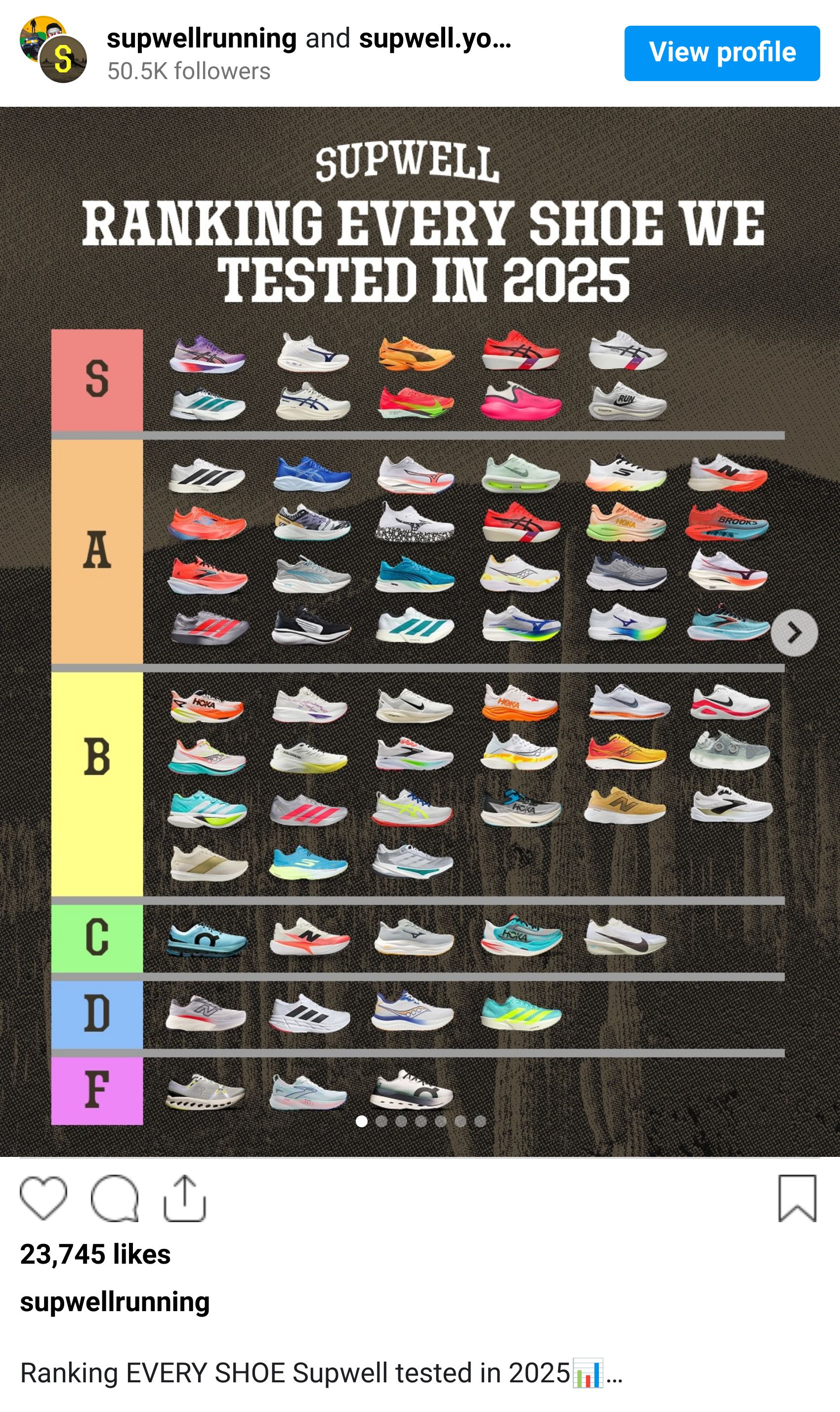
And thanks to social media, we are never truly alone when it comes to making our choices. Like a child flicking through a toy catalogue at Christmas, the Daily Split team has spent this week looking through some of the Instagram accounts which not only offer advice but also give their verdicts on the myriad of shoes out on the market.
Supwell labels itself as ‘the world’s best community for hobby joggers’ and is a buy, sell, trade marketplace for shoes, as well as a trusted guide on running shoe reviews. There is something about an Instagram page dedicated to, and including so many images of, running shoes that sends a thrill through your bones… it has got us very excited this week, with some even writing their 2027 Christmas lists already!!!!
We hope you enjoy it as much as we have… 👟🏃🏼😍

⏱️ Coaches corner: The sleep factor
So you have your training programme set, your nutrition plan is spot on, and you know that you’ve got all the right equipment, but there is still something not quite right, something holding you back, impacting on your ability to truly push your performance levels to the absolute limit.
For many recreational endurance athletes, sleep is often a key overlooked factor, the missing piece of the success jigsaw, and a topic which the elite endurance pros make sure to prioritise. If you are not sleeping well, then you simply cannot succeed.
Why is sleep so important?
Sleep plays a vital role in our recovery – both physically and mentally.
💪 The body produces growth hormone and androgens during deep sleep, which are used to repair and rebuild muscle and bone tissue.
😴 Protein synthesis occurs in our muscles while we sleep, which is how they absorb training stimulus and become stronger.
😷 Sleep also helps to support the immune system, and regulates hormones such as cortisol – the hormone associated with stress.
🧠 Additionally, sleep is important for your cognitive function as it has an impact on memory, learning, and neurofunction.
🤕 If you’ve been prone to injuries, suffering from more colds than usual, or you’re struggling with motivation. It’s worth taking a look at your sleep as a potential contributing factor.
Top tips to improve your sleep
⏰ When to work out: It can be hard to avoid training in the evenings, but be mindful of what type of training session you are doing late on in the day. High-intensity exercise in the evening has been shown to impact your ability to sleep, and it can reduce the quality of your sleep once you do drop off. Try shifting your schedule so you can get any high-intensity sessions ticked off in the morning to reduce the impact.
🍲 Don’t eat late: It can be hard to avoid eating late if you have to train after work. But doing so can make it harder to fall asleep as your body is busy digesting your food. On days when you won’t be able to have your evening meal until late, consider having your main meal at lunchtime. You can fuel yourself well for your evening session, then replenish with a lighter post-training meal that won’t have as much impact.
☕️ Reduce caffeine: For most of us endurance athletes, being told to forego caffeine entirely and do without our morning coffee feels a bit like being told to quit oxygen. It’s just not going to happen. But caffeine does impact your sleep, so try to resist the temptation to have a mid-afternoon shot of espresso. Instead, focus on staying hydrated and maybe take a short walk to get some fresh air.
🤳 Put the phone down: Avoiding screen time is easier said than done, but doing so is important to improve sleep. Melatonin is a hormone which prompts sleep, produced by serotonin and stimulated by darkness. The blue light emitted by our phones, tablets and other devices disrupts the production of melatonin, making it harder to fall asleep. Establish a pre-sleep routine that keeps you away from your devices.
🛌 Create the right environment: Temperature, light and noise can all impact our ability to sleep properly. If the room is too warm, we wake up when our body temperature increases too much. Keep your bedroom at a cooler temperature to help decrease this wakefulness. If light or noise prevents you from sleeping, consider wearing earplugs and an eye mask. On nights when sleep is eluding you, don’t lie in bed staring at the ceiling. After 20 minutes, get up and do something relaxing like reading a book in another room. Return to the bedroom when you feel sleepy again. Mentally, you want to associate the bedroom with rest and relaxation – not the stress and frustration of not being able to fall asleep.
👕 Try specialist sleepwear: Some sportswear brands, such as SKINS, have taken the idea of sleep being an athletic recovery strategy to the next level with the introduction of sleepwear loaded with technology to enhance your sleep quality. For some brands, that involves the use of compression, shown to improve circulation, giving the body a helping hand with muscular repair and regeneration. And taking things a step further, brands such as KYMIRA have incorporated infrared technology into sleepwear, which not only helps to stimulate muscle repair and recovery but also helps to replenish ATP (energy) supplies and regulate temperature.
💪 Outside edge of endurance
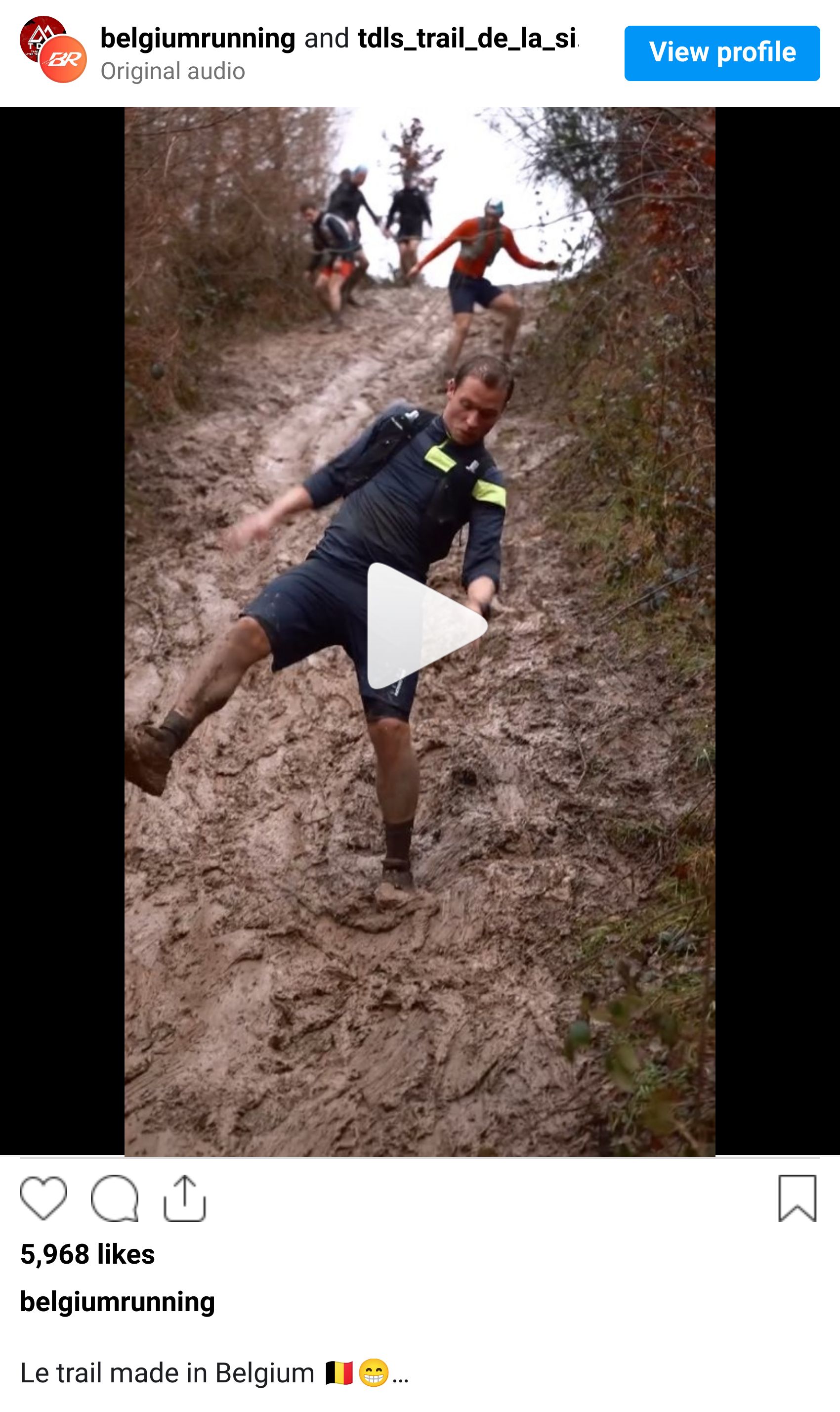
Ultra runners at last weekend’s Trail de la Siberie in the wild landscape of Belgium’s Molignée and Bocq valley certainly looked to have a muddy marvellous time as they slipped and slid their way across a brutal selection of distance challenges.
Kicking off with its FIVE night runs on the Friday evening, they followed that up on the Saturday with SEVEN ultra trail runs, offering distances of 35km, 42km, 52km, 75km, 100km, 125km, and a truly gut-busting, energy-sapping 160km.
As this post below proves, however, the athletes taking part certainly enjoyed their experience… 💦 🛝 🌳
Entries are pouring in for the Ultimate Triathlon Experience — and the deadline is fast approaching. If you haven’t entered yet, now’s the time. Don’t forget: referrals earn the most entries, so share your link with training partners and friends to boost your chances. Get in before it closes.
We are giving away a prize package designed for those of you who live for the finish line. Whether you are a seasoned pro or preparing for your first middle-distance event, this bundle provides the access and equipment you will need to perform at your peak.
What did you think of today's email?
That’s your Split. Until Next Time
Together, we go the distance. — @247_endurance 🏃♂️🚴♀️🏊♂️