


👋 Welcome back
Hei og velkommen!!!
That’s hello and welcome for those of you who do not actually speak Norwegian – a nod from us to the incredible sporting success of those Scandinavian standard-setters, data-driven dynamos, triathlon trailblazers, and now Olympic legends.
Having redefined what’s possible over swim, bike and run, they are now creating history on snow and ice, as the Nordic endurance machine shows no signs of stopping. Today, we take a look at what makes them so incredibly special.
But it’s not all about the Norwegians this Tuesday morning… here’s what else we have lined up for you today.
LATEST: Your news highlights from the world of endurance.
RECORD: Stunning new world record for 100-miler
PREVIEW: The World Triathlon Winter Championships
TIPS: Why walking is NOT a weakness in ultra running?
🏃🏼 Quick splits

Russ Cook, aka The Hardest Geezer, is attempting to run a 2:30 London Marathon.
🤫 Hardest Geezer hits back: This is what Russ Cook, aka The Hardest Geezer, had to say when his social media critics questioned whether he is good enough to complete his latest challenge of running a 2:30 London Marathon. Read HERE.
⏳ Out of time: The man behind the Barkley Marathons, Laz Lake, has revealed how 40 quickly became 12 on the very first loop of the potentially five-loop race… before the surviving runners were then 'beaten' by the course. Read HERE.
🎂 Milestone for Gwen: American triathlete Gwen Jorgensen is looking forward to spending her 40th birthday competing at the WTCS Samarkand as part of her race plans for the coming 2026 season. Read HERE.
👶 Sophie’s big return: The field for next month’s Lanzarote World Cup includes Sophie Evans – formerly Coldwell – as she returns to competition following the birth of her first child. Read HERE.
🏔️ Boom for UTMB: There were 29,000 applications for the UTMB World Series Finals draw, as enthusiasm for the 24-30 August event in Chamonix continues to grow alongside demand for all UTMB races. Read HERE.
🏁 Race news

Tamara Jewett celebrates her win at Challenge Wānaka. [Challenge Family]
🇳🇿 Challenge Wanaka
The 20th anniversary edition of Challenge Wānaka saw the professional races return, as both events produced two impressive winners. In the women’s race, Wānaka local Rebecca Clarke led most of the race before being overtaken by Tamara Jewett during the final stretch of the run, with Jewett claiming her first Challenge Wānaka win. And for the men, Jack Moody secured his second Challenge Wānaka victory with a strong performance, coming from fourth place off the bike to take the top place during the run.
🎰 Jackpot 100 Mile Ultra
Ashley Paulson set a new women’s record for the 100 miles as she won the Jackpot Ultra by more than two hours last Friday, in a time of 12:19:34 – which works out at an average pace of 7:21 per mile.
Held in Henderson, Nevada, just outside of Las Vegas, the Jackpot 100 also served as the USATF 100 Mile Championships. The 44-year-old was second overall, behind the race winner Rajpaul Pannu, who clocked 11:38:56.
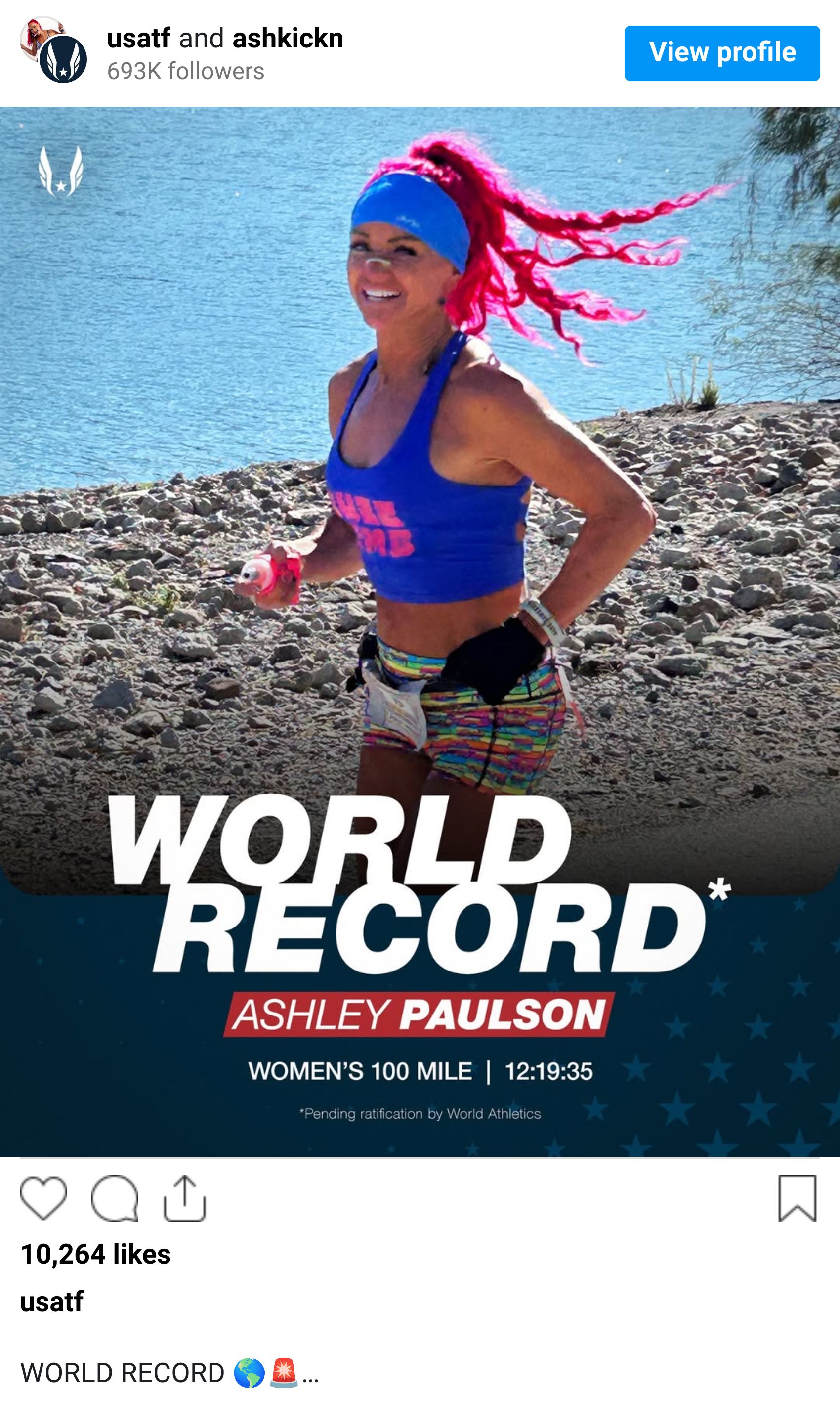
After the race, an emotional Paulson told her sponsor, Buzz Bomb Caffeine: “I’m like, has this really happened? I worked so hard for it, but it came; it happened. Dreams come true; you just gotta keep fighting for it and show up, put in the work, then execute.”
❄️ Winter Olympics
The 15th day of the Games once again belonged to Norway’s Johannes Hoesflot Klaebo, as the Norwegian GOAT created even more history by becoming the very first athlete to win SIX gold medals at a single Winter Olympics.
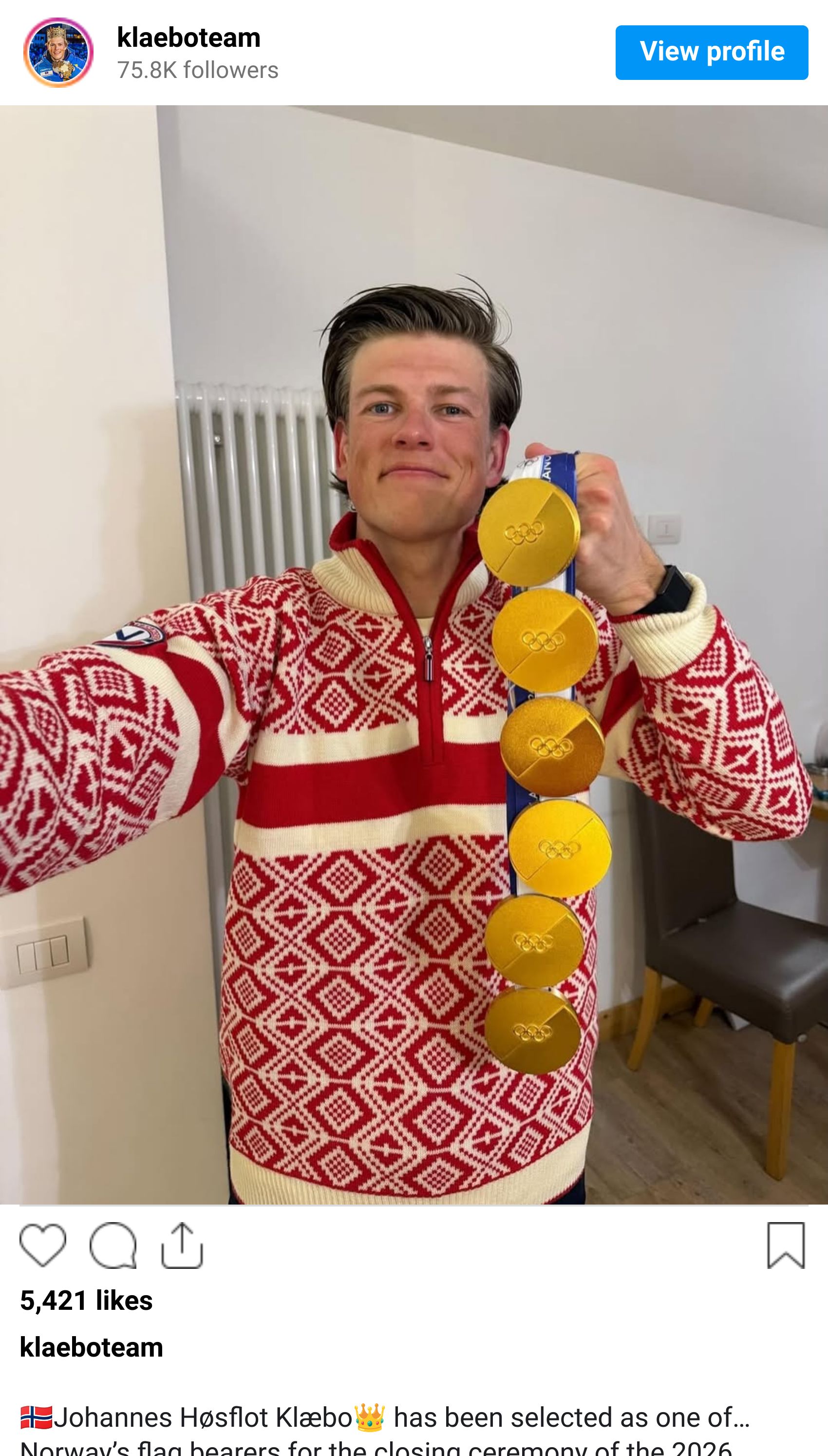
Having won every race that he started – from sprints and relays to gut-busting distance events – he completed the set with victory in the men’s 50km mass start in a time of 2:07:07. He is also the all-time gold-medal leader in the history of the Winter Olympics, with a total of 11 over the course of his three Games in 2018, 2022, and now 2026.
Norway completed a podium sweep through Martin Løwstrøm Nyenget and Emil Iversen.
Here’s a quick look at the other news in your Winter Olympics wrap-up.
The women’s 50km mass start cross-country skiing was won by Sweden’s Ebba Andersson, who finally got her hands on gold, having already won three silvers in Italy. Heidi Weng of Norway was second, and Nadja Kaelin (SWI) third.
France’s Emily Harrop and Thibault Anselmet added to their medal hauls in the ski mountaineering as the duo, who won silver and bronze, respectively, in their individual events, combined to take gold in the mixed relay, with a winning time of 26:57:04.
The women’s 12.5km biathlon was dominated by the French, as Océane Michelon took gold ahead of compatriot Julia Simon, who leaves the Games with an impressive haul of three gold and one silver medal.
The final medal table was topped by Norway, which took home 41 medals (18 gold, 12 silver, 11 bronze), and finished ahead of the USA 33 (12:12:9), the Netherlands 20 (10:7:3), Italy 30 (10:6:14), and Germany 26 (8:10:8).
For all the latest Winter Olympic news, go to the official website HERE.

The Winter World Triathlon and Duathlon Championships take place this weekend. [World Triathlon]
🎿 Winter World Triathlon and Duathlon Championships
The Winter Olympics may be wrapped up and finished, but the snow sports continue this weekend as World Triathlon hosts its Winter Triathlon and Duathlon World Championships in Padola, Italy.
The duathlon (running and skiing) takes place on Friday, with the elite, under-23s and junior classes competing. Saturday will see the age-group and para winter duathlon championships, as well as the elite, under-23 and junior winter triathlon championships. The triathlon has the added discipline of snow cycling. Sunday will then host the age-group and para triathlon events before the final 2×2 triathlon mixed relay.
All of the disciplines are completed on snow, with the elite triathletes tackling an 8km run, a 12km mountain bike ride, and a 12km ski. The duathlon usually consists of a 4km run and an 8km ski.

The incredible Norway sweep at last year’s IRONMAN World Championships. [IRONMAN]
🔍 The BIG issue: Another Norwegian method?
Hailed as the secret behind their incredible endurance success, the so-called Norwegian Method of data-driven, high-volume and low-intensity training has seemingly powered many of its nation’s athletes onto glory.
Last year’s IRONMAN World Championships served only to remind us that this relatively small Nordic country of around 5.7 million people continues to punch well above its weight when it comes to athletic achievement.
The Nice cleansweep of Casper Stornes, Gustav Iden and Kristian Blummenfelt was quickly followed by the stunning win of Solveig Løvseth in Kona, as the world was once again reminded – if any nudges were needed – of just how potent this corner of Scandinavia can be.
It is a level of sporting success which has once again been cast under the spotlight this week, as Norway topped the final medal table of the Winter Olympics at Milano-Cortina with an incredible 41 medals – a tally which included 18 gold, 12 silver and 11 bronze.
The feat is truly incredible. Sure, they live in a country where they grow up with snow and ice, but the same could be said for the likes of the USA, Canada, Sweden, Finland, Switzerland, Italy, and Austria.
When you compare the populations of the top ten countries, it really does bring home just how impressive an effort this truly is – USA (342m), Netherlands (18m), Italy (59m), Germany (84m), France (67m), Sweden (10m), Switzerland (9.1m), Austria (9.2m), and Japan (123m)… and Canada with its 42m people didn’t even make the top ten.
So what is the secret? Can it be that the Norwegian Method, which has served the endurance athletes so well, is also turning the winter Olympians into superhuman winners? Or is there something more in terms of the secrets to their success?
It is no doubt a question which will be asked by many nations as they hold their own Olympics debriefs in the coming months, and while there can be little doubt that the training practices of later life are very much a key ingredient, many are already pointing to how Norway treats its younger generation for an insight into their medal-winning model.
The Children’s Rights in Norwegian Sport is a development plan based on the UN Convention of the Child, which prioritises safety, friendship and joy over competition, with strict regulations for children under 13, including no national championships or official rankings before age 11.
Our guide below has more information on how it works, but the basic principle seems to be that if you keep them keen when they are young, then you have more chance of developing them once they get older.
It was something that Solveig Løvseth was keen to highlight when she spoke to TRI247 reporter Matt Reeder last year in the wake of her Kona win. Asked what the secret was to Norway’s success, she was quick to point to how young athletes are treated.
“It is important that younger athletes take time to get better, and of course, it’s also important that you do enjoy it,” she said. “It’s more important to stay in the sport than to be the most professional from a really early age. When you’re younger, just have fun with it and do it in a way that is sustainable for you.
“I actually think a lot of people end up quitting early because they’re taking it too seriously, and they don’t feel like they’re getting the results they want right away. If you don’t enjoy it enough at that time, it’s just easy to quit. But if you’re instead making sure it’s fun and try to stay in it for longer, then you only need to get a little bit better every year, and at some point you will be quite good.”
Wise words from the World Champion, which should give all youth coaches of all sports plenty to think about.

Having fun in sport is more important than results when you are young, says Solveig Løvseth. [IRONMAN]
Norway: Building a legacy of sporting success
The Norges idrettsforbund (NIF) Provisions on Children’s sports ensure participation on the child’s terms, giving them the right to pick and choose the activities they want to do, and influence their training.
Activities must be safe, secure, and free from excessive pressure or abuse, while children under the age of six must be accompanied by an adult.
The NIF regulations, designed to create the ‘Joy of Sport for All’, are reinforced by the threat of government funding being withdrawn for those who do not comply.
There is an emphasis on playing multiple sports, so that a young athlete can try as many as possible before deciding at a later date which they prefer.
There are no rankings or league tables, and no score-keeping until the children reach the age of 10.
Rights apply to all, regardless of skill level, gender, ethnicity, or disability.
Training should focus on mastering skills and building friendships, not winning.
Children have the right to express their opinions, which must be considered in planning activities.
There are no national competitions of any kind for children under 13.
If prizes are awarded, then ALL children must be awarded them.
Should nations be looking at the Norwegian success and following its methods?
👩💻 Trending in triathlon
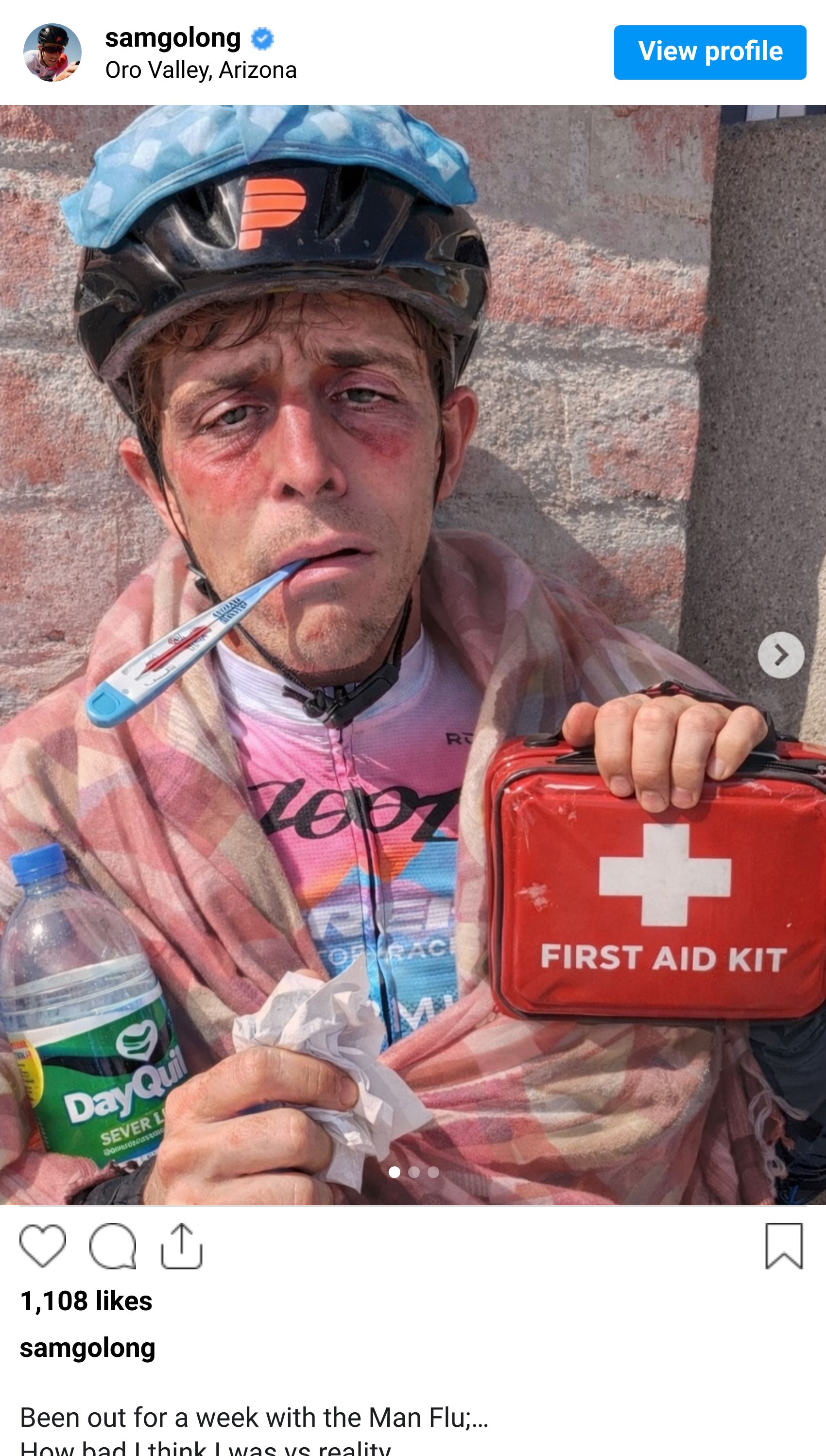
Spare a thought this week for poor Sam Long as his preparations ahead of the new season continue to be hampered by illness and bad luck. Only a few weeks ago, he was posting about having surgery to remove a skin infection on his bottom and complaining that a virus had wiped him out completely; now it seems he has been unwell once again, with this AI-inspired post on his Instagram account confirming he has had man flu.
We wish him a speedy recovery and thank him for always being entertaining… even when he is clearly not feeling too well.
⏱️ Coaches corner: Walking isn’t a weakness
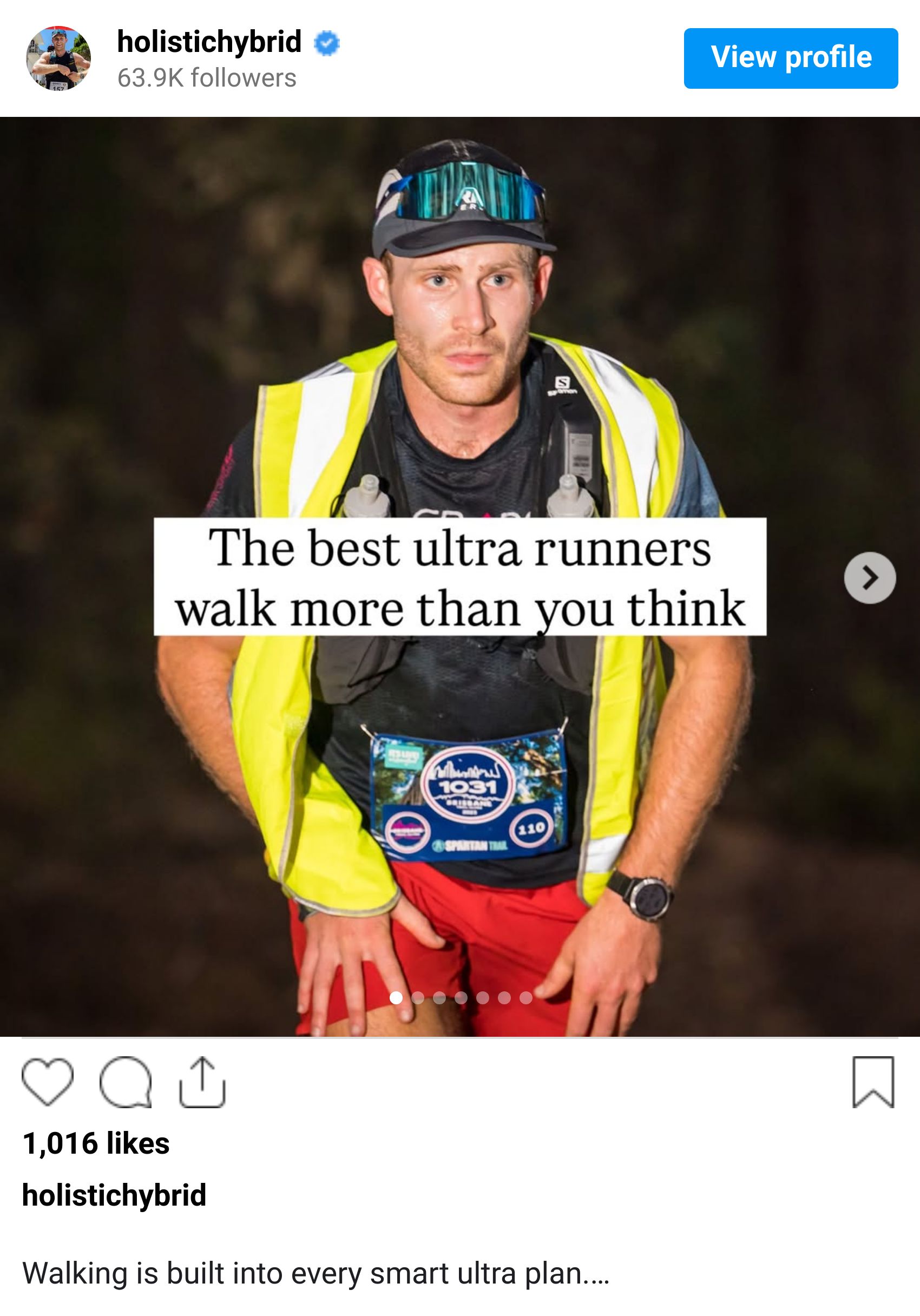
Today’s top tips come from Australian ultra runner Giles Penfold, who shares content on his @holistichybrid Instagram page and also runs online coaching sessions, called The Distance Project, for athletes looking to complete an ultramarathon.
Having completed 32 ultramarathons, he is perfectly placed to offer the kind of advice that can make the difference between finishing or failing at long distance – and he has one major tip that he believes is the most crucial above all else.
“Walking isn’t a weakness,” he says. “It’s about experience, and its restraint. It’s how you go further than you ever have before. It removes the panic, running becomes optional, and finishing becomes realistic.
“Most people think that real ultra runners run the whole way. That belief ruins more races than bad weather ever will. If you can walk all day, you can finish an ultramarathon. This isn’t a race against speed, it’s a relationship with time, energy and patience.
“Walking is built into every smart ultra plan. The best ultra runners walk more than you think. The goal is not to avoid walking – it’s to avoid being forced to walk. Master that, and ultras change completely.”
Planning is key
“Good ultra runners plan their walking,” he adds. “It’s not about giving up or being weak. It is energy management. Walking is part of the system. Planned walking gives you control, while forced walking is simply survival.
“One finishes strong. The other barely finishes… or doesn’t. If you get to walk early by choice, you get to run later by ability. That’s how ultras are often finished, with the athletes feeling strong and capable.
“It sounds boring. Sounds slow. Sounds like something beginners do. But after 30+ ultras and coaching dozens of finishes, this is the pattern I see every single time: The people who finish aren’t the fastest, they’re the ones who know how to walk well.”
Giles adds that the decision to walk for ultra runners is not a random one; it is an intentional one, based on certain factors such as:
🏃🏼 What is their running capacity level?
🏔️ When they face steep climbs.
🥵 During hot sections of the race.
⚠️ When the terrain is particularly technical.
“Walking controls heart rate, saves your legs, and lets you eat, breathe, think, and keep moving when running would destroy you. Most runners never practise it, and then they panic when they’re forced to.
“Ego runs… wisdom walks”.
You can also find Giles on his YouTube page HERE.
💪 Outside edge of endurance
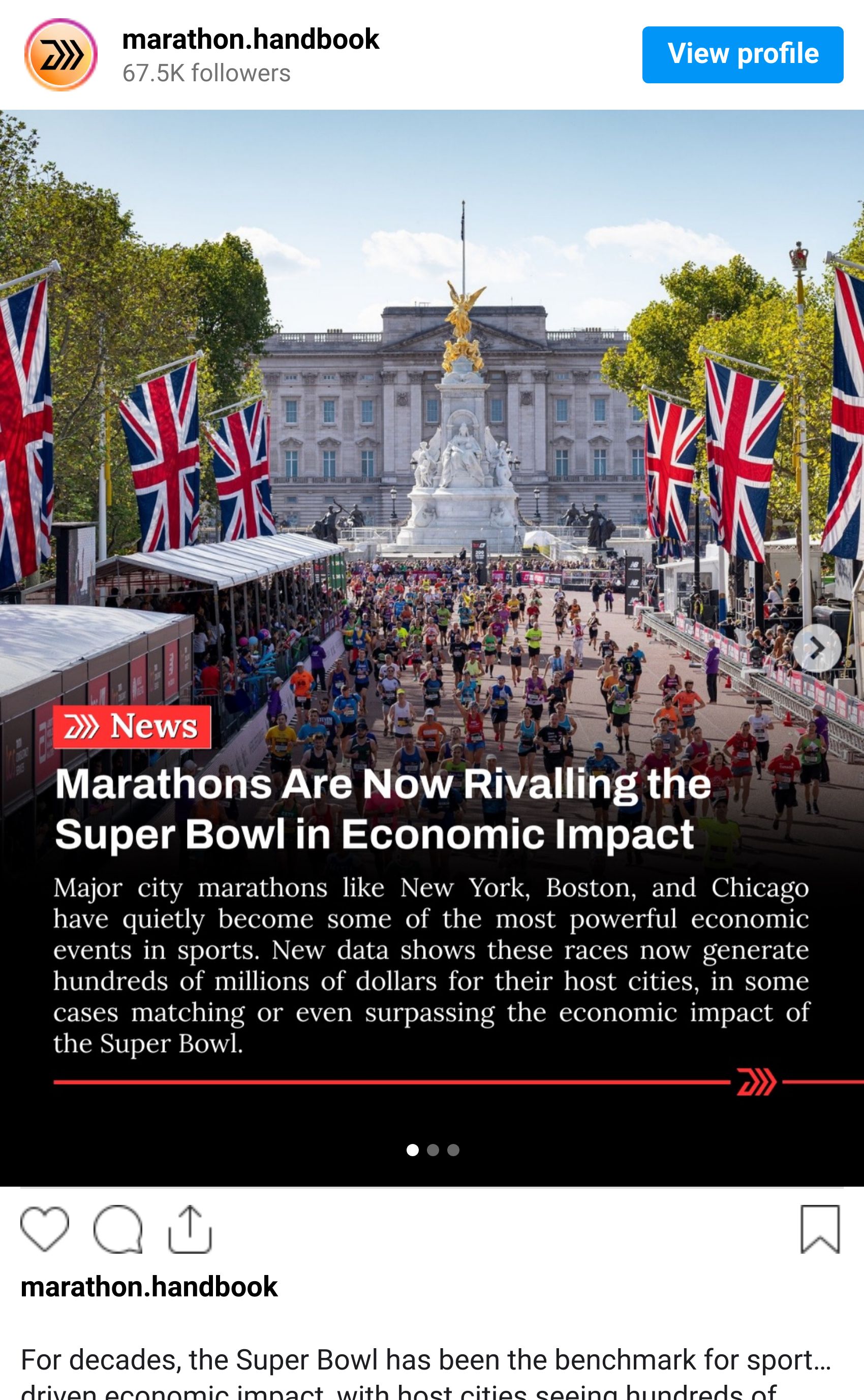
An interesting post from the guys at Marathon Handbook popped up on our Instagram feed this week, highlighting the value of marathons to their host cities, and suggesting they are now more lucrative than the Super Bowl.
American Football’s grand finale has always been seen as the big daddy benchmark in terms of sports-driven economic impact, with this year’s event estimated to generate between $370m and $630m in earnings for the Santa Clara region in California.
However, a report from Brand Finance explains the world’s 50 largest marathons generated $5.2bn in economic impact in 2024, with events like New York ($692m), Chicago ($683m), Boston ($509m), and London ($350m) leading the way and creating a longer-lasting impact in terms of hotel stays, restaurant bookings and retail.
Are you ready to take your endurance journey to the next level? We have teamed up with Holly Wilson, Challenge Family, and some of the industry’s leading performance brands to give one lucky winner the Ultimate Triathlon Experience.
We are giving away a prize package designed for those of you who live for the finish line. Whether you are a seasoned pro or preparing for your first middle-distance event, this bundle provides the access and equipment you will need to perform at your peak.

What did you think of today's email?
That’s your Split. Until Next Time
Together, we go the distance. — @247_endurance 🏃♂️🚴♀️🏊♂️