

👋 Welcome back
WOW… where do we even start?!
From brutal ultra battles in the mountains, to marathon drama on the roads, Grand Tour chaos in the peloton and another huge weekend of triathlon action, endurance sport delivered absolutely EVERYTHING over the last few days.
Records were threatened, legends were tested, and Kona slots were grasped with both hands – and to cap it all off, we can finally reveal who won your vote as the women’s GOAT of triathlon.
So grab a coffee, loosen the legs and settle in… because the endurance world has been VERY busy indeed.
Here’s what we have lined up for you today…
LATEST: The endurance news headlines.
REPORTS: IRONMAN, T100, Supertri, Challenge… phew!!!
GOAT: Your vote for the Greatest woman triathlete of all time.
BREAKING: Jonny Brownlee beats his brother Ali at last.
TIPS: How to prevent those ‘jelly legs’ from wrecking your run
🏃🏼 Quick splits

Laura Philipp and Solveig Løvseth will race at IRONMAN Hamburg. [IRONMAN].
🙌 STACKED: The last three winners of the women’s IRONMAN World Championship are all on the start list for IRONMAN Hamburg. Read HERE.
👏 NUMBERS: Jeremy MacLean won his first pro race in Chattanooga last week as he took the line in the week of his 21st birthday. Read HERE.
🏥 RETURN: Laura Philipp has expressed her delight at being back on the racing circuit after spending time in hospital recently. Read HERE.
🎽 ANALYSIS: The ridiculous numbers that show just how incredible Rachel Entrekin’s historic Cocodona 2025 victory really was. Read HERE.
🥾 ZEGAMA: Moroccan Elhousine Elazzaoui is looking for an unprecedented third Golden Trail World Series title in a row. Read HERE.
🏁 Race news

The top three men at The Championship in Slovakia last weekend. [Challenge Family]
The Championship 2026
Harry Palmer (GBR) and Caroline Pohle (GER) emerged as the winners after a dramatic day’s racing at The Championship, Challenge Family’s showpiece middle-distance race at the iconic x-bionic sphere in Šamorín.
With a prize purse of €100,000, it was always going to be fiercely contested, and Palmer had to bide his time before finally overhauling long-time leader Valdemar Solok (DEN) deep into the run.
Pohle collapsed 800m before the finish line here in 2024, but on another hot day in Slovakia, she took control on the bike and then managed things superbly on the run as she held off her great rival and fellow German Lena Meissner.
Men’s Results:
🥇 Harry Palmer (GBR) 3:31:55
🥈 Valdemar Solok (DEN) 3:32:29 (+0:35)
🥉 Will Draper (GBR) 3:33:59 (+2:04)
Women’s Results:
🥇 Caroline Pohle (GER) 3:55:39
🥈 Lena Meissner (GER) 3:57:11 (+1:33)
🥉 Katrine Græsbøll Christensen (DEN) 3:58:32 (+2:54)
IRONMAN Lanzarote
Former IRONMAN World Champions Sam Laidlow (FRA) and Lucy Charles-Barclay (GBR) sent out warnings to their rivals this season with ultra-impressive victories at IRONMAN Lanzarote.
The pair only needed to validate their tickets for Kona, but they bossed their respective races from the gun.
Laidlow destroyed the men’s course record by nearly 20 minutes, with three-time Kona champ Patrick Lange chasing him home as he made sure of his own return to the Big Island.
And like Laidlow, Charles-Barclay led out of the swim and was never headed in the race where it all started for her as a pro.
Men’s Results (swim-bike-run-overall):
🥇 Sam Laidlow (FRA) 46:25-4:27:52-2:44:14-8:03:40
🥈 Patrick Lange (GER) 47:33-4:45:03-2:33:43-8:12:29
🥉 Jordi Montraveta Moya (ESP) 52:19-4:38:50-2:39:17-8:16:16
Women’s Results (swim-bike-run-overall):
🥇 Lucy Charles-Barclay (GBR) 47:02-5:21:05-3:01:13-9:15:39
🥈 Nina Derron (SUI) 54:43-5:23:49-3:17:57-9:42:02
🥉 Nikita Paskiewiez (FRA) 59:25-5:34:18-3:07:00-9:47:36
T100 Triathlon World Tour – Spain
Georgia Taylor-Brown, the most decorated female Olympic triathlete, powered to a hugely impressive first T100 victory in Spain on Saturday.
The Briton was 12th on her T100 debut last year and followed that with a ninth, a fourth and then a second in the Grand Final in Qatar, and she went one better in some style in Pamplona as she surged past Julie Derron (SUI) on the run and never looked back.
A minute and 20 seconds separated them on the line, with Taylor Spivey (USA) rounding out the podium in third – all three of them short-course stars.
Results (swim-bike-run-overall):
🥇 Georgia Taylor-Brown (GBR) 26:23-1:59:23-1:09:40-3:38:03
🥈 Julie Derron (SUI) 26:37-1:58:42-1:11:45-3:39:23
🥉 Taylor Spivey (USA) 26:14-2:04:18-1:08:34-3:41:29
Supertri Pro Series – Austin
The big stars rose to the challenge at Austin on Monday as America’s Gwen Jorgensen and Germany’s Tim Hellwig took the tape in their respective Supertri Pro Series races.
As Olympic gold medallists, they were always going to be among the favourites to come home with the victory, and they did not disappoint in this opening race of the racing brand’s new-look competition.
Men’s Results:
🥇 Tim Hellwig (GER)
🥈 Aurélien Jem (FRA)
🥉 Matthew McGoey (USA)
Women’s Results:
🥇 Gwen Jorgensen (USA)
🥈 Eleanor Beveridge (USA)
🥉 Zuzana Michaličková (SVK)
Cape Town Marathon
Three of the four course records in the Sanlam Cape Town Marathon were shattered on a spectacular day of racing as the event cemented its place as the premier marathon in Africa and bolstered its candidacy to become an Abbott World Marathon Majors.
Elite men’s race: The elite men’s race was won by Ethiopia’s Mohamed Esa in a scintillating 2:04:55, obliterating the course record of 2:08:16, set by another Ethiopian, Abdisa Tola, in 2024. He was followed over the line by countryman Yihunilign Adane in 2:04:59, with Kenyan Kalipus Lomwai third in 2:05:06.
The man considered by many to be the greatest marathoner of all time, Eliud Kipchoge of Kenya, was 16th home in 2:13:29 in what was his first-ever marathon in Africa and the first stop on his ‘World Tour’.
The men’s race saw the first 10 runners all finish under the previous course record.
Elite women’s race: Ethiopian runners made it a clean sweep of the podium positions, with Dera Dida Yami taking the win in 2:23:18, just under a minute outside the course record of 2:22:22 set by SA’s Glenrose Xaba in the 2024 race.
Second over the line was Mestawut Fikir in 2:23:46, with Waganesh Amare third in 2:23:57. Former women’s world champion, Kenyan 46-year-old Edna Kiplagat, finished fifth in 2:25:44.
David Weir of Great Britain dominated the men’s wheelchair race and took the win in 1:30:20, well inside the course record 1:32:09 set by Dutchman Gert Schipper in 2023.
The Brit was followed in by Dutchman Jetze Plat (1:33:12), while third position went to the 2024 winner in Cape Town, Sho Watanabe of Japan.
The women’s wheelchair record now belongs to Switzerland’s Manuela Schär, who dominated the race to win in 1:43:25, destroying the previous course record of 1:52:58, set by Brit Eden Rainbow-Cooper in 2023.
Second-placed Chen Xiaochun (China) also finished inside the previous record, crossing the line in 1:52:21, with another Chinese athlete, Deng Yirun, taking third in 1:57:05.
Sumarpo: The Eco-Pioneer Redefining Tri Wetsuits.
As the first 100% eco-focused triathlon wetsuit brand, Sumarpo combines premium Yamamoto limestone neoprene, benzene-free adhesives, and recycled fabrics with cutting-edge performance. Sustainable, high-performing, and built for athletes who want to go faster while doing good.
Akula Men's Eco Wetsuit (£980 / $979.95)
"The Shark" – elite-level flexibility and speed. 1.5mm Yamamoto #40 with 630% elongation, patented Aero Boost 5.0 buoyancy (+34% vs Aerodome), Bio-Skin drag reduction, and full Yamamoto Nano SCS coating. Perfect for serious racers chasing every second.
Learn More
Vanguard Women's Eco Wetsuit (£580 / $579.95)
The ultimate all-rounder. Superb stretch via SQ-Flex + Yamamoto #40, excellent Aero Boost 5.0 buoyancy, 3D GSP forearm propulsion, and full SCS coating. Balanced performance with easy T1 and eco credentials. Free Triad bag included.
Learn More
Vanguard Men's Eco Wetsuit (£580 / $579.95)
Perfect balance of flexibility, buoyancy, and speed. Same elite tech as the women’s version: 630% stretch shoulders, Aero Boost 5.0, leg elevation design, and full hydrodynamic SCS coating. The versatile workhorse every triathlete needs.
Learn More
Elite Pro Women's Eco Wetsuit (£700 / $699.95)
"Buoyancy King." Maximum lower-body lift with innovative Aero Boost 5.0 placement, excellent flexibility, and proven body positioning. Ideal for athletes wanting to stay higher in the water and conserve energy across the swim.
Learn More

Elhousine Elazzaoui and Caroline Kimutai cross the line together.
[@KoastalForest | Golden Trail World Series]
Golden Trail World Series – Ledro Sky Trentino
There was a moment for the Golden Trail World Series history books on Sunday when the men’s and women’s winners crossed the line together at the Ledro Sky Trentino race, the second event in this year’s competition.
The scene of last year’s Grand Final, it was a 21.5km race with 1,777 metres of elevation gain, and Kenya’s Caroline Kimutai marked herself out as one of the overall favourites as she secured her third win in the circuit, following the Jinshanling Great Wall Trail Race and Sierre-Zinal in 2025.
And there at the finish at exactly the same time was Morocco’s Elhousine Elazzaoui, winner of the last two men’s overall titles as well as this season’s opener in Zegama-Aizkorri.
The pair held hands as they crossed the line in what was a truly historic moment.
The Enhanced Games
Greece’s Kristian Gkolomeev was the only athlete to beat a world record at the controversial Enhanced Games in Las Vegas.
The 32-year-old clocked 20.81 seconds in the men’s 50m freestyle, eclipsing Australian Cameron McEvoy's 20.88, which he set in March, but Gkolomeev's time will not be recognised by official authorities.
Results at the inaugural Games are considered illegal by global sporting bodies, such as the International Olympic Committee (IOC) and World Anti-Doping Agency (WADA), because athletes can take banned performance-enhancing drugs.
The competition featured events in athletics, weightlifting and swimming, with Gkolomeev setting his time wearing a polyurethane suit, which is banned in official competitions.
World Aquatics has condemned the event as a ‘circus, built on short-cuts’, while Gkolomeev was rewarded by Enhanced Games organisers with $250,000 (£185,000) for winning and a $1m bonus (£741,000) for the unofficial record.
Read more on this story at the BBC, HERE.
🚴♂️ News from the saddle
Giro d’Italia: Fredrik Dversnes won stage 15 of the Giro d'Italia from the breakaway on Sunday after the four escapees won the day on the streets of Milan. The Uno-X Mobility rider sprinted clear of the four-man breakaway group to take the most unexpected of wins.
With the break taking the top four places, Mirco Maestri (Polti-VisitMalta) was second and Martin Macellusi (Baridani-CSF 7 Saber) third. The peloton trailed home five seconds down, Paul Magnier (Soudal Quick-Step) leading the way in fifth place.
Denmark’s Jonas Vingegaard retains the General Classification lead by +2:26 over Portugal’s Afonso Eulálio, with Austria’s Felix Gall in third.
For more on this story, read the Cycling Weekly, HERE.
Vuelta a Burgos Feminas: Yara Kastelijn took her first overall win in a WorldTour stage race on Sunday, winning the closing stage of the four-day Vuelta a Burgos Feminas.
The Fenix-Premier Tech rider had escaped a group of general classification riders with Évita Muzic (FDJ United-SUEZ) early on the brutal final climb of Lagunas de Neila. She then allowed the French woman to lead for much of the climb before attacking with 1.2km to go, soloing to victory.
Muzic finished second, while Usoa Ostolaza (Laboral Kutxa-Fundación Euskadi) was third, both taking the same positions on GC.
For more on this story, read the Cycling Weekly, HERE.

Chrissie Wellington has been voted the GOAT of women's triathlon. [Challenge Family]
🔍 The BIG issue: The GOAT of women’s triathlon
In truth, we always knew it was something of an impossible task, but trying to come up with the undisputed GOATs of men’s and women’s triathlon has been great fun, nonetheless.
We threw ten names at our Daily Split audience and asked them to come up with the two athletes who deserved to be tagged as the Greatest Of All Time for each gender.
Deep down, we already knew that all ten deserved the moniker in their own right… How can you split a Jan Frodeno and a Mark Allen, or a Daniela Ryf and a Paula Newby-Fraser?
Not only were all ten of the nominees world-class, but they also played their own particular roles in building up the sport of triathlon to what it is today. Incredible athletes, without a doubt, but just as importantly, they were, and will always remain, ambassadors for the swim-bike-run world.
American Allen came out on top of our men’s poll, the Iron War veteran and six-time world champion, edging out Frodeno in a battle we would much prefer to have seen out on the race circuit than on a polling card.
Did that make the efforts of Dave Scott, Alistair Brownlee and Kristian Blummenfelt any less special? Of course it didn’t… and even Allen admitted they all deserved to be tagged as GOATs for what they achieved in the sport.
So then it was onto the women. And this one really was tough, with five female athletes who not only achieved great success but also seemed to break down sporting barriers with every stroke, pedal and stride that they completed.
Our poll, however, came back with a clear winner… and that winner was Chrissie Wellington, the British competitor who won four world titles in five years – including on her debut in 2007 – and set the world record time of 8:18:13, which stood for more than a decade.
South African Paula Newby-Fraser and Switzerland’s Daniela Ryf were joint-second, while Natascha Badmann (SUI) and Flora Duffy (BER) were not too far behind. A vote that was once again so close that we wished the battle could have taken place on the Big Island. Boy, what a tussle these ladies would have put on for us in their prime.
While the process has been fun and we have enjoyed looking back at these legends of multisport and multidistance, perhaps we should leave the final word to Allen, who has his own thoughts on the Greatest Of All Time debate.
“Maybe the greatest of all time is not one athlete. Maybe it is the lineage itself,” he says. “One champion pushing the next. One era challenging another. One impossible performance becoming the starting point for someone else’s dream.
“That is the real ode. Not to one GOAT standing alone at the top of the mountain. But to all of them, standing across the ridgelines of history, each one showing us a different way up.”
Well said, sir… well said. 👏👏👏

Paula Newby-Fraser came second in the poll. [IRONMAN]
👩💻 Trending in triathlon
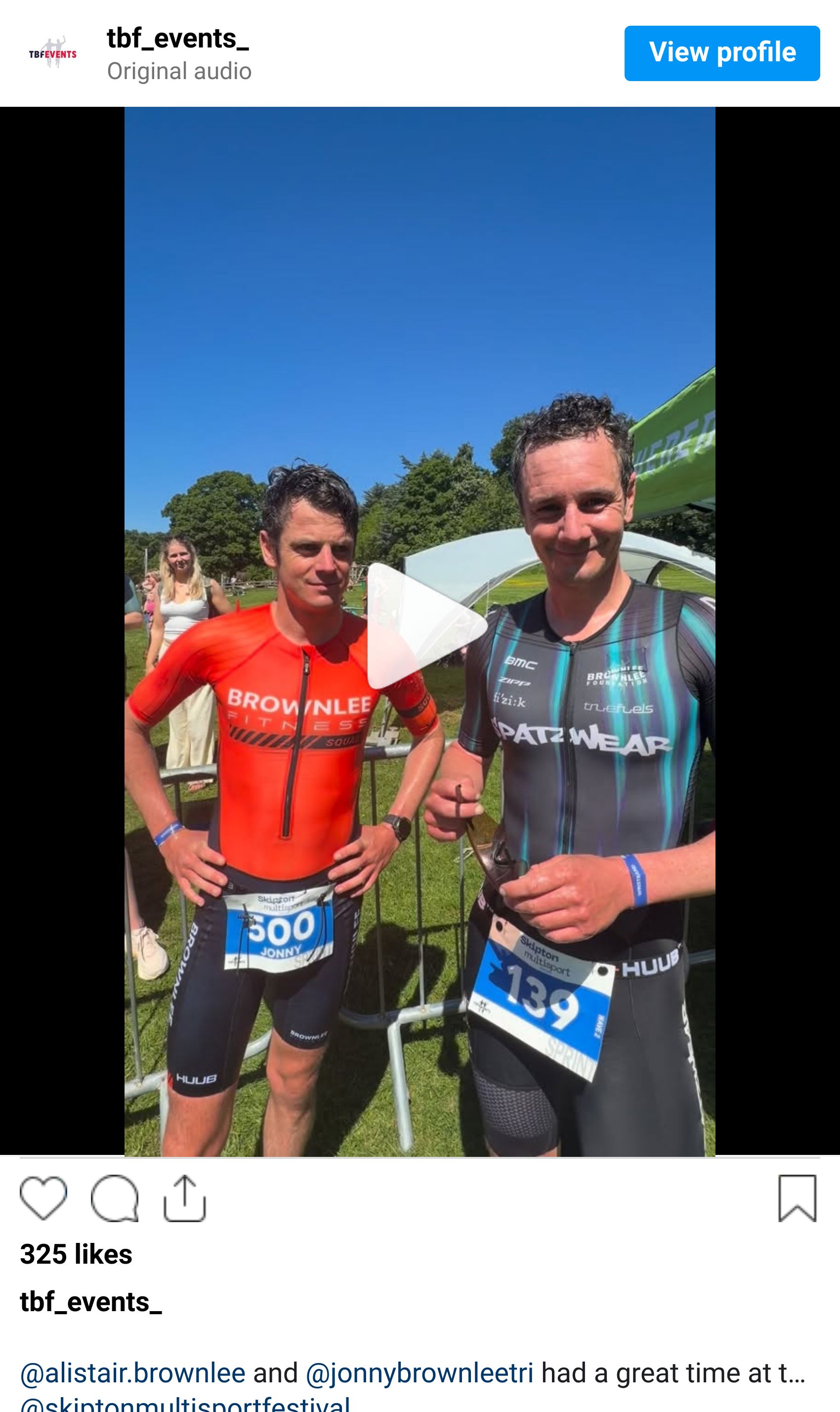
There was some HUGE breaking news over the weekend that was clearly missed by pretty much all of the major sports websites and news outlets – Jonny Brownlee finally beat his big brother, Ali!!!
OK, so it was only the Skipton Triathlon, which was being held as part of the Multi-Sport Festival on Sunday to raise funds for The Brownlee Foundation, but we all know how competitive these guys get when they line up for a race… even in retirement.
And while they dominated the short-course discipline and did so much to put triathlon on the sporting map, Jonny rarely came out on top against Alistair.
Amateur athletes had been given the chance to race against the brothers in relay teams, while true to form, the triathlon legends also took it upon themselves to take on each other once more in swim-bike-run.
Jonny actually completed the course three times; he was having so much fun, while double-gold Olympic champion Alistair completed it once, and had to admit through gritted teeth that he had lost to his younger sibling.
A video from the duo after the festival shows Ali saying: “We have both done the Skipton Tri, which was part of the Triathlon Festival. I did it once, and Jonny did it three times… and he still beat me, although it was close, I reckon.
“It’s all about raising money for The Brownlee Foundation, which is an amazing cause. This week alone, we have had 5,000 children do a free triathlon, so you can see the money goes to a really good cause.”
Jonny then added: “We are going to hit some massive milestones with The Brownlee Foundation this year, and I think this event has got a great feel about it. There is a family feel, and whether you are a first-timer or an experienced athlete, there is a bit for everyone.
“And I’ve really enjoyed it… so much so that I did it three times. It has been a great morning.”
You can find out more about The Brownlee Foundation, HERE.
⏱️ Coaches corner: How to conquer ‘jelly legs’
‘Jelly legs’ is the heavy, unstable, awkward feeling many triathletes experience during the first part of the run after cycling. The legs can feel numb, tight, uncoordinated, or completely disconnected from normal running rhythm.
This sensation is one of the most common challenges in triathlon, especially for newer athletes. The bike-to-run transition forces the body to switch movement patterns immediately while already fatigued.
Cycling relies on repetitive seated muscle contractions and different neuromuscular recruitment than running. Once athletes begin running, the body must suddenly absorb impact forces, stabilise posture differently, and coordinate stride mechanics under fatigue.
‘Jelly legs’ are normal to some extent, but poor pacing, weak run durability, nutrition mistakes, and limited transition practice can make the problem far worse. This becomes more noticeable as race distances increase.
Cycling fatigue changes running mechanics
The biggest reason triathletes experience ‘jelly legs’ is accumulated muscular fatigue from the bike leg. Cycling heavily loads the quadriceps, glutes, calves and hip flexors, but without the impact forces used during running.
After long periods of riding in a fixed position, the body must suddenly transition into an upright posture, brace for impact absorption, and require higher cadence movement with different muscle activation patterns.
It is this abrupt change that often makes the first kilometres of the run feel awkward and unstable.
Blood flow and muscle recruitment shift rapidly
During cycling, muscles contract in a repetitive circular pattern with relatively stable positioning. However, once running begins, the ground impact increases, your stabilising muscles activate differently, your stride mechanics change, and your neuromuscular coordination shifts rapidly.
The body needs time to redistribute the workload efficiently. This temporary mismatch between cycling movement and running movement contributes heavily to the jelly-leg sensation.
Don’t ride too hard!!!
One of the biggest causes of severe ‘jelly legs’ is poor bike pacing. Cycling above sustainable effort increases your lactate accumulation, resulting in glycogen depletion, muscular fatigue, heart rate drift, and neuromuscular breakdown.
Athletes who push aggressively on the bike often begin the run already heavily fatigued. Meanwhile, athletes pacing correctly usually regain running rhythm much faster after transition. This is one reason why understanding pacing and fuelling a triathlon matters far more than simply chasing bike speed.
Brick training helps reduce ‘jelly legs’
Brick workouts combine cycling immediately followed by running. These sessions help athletes adapt to neuromuscular transition, heavy-leg sensation, running cadence changes, post-bike pacing, and fatigue management.
Brick training does not eliminate ‘jelly legs’ completely, but it improves how quickly the body adjusts during transition.
Useful brick sessions – where the goal is adaptation rather than exhaustion – often involve:
Moderate bike intensity.
Short controlled runs.
Gradual pacing progression.

‘Jelly legs’ can impact an athlete as they step from the bike to the run leg.
Poor nutrition increases heavy-leg fatigue
‘Jelly legs’ become much worse when glycogen stores are depleted. Without sufficient carbohydrate intake during the bike ride, your muscles fatigue faster, coordination declines, running pace collapses, and perceived effort rises sharply.
The bike leg is the best opportunity to fuel properly before running begins. Athletes who underfuel commonly mistake severe energy depletion for purely muscular fatigue.
Nutrition planning becomes increasingly important during preparation
Cadence changes after cycling
Cycling cadence often differs significantly from running cadence. After spinning at high bike cadence for extended periods, runners sometimes overstride, shuffle awkwardly, struggle to find rhythm and can run too aggressively initially.
The body usually needs several minutes to normalise stride mechanics again. Controlled pacing during the opening run section helps this adaptation occur more naturally.
Top tips to help you avoid ‘jelly legs’
Strong aerobic fitness: This improves fatigue resistance, recovery during racing, cardiovascular efficiency, and muscular endurance. Athletes with stronger endurance bases generally recover from the bike-to-run transition more quickly because their systems tolerate prolonged stress more effectively.
Bike fit: Poor bike fit increases unnecessary muscular stress before the run even starts. Common fit issues include the following: saddle too low, excessive reach, poor cleat alignment, and aggressive hip angle. These problems may overload specific muscles and worsen stiffness during transition.
Strength training: Helps triathletes tolerate fatigue more effectively during transitions, with important benefits including: Better posture control; improved hip stability; increased muscular resilience; better force absorption; and improved running mechanics.
Useful strength areas: Work on your glutes, core, hamstrings, calves, and
hip stabilisers. Athletes with stronger stabilising muscles generally maintain smoother running mechanics after cycling fatigue accumulates.Recovery and fatigue: Accumulated training fatigue can make transition running much worse. Athletes carrying excessive fatigue into races often struggle with such issues as reduced coordination, heavy legs, poor pacing control, and reduced muscular responsiveness. Recovery habits strongly influence race-day durability.
💪 Outside edge of endurance
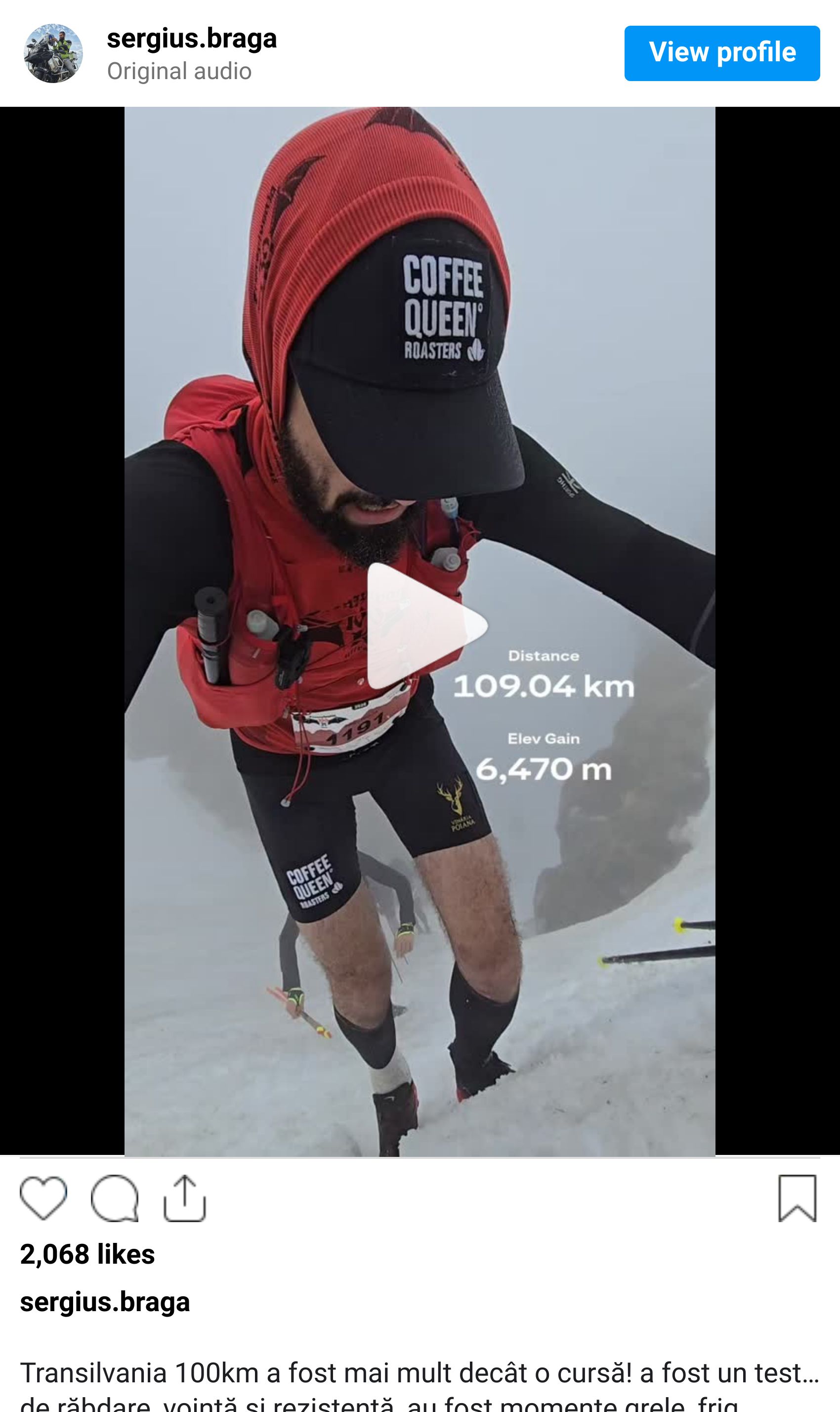
The Transylvania 100k certainly tested its participants to the absolute limit this weekend, as snow, ice and windy conditions resulted in a devilishly difficult route through the land of Count Dracula.
Starting beneath Dracula’s Castle in the village of Bran, the athletes embarked on an adventure through the alpine-like scenery of rural Transylvania, twisting along single tracks, ancient forest trails, mountain plateaus, and windswept ridges.
After climbing and descending many thousands of metres, they finished back at Bran Castle.
However, as you can see from the video below, this year’s event was a little more difficult than in the previous 11 years, as the weather made it a real battle to even stand upright.
What did you think of today's email?
That’s your Split. Until Next Time
Together, we go the distance. — @247_endurance 🏃♂️🚴♀️🏊♂️