

👋 Welcome back
Morning endurance fans…
Another huge weekend of triathlon delivered big wins, huge performances and plenty of clues about who is peaking at the right time as we head into the business half of the campaign.
But with the IRONMAN 70.3 World Championship looming on the horizon, one question has already been posed: can America finally break Europe’s stranglehold on the sport’s biggest middle-distance title?
As we round up the weekend’s action, we’re also looking ahead to Nice as one athlete in particular thinks it is time for the USA to hit back.
Here’s what we have lined up for you today…
LATEST: The endurance news headlines.
REPORTS: IRONMAN 70.3 Pennsylvania starts debate.
WAITING: Are the USA ready to challenge Europe?
TIPS: What is swimmer’s shoulder and how to beat it?
DEDICATED: The man triathloning across America.
🏃🏼 Quick splits

Alistair Brownlee has been named as Chef de Mission for the Summer Youth Olympics.
[World Triathlon]
🥇 APPOINTED: Double Olympic champion Alistair Brownlee has been named Chef de Mission to lead Team GB at the Summer Youth Olympics. Read HERE.
🤒 MISSING: What does the season now hold for Hayden Wilde after he was forced to withdraw from WTCS Quiberon this weekend? Read HERE.
🇳🇴 CHAMPION: Solveig Løvseth has revealed how she was not ready for the reaction to winning last year’s IRONMAN World Championship. Read HERE.
🎽 STAIRWAY: An iconic piece of trail running history has been updated ahead of this year’s edition of the Broken Arrow Skyrace. Read HERE.
🥾 HISTORY: James Gibson has set new records for three brutally tough mountain challenges in the space of just six months. Read HERE.
🏁 Race news

Trevor Foley won his second race of the season at IRONMAN 70.3 Happy Valley. [IRONMAN]
IRONMAN 70.3 Pennsylvania Happy Valley
ELITE MEN: Trevor Foley secured his second win of the season as he took the tape and the North American IRONMAN 70.3 Championships in Pennsylvania on Sunday after a battle royale with compatriot Sam Long.
The pair had been well off the pace as they exited the swim in 19th and 28th, respectively, but once again showed their power in the saddle as they made up time on the leaders and positioned themselves perfectly for a decisive half-marathon chase.
Having both caught and left bike leader Matthew Marquardt (USA) behind, it was Foley who had the strongest legs at the end, pulling away with 5km remaining to win his first-ever race against Long in 14 attempts.
Third place went to another athlete who made his way up through the field, as Jason West – a former student at Penn State, where this event was being held – secured what was clearly an emotional podium place.
RESULTS (1.9km swim - 90km bike - 21.1km run):
🥇 Trevor Foley (USA) 25:42 - 2:03:26 - 1:09:50 = 3:42:25
🥈 Sam Long (USA) 26:23 - 2:02:57 - 1:11:14 = 3:43:35
🥉 Jason West (USA) 24:20 - 2:06:57 - 1:10:11 = 3:44:38
ELITE WOMEN: Canadian Paula Findlay put in a truly dominant performance as she powered away to victory at the IRONMAN 70.3 North American Championships in Pennsylvania.
In contention throughout the swim, she took the lead on the bike section and never looked back, crossing the finish line at Beaver Stadium more than four minutes ahead of her nearest rival, Lydia Russell (USA).
Third place went to Australian Grace Thek, who was able to hunt down and pass a visibly tiring Grace Alexander, who had hardly been out of the top three positions all race before finally being caught in the latter stages of the half-marathon.
RESULTS (1.9km swim - 90km bike - 21.1km run):
🥇 Paula Findlay (CAN) 27:04 - 2:19:11 - 1:23:45 = 4:14:02
🥈 Lydia Russell (USA) 28:00 - 2:26:44 - 1:19:05 = 4:18:10
🥉 Grace Thek (AUS) 27:07 - 2:27:13 - 1:22:26 = 4:20:36
IRONMAN Cairns
Nick Thompson and Penny Slater claimed their maiden IRONMAN wins with impressive performances at IRONMAN Cairns.
Thompson, from Perth, took the win in 7:49:48, more than seven minutes clear of Canberra’s Ben Hill, with Jumpei Furuya of Japan finishing third.
Slater crossed the finish line in 8:59:27, over eight minutes ahead of Skye Wallace, with New Zealand’s Rebecca Clarke in third.
IRONMAN Austria
Italy’s Mattia Ceccarelli delivered a standout performance to secure his first professional IRONMAN victory at IRONMAN Kärnten-Klagenfurt, Austria, on Sunday. The 38-year-old Italian has been racing IRONMAN triathlons since 2018, but had yet to take the tape.
Ceccarelli crossed the line in 7:48:07, with Jon Saeveras Breivold (NOR) finishing in second place (7:49:44), while Florian Angert (GER) was third (7:52:35).
At the finish line, Ceccarelli said: “I wanted to enjoy the race. The last 40km on the bike, I was struggling a bit because I couldn’t fuel properly. But there were so many Italian people here, and I kept pushing. Now I know why the Italians love it here!”
European Championships
World Champion Lisa Tertsch and in-form Oliver Conway took the Elite titles at this weekend’s European Triathlon Championships in Tarragona.
The German picked up her first podium of this season in Alghero two weeks ago and showed her class once again with a fine sprint finish in Spain.
Briton Conway, who took the tape at last weekend’s Supertri Blenheim Palace, once again delivered a stunning run leg as he blew his rivals away to take an emphatic victory.
🚴♂️ News from the saddle
Isaac Del Toro of UAE Team Emirates-XRG claimed his second successive summit finish victory to top the Tour Auvergne-Rhône-Alpes GC, overturning Red Bull-Bora-hansgrohe’s Luke Tuckwell’s narrow advantage on the final day.
Del Toro won the seventh stage to Grand Colombier and repeated his success on the HC climb to Plateau de Solaison, attacking just a few kilometres into the 11.5km climb, which was the fourth and final categorised ascent of the day.
No one was able to respond to 22-year-old Del Toro’s attack, and his nearest challenger, Lidl-Trek’s Juan Ayuso, finished exactly a minute in arrears.
Tuckwell, who took yellow on stage six after placing third from the breakaway, finished eighth at Plateau de Solaison. It wasn’t enough to keep hold of yellow, but he did secure a highly commendable and unexpected second place overall. Ayuso rounded out the podium.
Read more on this story at Cycling Weekly, HERE.

Can the Americans break the European stranglehold on IRONMAN’s world championships? [IRONMAN]
🔍 The BIG issue: Can America break the European grip on IRONMAN?
When Sam Long was asked whether he felt he and his fellow Americans were ready to break the European stranglehold on the men’s IRONMAN 70.3 World Championship, his answer was as swift as it was assured.
The ebullient and likeable athlete had just battled his way into second place at Sunday’s North American Championship in Pennsylvania and was clearly excited by what he had seen out on the course.
Anyone who had followed Long’s career or watched his YouTube videos will, of course, know that he was never going to deliver a negative response, but it was the enthusiasm with which he replied that showed he really meant what he was saying.
Part of a USA 1-2-3 in Happy Valley, he explained how the standard of athletes is improving all the time and that it was about time they did something to ‘rival these Euros’.
Long finished behind Trevor Foley and ahead of Jason West in what was a predominantly American field. And having seen his compatriots up close and personal, he is in no doubt that they can compete with their European rivals.
And let’s face it… they really do need to start redressing the balance of power very soon.
Of the 19 IRONMAN 70.3 World Championship races held since 2006, only Andy Potts has managed to secure victory for the USA; his win came in 2007 when he beat Argentina’s Oscar Galindez and Britain’s Andrew Johns to the tape.
They have come close to adding to that tally, with Long himself one of three athletes who have finished second, along with Chris Lieto in 2011 and Ben Kanute twice in 2017 and 2022.
While there have also been three athletes who have finished third – Matt Reed (2009), Tim O’Donnell (2010), and Rudy Von Berg (2019) – the eight podium finishes out of a possible 57 since 2006 stand as a pretty poor return for a nation which takes its triathlon so seriously.
In contrast, a European has won the 70.3 title 14 times, finished second 11 times, and come home in third a further 11 times, giving them a tally of 36.
The tell-tale sign for Long that his American colleagues are indeed stepping things up came during the bike section of Sunday’s race, where he, as someone who usually dominates races from the saddle, found himself unable to break away.
When asked post-race if he felt the Americans were raising their game at the 70.3 distance and could now compete against the Europeans, he said: “Absolutely, for sure. It was a great North American championship. We all had fantastic races, and the level keeps getting higher.
“On the bike, I kept thinking like, ‘Oh, my gosh, how are all these guys still with me?’ I thought surely this is going to break them; surely this is going to break them.
“But wow, they were all really strong. And then, even Mark Dubrick was right off the bike with us; all of these North American athletes are rising to the top, you know, to try and rival these Euros a little.”
It won’t be easy, however, with form and history against them in both the 70.3 discipline and also full-distance, where the last US winner was Tim DeBoom, who doubled up with victories in 2001 and 2002.
Indeed, Deboom’s wins remain the only US men’s full-distance titles in the 29 years since the great Mark Allen won the last of his six, way back in 1995.
Something needs to change at some point… and who knows, maybe Long could be the man to provide that crucial spark for his country.

Taylor Knibb has won the 70.3 World Championship three times, while also finishing second and third during her stellar career. [IRONMAN]
… And what about the USA women?
Of course, Sam Long was talking about the USA men when he was asked the question about success at this year’s IRONMAN 70.3 World Championships, but what about the women? Have they fared any better?
Well, the short answer is ‘yes’, if only because of the incredible talent that is Taylor Knibb, who won three titles in a row between 2022 and 2024 and also finished as runner-up last season, and was third in 2021.
America’s only other winner was Joanna Zeiger in 2008, although that day was particularly special for the women in the stars and stripes as they swept the podium through a second place for Mary Beth Ellis and a third for Becky Lavelle.
In total, the USA women have secured four wins, five seconds, and four third-place finishes… giving them 13 podium finishes out of the possible 57 – which is marginally better than the men.
The Europeans have won it 11 times, thanks to Switzerland’s Daniela Ryf (5 titles), and six wins from British athletes, including Julie Dibens, Jodie Swallow, Leanda Cave, Holly Lawrence and Lucy Charles-Barclay twice.
Europe’s women have also achieved eight silvers and eight bronzes, giving them an overall tally of 27 podium places since 2006.
And in case you were wondering, the last American woman to win the full-distance IRONMAN World Championship title was Chelsea Sodaro in 2022; although her win did break an extraordinarily long wait for success, which dated all the way back to 1995 when Karen Smyers took the tape.
Will an American triathlete win the IRONMAN 70.3 World Championships this season?
👩💻 Trending in triathlon
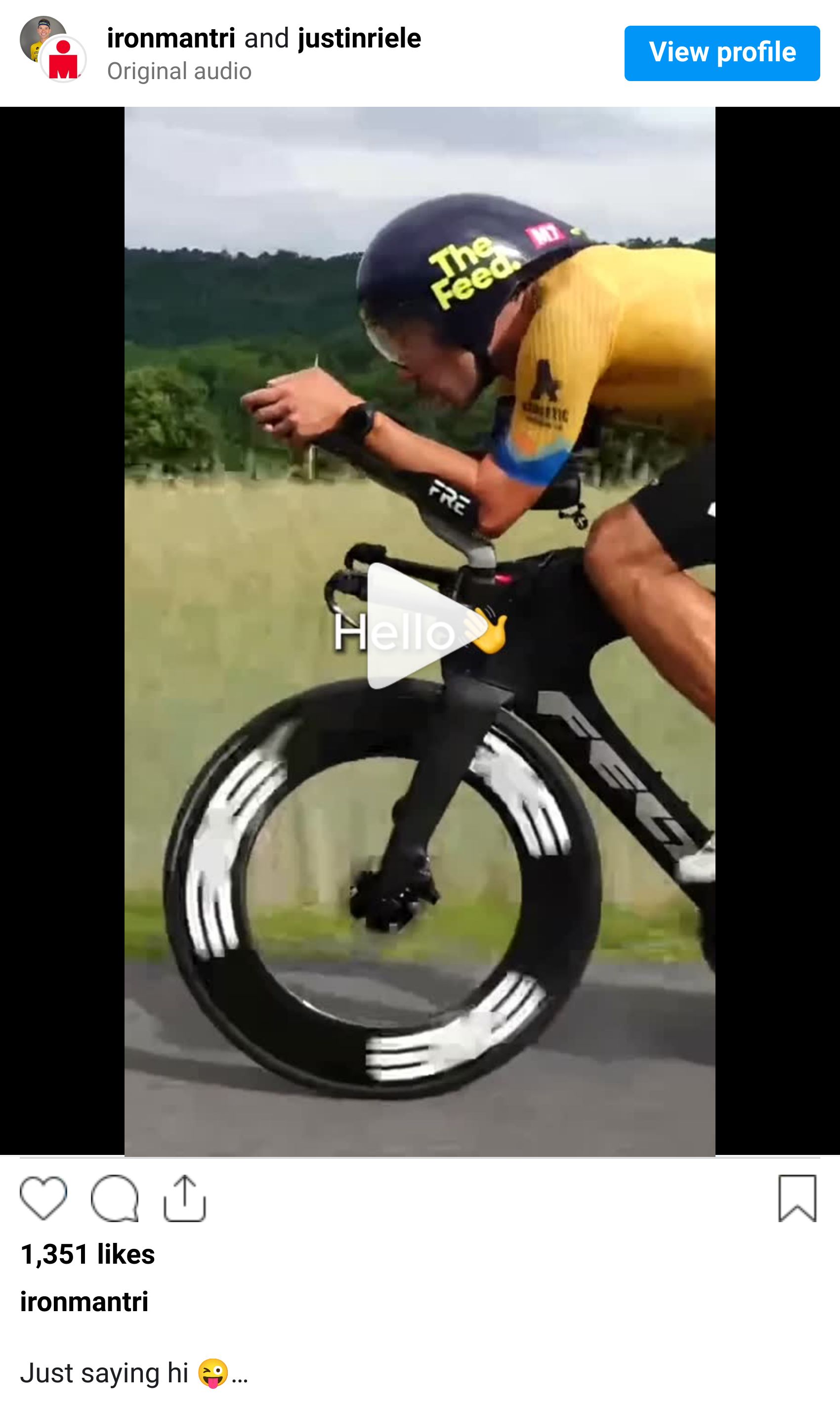
Justin Riele showed how delighted he is to be back in action with a cheeky waggle of the tongue to the cameras during Sunday’s IRONMAN 70.3 Happy Valley.
The American is only 11 weeks post-surgery after his horror fall at Oceanside earlier this season resulted in him being rushed to the hospital for a shoulder operation.
While he accepts swimming is still tough due to his ongoing recovery, he was pleased with the bike and his run… and with his ninth-placed finish overall.
Everyone at the Daily Split is delighted to see him back competing and, by the looks of this video, clearly enjoying himself again. 😜 💪 👏
⏱️ Coaches corner: How can you prevent swimmer’s shoulder?
Swimmer’s shoulder is not a single injury. Instead, it is a broad term used to describe irritation, inflammation, or overuse problems affecting the shoulder joint and surrounding tissues due to repetitive swimming. Understanding what causes swimmer’s shoulder and how to prevent it can help triathletes stay healthy and maintain consistent training throughout the season.
WHAT IS IT? Swimmer’s shoulder generally refers to pain that develops because of repetitive overhead arm movements. The condition often involves rotator cuff irritation, tendon inflammation, shoulder impingement, muscle imbalance and joint instability.
WHY ARE TRIATHLETES AT RISK? Triathletes need to balance swimming, cycling, running and strength training at the same time. While swimmers may spend years developing efficient stroke mechanics, many triathletes enter the sport from running or cycling backgrounds.
As a result, they may lack swim-specific strength, have technical flaws and look to increase swim volume rapidly, which, when combined, increases injury risk.
POOR SWIM TECHNIQUE: Technique is one of the most common contributors to swimmer’s shoulder and can put added stress on the joints. Common errors include:
Crossing the midline.
Poor hand entry.
Dropped elbows.
Excessive shoulder rotation.
Pulling inefficiently through the water.
COMMON SIGNS OF SWIMMER’S SHOULDER: Symptoms may include pain during swimming or stiffness in the joint. You may experience weakness, a clicking sensation, reduced range of motion and even pain when you raise your arm overhead.
Early attention often leads to better outcomes.

Poor technique is one of the many ways athletes can pick up swimmer’s shoulder.
TIPS TO PREVENT IT: Keeping fit and ensuring your shoulders are not impacted by over-stress is essential if you are to train and compete in triathlon. Here are some of the key tips to remember:
Don’t increase volume too quickly: Many triathletes become enthusiastic after entering a training block and suddenly increase their swim frequency, duration and distance. The shoulder may not be prepared for this sudden workload.
Beware weak rotator cuff muscles: The rotator cuff plays an important role in stabilising the shoulder. Weakness in these muscles may contribute to poor shoulder control, excessive movement and increased tissue stress. Strengthening the rotator cuff can improve your stability and efficiency.
Poor mobility is a concern: Limited mobility can alter swimming mechanics significantly, and restrictions in movement may force athletes into compensatory movement patterns. These compensations often increase stress on the shoulder joint.
Avoid excessive use of paddles: Swimming paddles can be useful training tools; however, they also increase resistance and shoulder load. Using paddles excessively or introducing them too quickly may contribute to shoulder irritation. Athletes should ensure that shoulder strength and technique are adequate before performing large amounts of paddle work.
Recovery is crucial: Recovery is where adaptation occurs. Without adequate recovery, small amounts of tissue irritation can accumulate over time. Common recovery mistakes include poor sleep, excessive training frequency, inadequate nutrition and ignoring soreness.
Avoid muscle imbalances: Many triathletes spend significant time cycling, sitting and working at desks, which may lead to rounded shoulders, tight chest muscles and weak upper-back muscles. Over time, these imbalances can affect swimming mechanics. Strengthening the upper back and improving posture often helps reduce unnecessary shoulder stress.
Do not ignore early symptoms: Swimmer’s shoulder rarely appears suddenly.
Common warning signs include mild soreness, stiffness, reduced range of motion and discomfort during certain parts of the stroke. Many athletes continue training through these symptoms. Unfortunately, this often allows minor irritation to become a more significant injury.
Inadequate strength: Strength training helps improve your shoulder stability and your posture, while helping to improve your force control. Triathletes who completely avoid strength work may miss an opportunity to improve shoulder resilience. Useful exercises often target the rotator cuff muscles, upper back, core and scapular stabilisers.
Poor posture: Shoulder health is influenced by more than swimming alone. Long periods spent at desks, looking at screens and driving may encourage poor posture. This can affect shoulder mechanics during training. Small daily habits often influence injury risk more than athletes realise.
💪 Outside edge of endurance
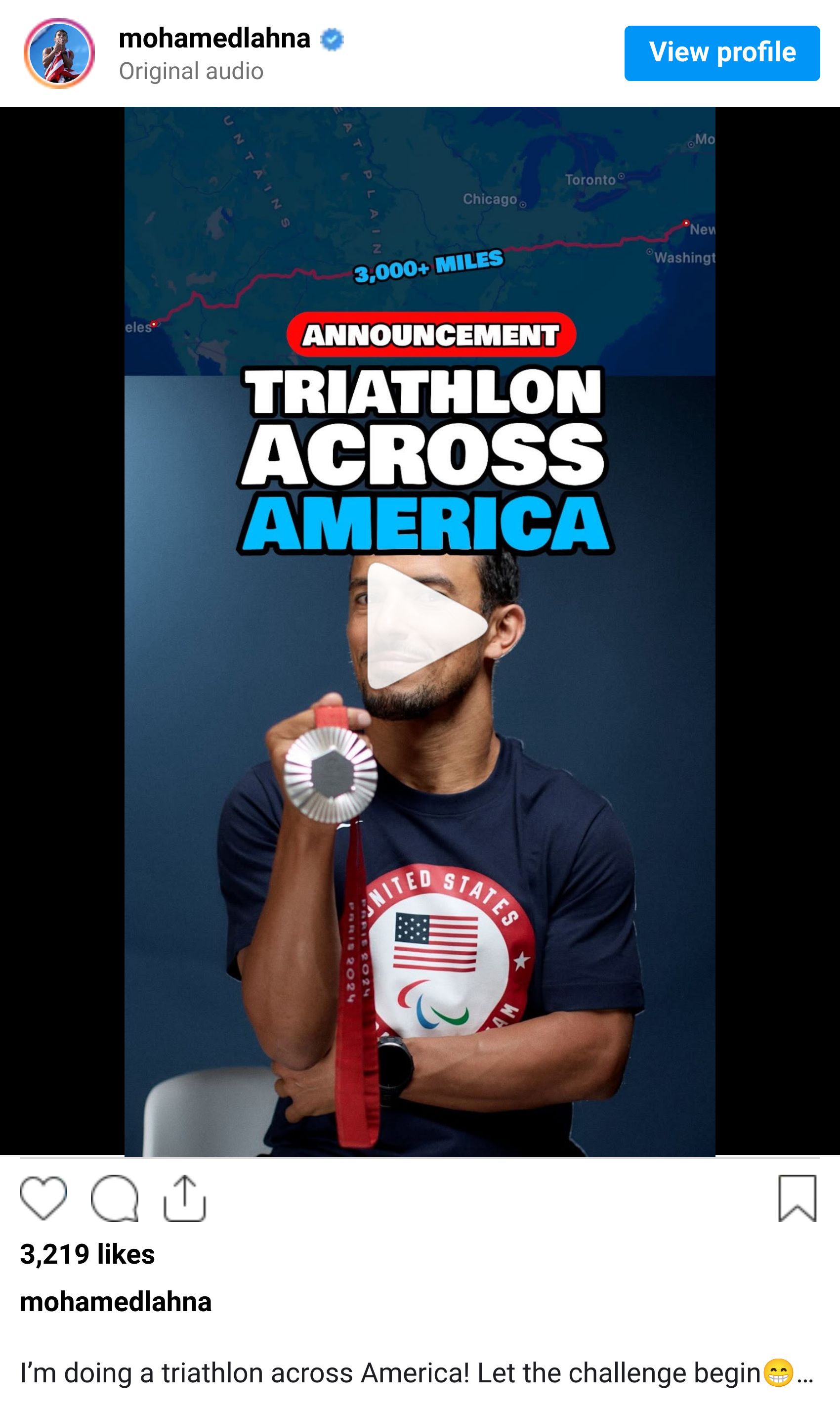
Paralympic silver and bronze medallist Mohamed Lahna started his historic Triathlon Across America at the weekend as he completed a 28.5-mile swim around Manhattan Island in 7 hours, 44 minutes and 58 seconds.
The swim started at 18:00 on Saturday and finished in the early hours of Sunday morning as New York City was celebrating the Knicks winning the NBA finals.
The swim was carried out as part of the official 20 Bridges swims, organised each year by New York Open Water, and was just the start of an extraordinary endurance journey which will span more than 3,300 miles across the United States while aiming to raise $250,000 for charity.
Mohamed transitioned to the bike stage of his triathlon yesterday, where he will ride from Manhattan’s Battery Park to Las Vegas, traversing 16 states with more than 100,000 feet of elevation gain, across approximately 3,000 miles.
On his epic swim, Mohamed said: “We did it! Overall, a great, great experience and a very unique swim and challenge. The first three hours were challenging due to the currents and water choppiness. I was sick a few times in the water. After that, things settled down, and the team and I just kept grinding the distance down.”
Lahna is aiming to raise $250,000 for Save the Children and Challenged Athletes Foundation, two organisations which have played transformative roles in his life and continue to empower individuals and communities around the world.
Supporters can contribute to the campaign and follow the journey HERE.
What did you think of today's email?
That’s your Split. Until Next Time
Together, we go the distance. — @247_endurance 🏃♂️🚴♀️🏊♂️