


👋 Welcome back
Morning endurance fans…
Think triathlon’s ready to put its feet up? Think again.
Kona may have delivered its verdicts, but two world titles are still up for grabs – and the T100 is about to take centre stage. With Dubai and Saudi Arabia providing the final stepping stones to December’s Qatar showdown, there is still time to land a blow, shake up the standings and turn a good season into a golden one.
In this edition of the Daily Split, we’re getting stuck into the title run-in: can anyone loosen Hayden Wilde’s grip on the men’s crown, and who will emerge from a fiercely contested women’s battle?
We’ll break down the contenders, explain the points that could make all the difference and look ahead to another big shake-up in 2027. Three races, two world titles, one last push – nobody’s clocking off just yet.
Here’s what we have lined up for you today…
LATEST: The endurance news headlines
REPORT: Challenge Barcelona & Forte Village Sardinia
ANALYSIS: Who will win the T100 championships?
TIPS: Should you be listening to music when running?
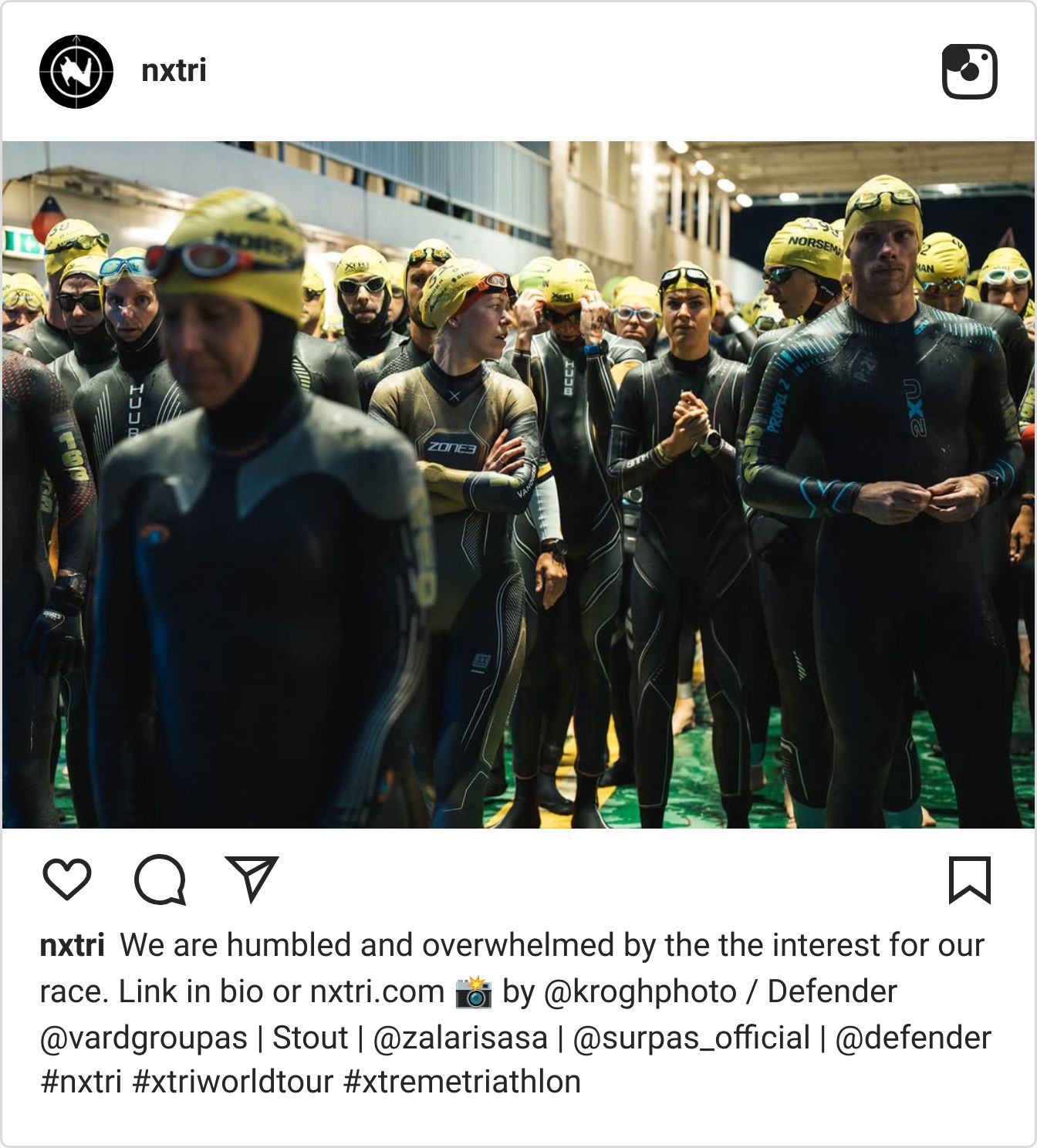
DEMAND: More than 16,000 people apply for 250 Norseman slots.
In partnership with

This week’s Daily Split is brought to you in association with Sedona – a blood test built for people who train.
Your HRV dipped and your sleep score says 71. Neither tells you what the miles are doing underneath. Sedona is a blood test for people who train: one at-home blood draw reads 1,000+ molecular signals and sets your baseline. Test again as the build goes on and see which signals tied to inflammation and muscle recovery went up, held, or came back down. The watch shows the surface. Sedona reads what sits under it. Standard blood work reads a few dozen results. Sedona reads 1,000+.

Sedona is invite-only. Founding members lock in early access and a say in what gets built next. Change your mind before your kit ships and you pay nothing. Request an invite
🏃🏼 Quick splits

Taylor Knibb celebrates her IRONMAN World Championship victory in Kona. [Ironman]
Courtney Dauwalter: Ultrarunning GOAT set for an IRONMAN
Taylor Knibb: The world's best female endurance athlete says Cam Wurf
Julie Derron: From Kona podium to T100 title tilt
Henri Schoeman: Reveals 10 years of online abuse after Cozumel win
USA crowned champions: Belgian pair run 516 miles each but America top the Backyard Ultra World Team Championships
🏁 Race news

A stacked field of athletes will be at the WTCS Abu Dhabi. [World Triathlon]
WTCS Abu Dhabi
Hayden Wilde and Matthew Hauser headline a star-studded men’s start list for next month’s rearranged WTCS Abu Dhabi.
And there is plenty of quality in the women’s field too, with Lisa Tertsch and Kate Waugh among the leading names – although France’s world and Olympic champion Cassandre Beaugrand and Britain's Beth Potter are notable absentees.
It's sprint-distance racing on Friday, November 13, for both the men and women, with Hudayriyat Island again hosting the action.
And then on Saturday the focus is on the Mixed Relay. Read More Here
Challenge Family
Challenge Barcelona - New Zealand’s Kyle Smith rode clear early and controlled the race for a dominant 3:30:39 victory — his first win since 2024’s The Championship — finishing more than four minutes ahead of Sven Thalmann. In the women’s race, Denmark’s Anastacia Damm Nielsen claimed her first professional title in a five-second thriller over Marta Bernardi (4:00:59–4:01:04), recovering from a late dropped chain on the bike. Read More Here
Challenge Forte Village Sardinia - France’s Pierre Dupuy led from the swim and held his advantage through the run to take his third win of the month in 3:37:56, ahead of Joran Driesen. Britain’s Nikki Bartlett held off Daniela Kleiser to win the women’s race in 4:09:50. Read More Here
🚴♂️ News from the saddle
Tadej Pogačar has laid out his 2027 schedule, with his choices being influenced both by events this year and congestion in the 2028 cycling calendar, with the Olympics looming.
Unsurprisingly, the UAE Team Emirates XRG star has his sights set firmly on a victory at the Vuelta a España, with a win at the Spanish race being the only Grand Tour still missing from his impressive palmarès.
Read the full story at Cycling Weekly HERE.

Last year’s champions Kate Waugh and Hayden Wilde with World Triathlon president Antonio Arimany and PTO CEO Sam Renouf. [World Triathlon]
🔍 The BIG issue: T100 Triathlon World Tour analysis and preview
Kona may have had its moment, and the IRONMAN Pro Series has run its course; Supertri had their day in the Jersey sun, and the WTCS enjoyed a drama-fuelled finish in Pontevedra… But the triathlon season is far from over, as all eyes now turn to a potentially titanic T100 Tour finale.
With two world champions still to crown, the road to Qatar has a couple of potentially awkward turns left to navigate as the athletes first head to Dubai and Saudi Arabia before lining up for the big showdown in Lusail.
Three meetings remain as we look to settle all the arguments and find out who will follow Hayden Wilde and Kate Waugh in taking the top honours come December. Here is all you need to know about the T100 run-in.

The women will head to Dubai next on November 14. [PTO]
Where are we heading?
DATE | RACE VENUE | PRO FIELD |
|---|---|---|
NOVEMBER 14 NOVEMBER 28 | T100 DUBAI T100 SAUDI ARABIA | WOMEN MEN |
DECEMBER 11 DECEMBER 12 | T100 FINALS QATAR T100 FINALS QATAR | WOMEN MEN |
How it all works
Each regular T100 race features 20 professional athletes, with men and women competing separately. Every finishing position earns points towards the Race to Qatar standings: 35 for a win, 29 for second and 26 for third, followed by 23 for fourth and 20 for fifth. The points then decrease down the field, with one awarded for 20th.
Each athlete’s best three results from the four regular-season races count towards their championship total before their score from the Qatar final is added. That means racing all four regular rounds gives athletes an opportunity to replace their lowest score. The top 24 in the standings are invited to the finale.
Qatar raises the stakes, with 55 points for victory, 46 for second, 41 for third, 37 for fourth and 33 for fifth. The athlete with the highest combined total is crowned world champion – so winning the final does not automatically secure the title. If athletes finish level on points, their placing in Qatar decides who comes out on top.

Reigning champion Hayden Wilde enjoys a healthy lead heading into the final two races of the men’s campaign in Saudi Arabia and Qatar. [PTO]
Can anyone stop Hayden Wilde?
Hayden Wilde is the man everyone is chasing – and there is already plenty of daylight between him and the rest after the reigning champion's impressive T100 campaign.
The Kiwi leads the men’s standings with 96 points from three races, with Jake Birtwhistle second on 59(3) and Germany’s Lasse Nygaard Priester third with 49(2). Britain’s Samuel Dickinson is fourth on 47(2), ahead of Rico Bogen on 43(2).
For the pursuers, Saudi Arabia offers a chance to make the conversation a little less comfortable for the leader. A strong result could improve their own position and maybe serve to pile a little added pressure on the champion’s shoulders.
IRONMAN 70.3 world Champion Wilde is keen to retain his T100 crown, and although his participation in Saudi Arabia remains unconfirmed, his entry for WTCS Abu Dhabi on Friday, November 13 will take him to the Middle East.
With three regular-season results already banked and a healthy lead in the standings, he could then target Saudi Arabia in a bid to replace his third place in San Francisco with another victory – giving him a maximum of 105 points heading into Qatar.
MEN’S STANDINGS | ||
|---|---|---|
1: HAYDEN WILDE 2: JAKE BIRTWHISTLE 3: LASSE NYGAARD PRIESTER 4: SAM DICKINSON 5: RICO BOGEN 6: GREGOR PAYET 7: MENNO KOOLHAAS 8: KYLE SMITH 9: KURT MCDONALD 10: HENRY RAPPO | (NEW ZEALAND) (AUSTRALIA) (GERMANY) (GREAT BRITAIN) (GERMANY) (HUNGARY) (THE NETHERLANDS) (NEW ZEALAND) (AUSTRALIA) (ESTONIA) | 96 (from 3 races) 59 (from 3 races) 49 (from 2 races) 47 (from 2 races) 43 (from 2 races) 40 (from 3 races) 37 (from 2 races) 34 (from 2 races) 32 (from 3 races) 30 (from 3 races) |
(Table after 3 races) |

Swiss athlete, Julie Derron, holds a slender lead ahead of the next race in Dubai. [PTO]
Will Dubai separate the women?
If the men have a clear front-runner, the women have rather less breathing room. Julie Derron leads on 64 points from two races, just two ahead of fellow Swiss athlete Imogen Simmonds on 62(3), with Georgia Taylor-Brown another point back on 61(2). Three athletes, three points: that is an inviting starting point for a crucial closing Middle East stretch.
Dubai could give somebody a valuable advantage. It could equally leave the leading contenders looking over their shoulders all the way to Qatar.
Taylor-Brown has hit some excellent form in recent months and will be keen to follow in the footsteps of partner Vincent Luis, who set the bar in their household when winning the IRONMAN World Championship earlier this month.
Challenge Roth winner and 70.3 Worlds podium placer Alanis Siffert, fourth on 47 points from three races, adds another Swiss name to the upper reaches of the table. The immediate question is which contenders will line up in Dubai – and who can turn that opportunity into momentum?
WOMEN’S STANDINGS | ||
|---|---|---|
1: JULIE DERRON 2: IMOGEN SIMMONDS 3: GEORGIA TAYLOR-BROWN 4: ALANIS SIFFERT 5: BIANCA BOGEN 6: TAYLOR SPIVEY 7: NICOLE VAN DER KAAY 8: TAYLOR KNIBB 9: SARA PEREZ SALA 10: KATE WAUGH | (SWITZERLAND) (SWITZERLAND) (GREAT BRITAIN) (SWITZERLAND) (GERMANY) (UNITED STATES) (NEW ZEALAND) (UNITED STATES) (SPAIN) (GREAT BRITAIN) | 64 (from 2 races) 62 (from 3 races) 61 (from 2 races) 47 (from 3 races) 42 (from 3 races) 40 (from 2 races) 39 (from 3 races) 35 (from 1 race) 34 (from 3 races) 29 (from 1 race) |
(Table after 3 races) |
Could a big-name player gatecrash the final?
With very little else to race for in the dying embers of the triathlon season, it is very possible that both title races could be impacted by some ‘outsider’ influence – athletes who are currently some way adrift of the leaders but who might fancy a run-out for on-the-day rewards.
Double IRONMAN Champion Taylor Knibb has 35 points in the women’s standings, having won her only race of the season in this format on the Gold Coast, while Kate Waugh – having struggled with injury for most of the early part of the season – has 29, also from one race. On the men’s side, Jelle Geens has 29 from one race, and Mika Noodt has 26.
Should they decide to race and contenders tumble down the leaderboard as a result of their performance, then they could have a major influence on who scores what around them – as well as make a late bid for honours themselves.
A win in both the final regular-season race and then at Qatar would still see someone pick up a maximum of 88 points… more than enough to muscle their way into the end-of-season overall picture.
BEST T100 RECORDS | ||
|---|---|---|
HAYDEN WILDE (NZL) TAYLOR KNIBB (USA) MARTEN V RIEL (BEL) KATE WAUGH (GBR) JULIE DERRON (SUI) | 8 WINS (10 STARTS) 6 WINS (8 STARTS) 3 WINS (9 STARTS) 3 WINS (8 STARTS) 3 WINS (11 STARTS) | 80% 75% 33.3% 37.5% 27.3% |
2024/2025/2026 |

PTO CEO Sam Renouf, left, and Antonio Arimany, president of World Triathlon, right, launched the new-look T50 and T100 calendar with the help of athletes Matt Hauser and Taylor Knibb in London earlier this summer. [World Triathlon]
Can we talk about next year yet?
Go on then – because 2027 promises rather more than a fresh set of race dates. The PTO and World Triathlon are bringing their flagship circuits together under the Triathlon World Tour banner, with the WTCS becoming the T50 World Championship Tour alongside the T100 World Championship Tour. Separate titles, one overarching structure, with the aim of making the sport easier to follow and giving its stars a bigger platform.
The initial T50 calendar includes London, Rome and Los Angeles, with Hamburg hosting its World Championship Finals in September. T100, meanwhile, is set to start on Australia’s Gold Coast in March and finish in Qatar in December, with Singapore, San Francisco, Vancouver and Marbella among the stops along the way.
Beneath those headline tours, a Challenger tier will provide a pathway towards the top level, incorporating World Triathlon Cups and selected Challenge Family events following the PTO’s acquisition of the latter. The ambition is substantial: a more connected sport, from emerging talent to world champions. Whether that translates into a clearer calendar and more compelling rivalries will be one of next season’s biggest stories. First, though, there is the small matter of finishing this one.
👩💻 Trending in triathlon
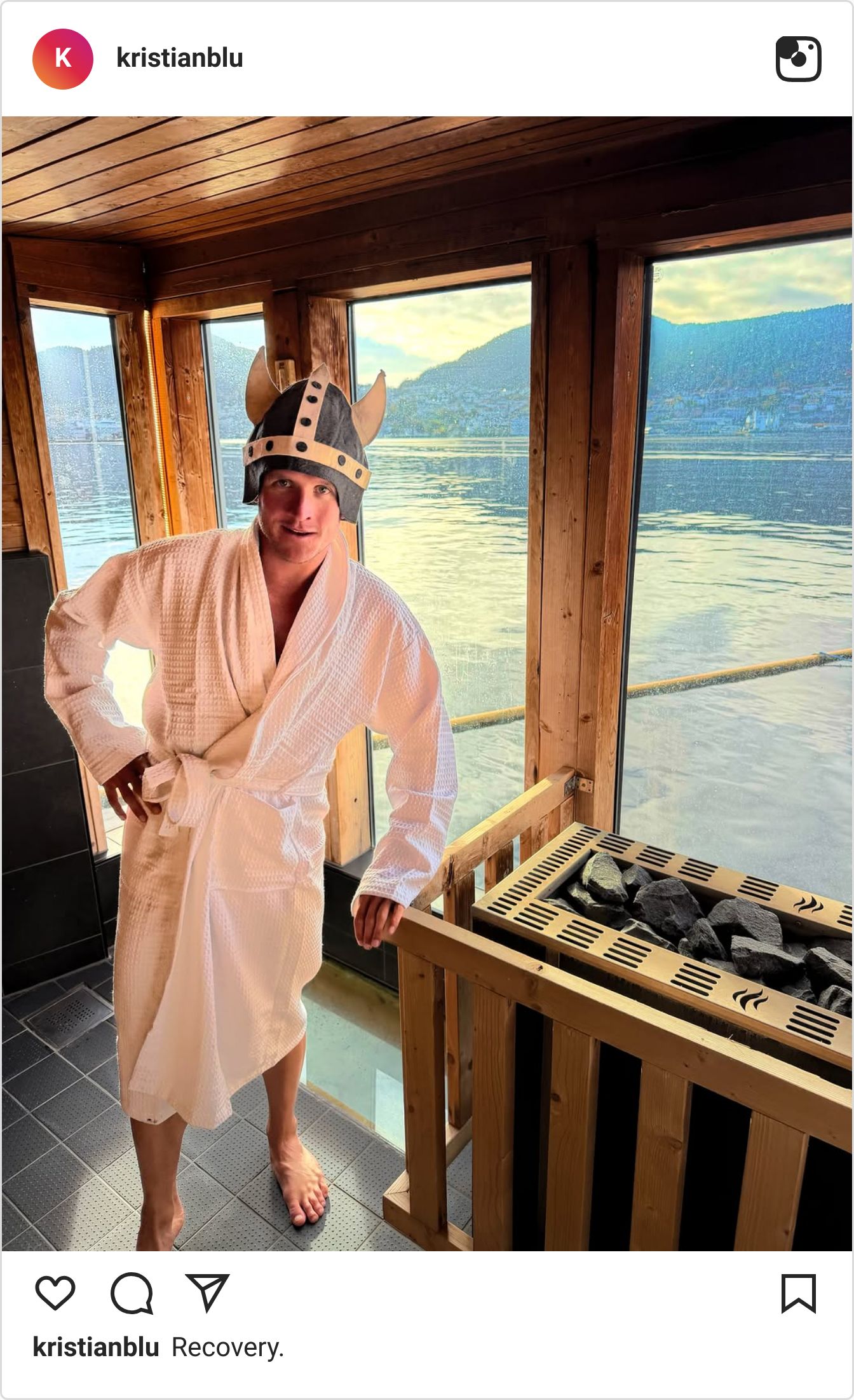
What better way to recover from the disappointment of Kona than heading off for a nice spa retreat in your home country of Norway? That’s clearly what Kristian Blummenfelt decided to do after his eighth place on the Big Island a couple of weeks ago… and we hope he emerged fresh and revitalised for the challenges which lay ahead in 2027.
Loving the robe, Big Blu, but not sure about the hat…
⏱️ Coaches corner: Why silence is golden when running a triathlon
Most of us have a favourite jam that we like to plug into when working out – but did you know that listening to music while running could actually be hampering your triathlon training?
OK, so we are not suggesting that you stop using music completely, but experts do suggest that regularly running without it can help athletes to develop useful racing and training skills. Here is all you need to know.
LISTEN TO YOUR BREATHING: Breathing provides immediate information about running intensity. Without music, it becomes easier to notice whether your breathing is:
Relaxed.
Controlled.
Becoming progressively harder.
Out of proportion to the planned effort.
This is particularly useful during easy runs. If an easy session suddenly requires heavy breathing, you may be running harder than intended.
YOU BECOME MORE AWARE OF PACE: Music can influence rhythm and perceived effort. A fast song may encourage you to increase cadence or pace without consciously deciding to do so. Without music, you can pay more attention to:
Early pace.
Breathing.
Heart rate.
Perceived effort.
Changes in fatigue.
IT HELPS YOU MONITOR RUNNING FORM: Running technique changes as fatigue increases. Without audio competing for your attention, you may notice:
Shoulders becoming tense.
Stride becoming excessively long.
Posture deteriorating.
Arms crossing the body.
Foot contact becoming louder.
No need to analyze every step. Occasional technique checks are enough.

IMPROVE RACE SPECIFICITY: Triathlon training should prepare you for the conditions you will experience during competition. Depending on the event and its rules, headphones may be restricted or prohibited. Even where audio devices are permitted in some training environments, relying on them for every run can make racing without them feel unfamiliar. Music free training teaches you to concentrate on:
Your pace.
Competitors.
Course markings.
Aid stations.
Officials.
Your physical condition.
Race preparation becomes more complete when you are comfortable running with your own thoughts and environmental cues.
JUDGE FATIGUE MORE CLEARLY: Triathletes often begin the run with fatigue already accumulated from swimming and cycling. This makes internal feedback especially important.
During a brick session, running without music allows you to assess:
How heavy your legs feel.
Whether your breathing settles.
Whether bike effort was excessive.
Whether your planned run pace is realistic.
Whether fatigue is changing your technique.
ENVIRONMENTAL AWARENESS IMPROVES: Being able to hear your surroundings can be important when running near traffic, cyclists, other runners, dogs, trail users and race officials.
Headphones can reduce awareness, particularly when volume is high or both ears are covered. This does not mean every headphone run is unsafe. The environment should determine whether audio is appropriate. On busy roads or unfamiliar routes, being able to hear what is happening around you may be more valuable than listening to music.
YOU LEARN TO RUN BY FEEL: Watches provide useful data, but experienced pacing also requires understanding how different intensities feel. Without music, pay attention to:
Breathing rhythm.
Leg fatigue.
Effort.
Posture.
Ability to speak.
Over time, these cues can help you recognize whether you are running easy, moderately, or hard without constantly checking a screen.
REDUCE DEPENDENCE ON MOTIVATION: Music can provide a useful motivational boost. The problem comes when you feel unable to train without it. Some sessions should teach you to continue running when there is no external entertainment. This can develop familiarity with:
Boredom.
Long quiet periods.
Difficult patches.
Maintaining concentration.
Staying patient.
Long distance triathlon often includes periods where performance depends on staying focused rather than feeling constantly motivated.

AVOID MUSIC IN BRICK SESSIONS: Brick sessions are especially useful for music free running because they simulate the transition into the final discipline. The first few minutes can feel awkward as your body changes from cycling to running. Listen to your breathing and monitor effort rather than immediately chasing pace.
BE AWARE OF RACE RULES: Never assume headphones are permitted because you use them during training. Check the rules for your specific event. Triathlon regulations can differ by event and governing body, and athletes need to remain able to hear instructions from officials and other important course information. Practicing without headphones removes one unnecessary adjustment if your event does not permit them.
WHEN CAN MUSIC BE USEFUL? Music can still have a place in training. You do not need to choose between always using music and never using it. A mixed approach allows you to enjoy music while still developing the ability to run confidently without it. You may enjoy it during:
Easy treadmill runs.
Familiar safe routes.
Recovery runs.
Long steady sessions.
Low risk indoor training.
💪 Outside edge of endurance
The Norseman – widely regarded as the toughest triathlon in the world – received entry applications from 16,033 athletes in its ballot for 2027, twice what it received for this year’s race.
In total, the number of ballot entrants increased by 102 per cent from 7,956 for the 2026 race. Athletes from 110 countries entered this year’s ballot, compared with 100 last year – those numbers include 7,176 Norwegians, while the largest international markets are the UK, with 1,740 entrants, followed by France with 1,074, the US with 1,045 and Germany with 785.
Norseman is also attracting younger athletes and significantly more women: the median age has fallen from 38 to 34, while the number of female applicants almost tripled to 1,907.
Those lucky enough to get a place for the August 7 event were informed via the race’s official YouTube channel last week… and there were plennty of disappointed people with numbers limited to around 250.
Race director Fredrik Mandt, said: “The level of interest is both exciting and challenging. We would love to say yes to everyone, but unfortunately many were disappointed. We have great respect for the commitment behind every entry, and we understand the disappointment of those who do not secure a place.
“Norseman will remain a small and highly personal race. The enormous interest does not change what Norseman is ultimately about: ordinary people preparing to accomplish something extraordinary.”
What did you think of today's email?
That’s your Split. Until Next Time
Together, we go the distance. — @247_endurance 🏃♂️🚴♀️🏊♂️