


In partnership with

👋 Welcome back
Morning, endurance fans…
Pontevedra certainly knew how to finish a season. Cassandre Beaugrand was in a class of her own as she reclaimed the women’s world title, while the men gave us a finish worthy of a Grand Final: Matt Hauser took the race win in a sprint, but Vasco Vilaça left Spain with the world crown.
But our recovery time is short, as Kona is just around the corner, and before we turn to who might make history this year, we’ve been arguing over who has already done it: from famous crawls and fierce rivalries to breakthrough wins and record-breaking rides, we’ve picked our TEN most iconic Kona moments. Let us know which one gets your vote.
Here’s what we have lined up for you today…
LATEST: The endurance news headlines
REPORTS: The WTCS Grand Final review
ANALYSIS: The TEN iconic Kona moments
TIPS: Do you know your triathlon etiquette?
🏃🏼 Quick splits

Casper Stornes will not defend his IRONMAN title at Kona next month. [IRONMAN]
🤕 INJURED: Reigning World Champion Casper Stornes will NOT defend his title on Kona in two weeks’ time after crashing on a training ride. Read HERE.
🥇 LA28: The triathlon courses for the 2028 Olympics in Los Angeles have been confirmed, with Venice Beach set to play a major role. Read HERE.
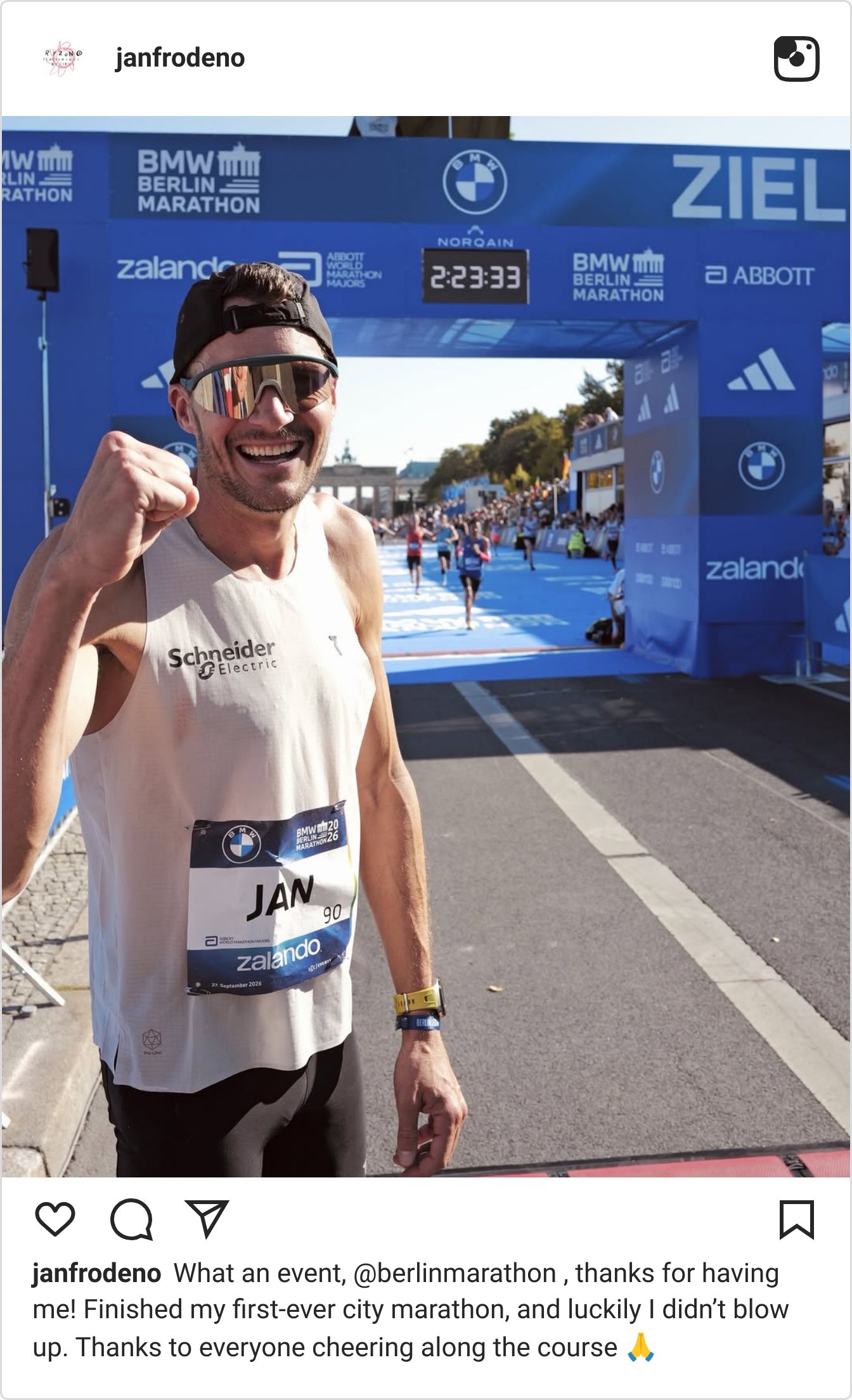
🎽 LEGEND: Jan Frodeno completed the Berlin Marathon on Sunday in a time of 2:23:33 as the German beat his own pre-race target. Read HERE.
🇳🇴 CHALLENGE: Norwegian duo Kristian Blummenfelt and Gustav Iden will end their seasons in China at Challenge Xiamen in November. Read HERE.
The World's Best Choose IM8. Here's Why.

David Beckham. Giannis Antetokounmpo. Aryna Sabalenka. Inter Miami CF. The world's best choose IM8 because performance starts with what you do every day.
Daily Ultimate Essentials Pro delivers a complete, clinically formulated system for energy, digestion, sleep, focus and healthy aging. In a 12-week randomized controlled trial, 95% felt a boost in daily energy, 85% felt less bloated with better digestion, 80% reported better sleep and 75% reported sharper focus and mental clarity.
IM8 is NSF Certified for Sport, tested against 280+ banned substances and recommended by 300+ clinicians. With 50 million servings sold across 46 countries, discover the IM8 routine trusted at the highest levels of sport—and built for everyday life. See the clinical results.
🏁 Race news

Matt Hauser and Vasco Vilaça race for the line in Pontevedra. [World Triathlon]
WTCS Grand Final – Pontevedra
ELITE MEN: Matt Hauser and Vasco Vilaça crossed the line in the same time after a thrilling finish to the WTCS Grand Final in Pontevedra on Sunday – and both had huge amounts to take from the race and the season as a whole.
Hauser won the sprint and the race in 1:39:31; Vilaça took second and secured his first world title. Olympic champion Alex Yee (GBR) produced a remarkable run to take third, just four seconds behind the winner, having begun the 10km leg 50 seconds adrift.
Ricardo Batista (POR) completed a tightly packed top four, finishing five seconds behind Hauser and securing third place in the series overall behind Vilaça and Hauser.
Vilaça said: “What got me through this race was just staying in the moment. I’m mostly happy to be able to handle the pressure. This is what the Olympics will be all about. This is what the big races are all about.”
ELITE MEN’S RESULTS - PONTEVEDRA
Olympic Distance (Swim: 1.5km - Bike: 40km - Run: 10km)
🥇 Matt Hauser (AUS) 16:53 - 51:30 - 29:32 = 1:39:31
🥈 Vasco Vilaça (POR) 17:04 - 51:25 - 29:21 = 1:39:31
🥉 Alex Yee (GBR) 17:35 - 51:37 - 29:46 = 1:39:35
ELITE MEN’S RESULTS - WTCS FINAL STANDINGS
🥇 Vasco Vilaça (POR) - 5,006.25 (5 events)
🥈 Matt Hauser (AUS) - 4,745.76 (5)
🥉 Ricardo Batista (POR) - 4,071.45 (5)
4 Dorian Coninx (FRA) - 3,865.28 (5)
5 Migiel Hidalgo (BRA) - 3,152.18 (5)

An emotional Cassandre Beaugrand crosses the line in Pontevedra. [World Triathlon]
ELITE WOMEN: France’s Cassandre Beaugrand reclaimed the women’s world triathlon title with a commanding victory at the WTCS Grand Final in Pontevedra, making it five wins from five WTCS starts in 2026.
The Olympic champion had already won all four of her regular-season Series races, giving her the maximum 4,000 points heading into the final. She began the 10km run in an eight-woman lead group, broke clear almost immediately and crossed the line in 1:50:52.
Georgia Taylor-Brown took second, 1:05 behind, while fellow Brits Kate Waugh and Beth Potter finished third (+1:31) and fourth (+1:53), respectively – which was enough to see Potter finish second overall.
Beaugrand said: “I wanted to give myself the chance to do my best and win the title and win the race. I think it’s even better when you can win the race on the day.”
ELITE WOMEN’S RESULTS - PONTEVEDRA
Olympic Distance (Swim: 1.5km - Bike: 40km - Run: 10km)
🥇 Cassandre Beaugrand (FRA) 19:46 - 56:54 - 32:35 = 1:50:52
🥈 Georgia Taylor-Brown (GBR) 19:52 - 56:48 - 33:41 = 1:51:57
🥉 Kate Waugh (GBR) 19:56 - 56:43 - 34:05 = 1:52:23
ELITE WOMEN’S RESULTS - WTCS FINAL STANDINGS
🥇 Cassandre Beaugrand (FRA) - 5,250.00 (5 events)
🥈 Beth Potter (GBR) - 4,764.32 (5)
🥉 Georgia Taylor-Brown (GBR) - 4,302.08 (5)
4 Lisa Tertsch (GER) - 4,231.21 (5)
5 Leonie Periault (FRA) - 4,113.45 (5)
🚨 WTCS NEWS AND REPORTS:
Junior World Championships: click HERE.
U23 World Championships: click HERE.
World Para Triathlon Championships: click HERE.
Berlin Marathon
WOMEN’S RACE: Tigst Assefa was due to undergo surgery on Monday after suffering a tendon injury during the closing stages of her Berlin Marathon victory, according to her manager.
Gianni Demadonna told Pura Vida Sports Africa that a tendon in the Ethiopian’s right leg was “broken” and that she had travelled to Munich for an operation with renowned foot and ankle surgeon Dr Johannes Gabel.
Asked about a return to competition, Demadonna said it could take “maybe six months”.
The news explains the painful final two kilometres of Sunday’s race.
Assefa was still ten seconds inside the world-record pace at 40km, but her stride deteriorated sharply as she approached the finish. She crossed the line in 2:11:04 before collapsing and receiving medical attention.
The men’s race remained tightly packed until after 30km, when Guye Adola accelerated away. He beat fellow Ethiopian Gemechu Dida Diriba by 28 seconds, with Tanzania’s Gabriel Geay third.

Lucy Charles-Barclay finally gets her win on Kona in 2023. [IRONMAN]
🔍 The BIG issue: Kona’s TEN most iconic moments through history
Kona is now less than two weeks away, and it is safe to say that Big Island fever is already gripping the Daily Split team as we look forward to another Hawaii showdown between the world’s best IRONMAN athletes.
The championships never fail to excite, but there seems to be something extra special about this year’s races… something in the air that seems to suggest that we are indeed set for something quite special on October 10.
Having both the men’s and women’s events taking place on the same day and at the same venue is certainly one of the reasons for us being so excited… Two races mean double the fun and double the drama, after all.
Next week’s Daily Split will provide you with an in-depth analysis and preview of the races… and a guide as to who we think will win them. But in today’s edition, we have looked back over the history of Big Island racing to come up with our top ten iconic Kona moments.
Enjoy our trip down memory lane… and don’t forget to vote for your favourite moment in our poll below.

1 - JULIE MOSS CRAWLS TO THE LINE (1982): Julie Moss looked set to win until she collapsed within sight of the finishing tape. She got back up, fell again and eventually crawled across the line. Kathleen McCartney passed her in the final metres to take the women’s title; Moss finished 29 seconds behind.
Television footage carried the extraordinary finish far beyond triathlon. Moss did not win, but her determination became one of the images most closely associated with IRONMAN. We should also remember McCartney’s remarkable comeback: she was a worthy world champion that day.
2 - THE PUNTOUS TWINS DOUBLE UP (1984): Canadian Sylviane Puntous became the first non-American to win the women’s race in 1983 when she beat her twin sister Patricia to the finish line. And the sisters then followed that up by doing exactly the same a year later.
3 - MARK ALLEN BEATS DAVE SCOTT IN THE IRON WAR (1989): Dave Scott had already won six world titles, and Mark Allen had raced Kona five times without winning. What happened on October 14, 1989, not only changed the course of history but also left such a mark on the sport that the Iron War is still regarded as the epitome of triathlon battles 37 years later.
Having raced virtually side-by-side deep into the marathon, Allen finally broke clear, winning in 8:09:15, just 58 seconds ahead of his great rival. It gave Allen his first Kona victory and began a run of six titles as he finally stepped out from behind Scott’s shadow.

Mark Allen finally won at Kona as he prevailed in the Iron War of 1989. [IRONMAN]
4 - PAULA NEWBY-FRASER BREAKS NINE HOURS (1992): Paula Newby-Fraser’s 8:55:28 in 1992 made her the first woman to complete the Kona race in under nine hours. It was a course record that stood for 17 years.
The performance captures why she became known as the “Queen of Kona”. Newby-Fraser ultimately won eight world titles, still the benchmark for victories at the event.
5 - WENDY INGRAHAM AND SIAN WELCH CRAWL TO THE FINISH (1997): Fifteen years after Julie Moss’s famous crawl, Kona witnessed another extraordinary finish. Wendy Ingraham and Sian Welch were not even fighting for a podium place when they neared the finish line, battling to finish fourth.
Just metres from the line, both collapsed. As they struggled to get themselves moving again, they both started crawling towards the finish in a desperate attempt to come out on top. Ingraham just managed to cross first to take fourth; Welch followed in fifth… and the footage remains some of the most dramatic in triathlon history.
6 - CHRISSIE WELLINGTON ARRIVES IN STYLE (2007): The British athlete won on her Kona debut in 2007 with an incredible performance that gave the triathlon world a taste of what was to come. She would eventually claim four world titles and win all 13 full-distance IRONMAN races that she competed in.
7 - DANIELA RYF WINS FOUR IN A ROW, DESPITE JELLYFISH (2018): Despite being stung by a jellyfish during the swim, the great Swiss star still went on to win her fourth consecutive Kona title in a time of 8:26:18, setting new women’s course records for both the overall race and the bike leg (4:26:07).

Gustav Iden announced himself on the world stage in 2022. [IRONMAN]
8 - GUSTAV IDEN REWRITES HISTORY ON DEBUT (2022): On his Kona debut in 2022, Gustav Iden caught long-time leader Sam Laidlow during the marathon and won in a then-course record time of 7:40:24. His 2:36:15 run remains the fastest marathon split at Kona and, after compatriot Kristian Blummenfelt had won the postponed 2021 world championship in St George earlier that year, heralded the start of a Norwegian assault on the sport’s major prizes.
9 - LUCY CHARLES-BARCLAY’S LONG WAIT ENDS (2023): Lucy Charles-Barclay had finished runner-up at the world championship four times before her breakthrough in 2023. In Kona, she led from the front and finally took the title in 8:24:31, breaking Daniela Ryf’s women’s course record.
After her struggles last year, when she blew up on the run, LCB will be hoping to channel more of her 2023 vibes when she lines up on Kamakahonu Beach next month.
10 - PATRICK LANGE TAKES KONA BELOW 7:40 (2024): Two years after Iden’s landmark run, Patrick Lange went faster still. The German won his third Kona title in 7:35:53 in 2024, becoming the first man to break 7:40 on the course. Lange had already become the first man under eight hours at Kona when he won in 2018.

Patrick Lange celebrates his 2024 win. [IRONMAN]
What is the most iconic Kona moment in IRONMAN history?
- 1982 - Julie Moss's crawl.
- 1984 - The Puntous twins make history (again).
- 1989 - The Iron War.
- 1992 - Paula Newby-Fraser breaks nine hours.
- 1997 - Wendy Ingraham and Sian Welch's crawl.
- 2007 - Chrissie Wellington's debut win.
- 2018 - Daniela Ryf wins despite jellyfish sting.
- 2022 - Gustav Iden's record-breaking debut.
- 2023 - Lucy Charles-Barclay finally wins.
- 2024 - Patrick Lange sets new records.
🚴♂️ News from the saddle
UCI Road World Championships: Brandon McNulty claimed his first World Championship and the biggest win of his career in Montréal.
In an unpredictable and attritional race, the American timed his move to perfection, attacking with 33km left to race, and, despite clearly struggling to maintain power in the final stages, held on to take the rainbow jersey.
On the streets of Montréal, Demi Vollering finally succeeded in her quest to become World Champion, as she outsprinted Kasia Niewiadoma to claim the women’s elite road race title after a thrilling showdown between the two rivals on the final lap.
For more on these stories, read Cycling Weekly HERE.
👩💻 Trending in triathlon
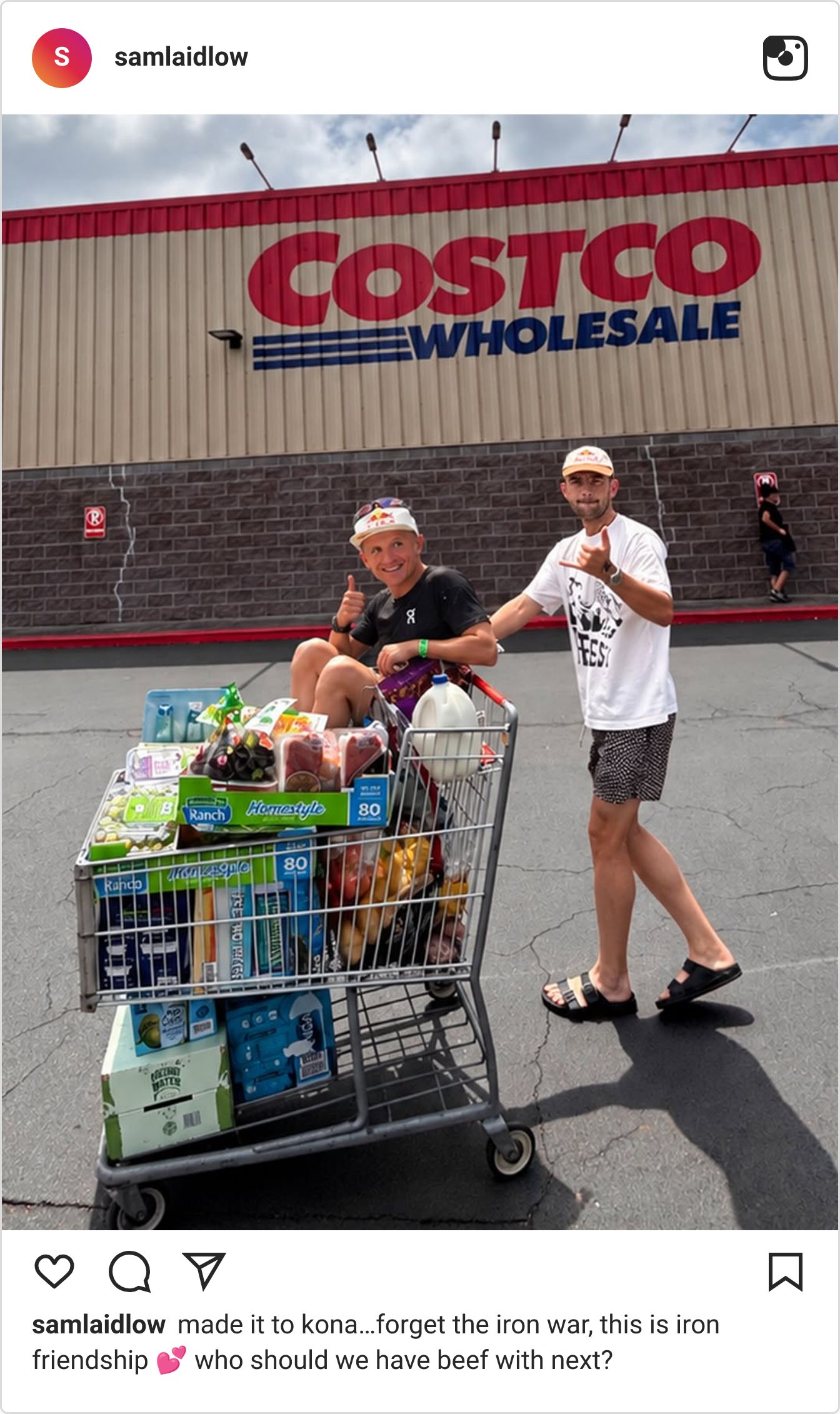
Proof that Kristian Blummenfelt and Sam Laidlow are the best of ‘frenemies’ was provided this week as the duo met up in Kona ahead of their Big Island showdown… and did some grocery shopping together.
Referencing the epic 1989 rivalry between Dave Scott and Mark Allen, Laidlow wrote: “Made it to kona… forget the iron war, this is iron friendship. 💕 Who should we have beef with next?”
Well, the beef can stay in the shopping trolley for now. There’ll be plenty at stake when they swap the supermarket aisles for the Queen K next week.
⏱️ Coaches corner: Do you know your triathlon race etiquette?
Triathlon race etiquette is about being predictable, respectful, and aware of the athletes around you. Some expectations are official race rules, while others are simple courtesies that help everyone compete safely.
Here is what you need to know…
WHY DOES GOOD ETIQUETTE MATTER? IT matters across all three disciplines. It includes avoiding unnecessary contact in the swim, following transition rules, passing safely on the bike, respecting drafting regulations, sharing aid stations, and allowing faster athletes to pass when appropriate.
Rules can vary between events and governing bodies, so the athlete guide and race briefing should always take priority. Learn the basic rules, pay attention to your surroundings, and avoid making another athlete’s race unnecessarily difficult.
KNOW THE RULES BEFORE YOU START: Race etiquette begins before the starting signal. Read the athlete guide and attend the race briefing when required. Pay particular attention to:
Swim start procedures.
Wetsuit rules.
Transition layout.
Mount and dismount lines.
Bike passing rules.
Drafting regulations.
Litter zones.
Outside assistance.
Course cutoffs.
Equipment requirements.
Do not assume rules are identical at every event.
SEED YOURSELF SENSIBLY FOR THE SWIM: Many races use rolling or wave starts based partly on expected swim ability. If athletes are asked to self-seed, choose a position that realistically reflects your expected pace. Starting far ahead of your ability can create unnecessary congestion as faster swimmers try to pass. Starting slightly farther back can provide more space for athletes who are nervous about contact.
AVOID UNNECESSARY SWIM CONTACT: Some contact is difficult to avoid during crowded open water races. Accidental touches to feet, arms, or shoulders happen. Deliberately pulling another swimmer, repeatedly swimming over them, or using aggressive contact is different. If you find yourself in a crowded area:
Adjust your line slightly.
Stay calm.
Avoid grabbing other swimmers.
Give space when practical.
Resume your rhythm.
Swimming unpredictably can create unnecessary contact. Sight regularly and try to maintain a consistent direction. If you need to change course significantly, check where other swimmers are when possible.

KEEP TIDY IN TRANSITION: Transition areas can become crowded quickly. Keep your equipment inside your designated space and avoid spreading your shoes, clothing, bottles and nutrition.
Do not deliberately move another athlete’s equipment unless race staff instruct you to do so. Know your route from swim entry to your bike and from your bike to the run exit before racing.
RIDE PREDICTABLY AND KNOW DRAFTING RULES: Predictability is one of the most important parts of cycling etiquette. Avoid sudden movements unless necessary for safety. Before changing your line, consider whether another rider may be approaching from behind.
Good etiquette is not about being excessively polite at the expense of racing. It is about competing without creating unnecessary danger.
Passing and drafting regulations vary according to event format and governing rules. Non-drafting triathlons generally require athletes to maintain prescribed separation and complete passes according to specific rules. Draft legal races operate differently. Do not simply copy what riders around you are doing. Learn the rules for your event.
DO NOT BLOCK OTHER RIDERS: Blocking can prevent faster athletes from passing safely. Ride in the required position for your race and move through the passing area according to the rules. On hills, speeds can vary significantly. Avoid sudden sideways movements when standing, changing gears, or passing another rider.
WARN OF ANY HAZARDS: Communication can improve safety, particularly when cyclists are close together. Depending on the race and situation, riders may verbally indicate:
A hazard.
A slowing rider.
Debris.
A sharp change in direction.
Their intention to pass.
Do not assume another athlete has seen the same obstacle you have. At the same time, avoid unnecessary shouting or aggressive behaviour.

BE CAREFUL AT BIKE AID STATIONS: Bike aid stations can produce large speed differences. Some riders slow significantly to collect bottles while others continue through. Before reaching the station:
Know what you need.
Move into the appropriate collection area.
Reduce speed progressively.
Avoid abrupt swerving.
Take only what you can control safely.
Follow littering rules.
If you miss a bottle, do not make a dangerous sudden turn to retrieve it. Continue safely and adjust your hydration plan when possible.
KEY RUNNING ETIQUETTE RULES: The run course is often more relaxed than the bike, but etiquette still matters. Here are a few of the key rules to remember as you set out on the final leg of your race.
Avoid running several athletes across when doing so blocks the entire course.
If you slow to walk, especially at an aid station, check that you are not abruptly stopping directly in front of another runner.
Your pace may also change significantly as fatigue develops.
Try not to slow too much at aid stations; step away from the main flow if you do need to stop.
Do not throw cups or packaging where they might cause a hazard.
Use your own nutrition or supplies officially provided by the race. Do not take bottles, gels, or equipment belonging to another athlete in transition or on course.
Do not mock, criticise, or deliberately interfere with slower competitors. If an athlete appears to be experiencing a genuine emergency, alert race staff or medical personnel when appropriate.
Always respect the officials and volunteers… And why not thank them now and again if you are able. They do appreciate it.
💪 Outside edge of endurance
Proof that legends and GOATS never lose their special talents at the weekend, as the great Jan Frodeno smashed his pre-Berlin Marathon target of 2:25 when he came home in an epic 2:23:33.
He may not be competing anymore, but it is clear that class is permanent.
What did you think of today's email?
That’s your Split. Until Next Time
Together, we go the distance. — @247_endurance 🏃♂️🚴♀️🏊♂️