

👋 Welcome back
Morning endurance fans…
Anyone watching the WTCS in Yokohama this morning could only sit back and admire the arrival of Tilda Månsson on the world stage. The Swedish starlet produced a sensational late surge to break Beth Potter and announce herself as one of the sport’s brightest new forces.
It was the perfect way to kick off yet another HUGE weekend of endurance sport. We’ve got 70.3 action in France and the US, brutal trail racing in the Basque Country, and the Giro d'Italia continuing to tear its way through Bulgaria and southern Italy as the racing – and drama – ramps up by the day.
And as if that wasn’t enough, we’re also asking you to pick your GOAT of women’s triathlon. So grab a coffee, settle in, and get ready for another packed edition of The Daily Split.
Here’s what we have lined up for you today…
LATEST: The endurance news headlines
REPORT: Hauser and Månsson win in Yokohama
PREVIEW: A packed weekend of triathlon and trail
GOATS: Who are triathlon’s greatest women athletes?
TIPS: The importance of sleep… 😴
🏃🏼 Quick splits

Lucy Charles-Barclay will be competing at IRONMAN Lanzarote later this month. [IRONMAN]
🙋♂️ QUALIFYING: A strong field of men and women athletes will line up for IRONMAN Lanzarote this month in a bid to qualify for Kona. Read HERE.
💪 COMEBACK: Justus Nieschlag will make his return to competition this weekend after spending almost nine months out with injury. Read HERE.
🏅 OLYMPICS: Sophie Evans admits the pull of the Olympics is still there, despite her focusing this season on middle-distance races. Read HERE.
🎽 RECORDS: The fastest marathoner in history, Kenyan Sabastian Sawe, will line up to defend his Berlin Marathon crown in September. Read HERE.
🫡 INSPIRING: German ultrarunner, Arda Saatçi, has completed his 600km run from Death Valley to Santa Monica Pier in just 123 hours. Read HERE.
🏁 Race news

Tilda Månsson celebrates her victory. [World Triathlon]
🇯🇵 WTCS Yokohama
Women’s race: Sweden’s Tilda Månsson caused a huge shock as she stunned Beth Potter (GBR) to take the win at WTCS Yokohama and announce herself on the triathlon world stage.
She only turned 22 on Wednesday and this was by far the biggest result of her career to date – and it came the hard way as she outsprinted former world champion Potter who had won the season’s opening WTCS race in Samarkand last month.
Jeanne Lehair (LUX), the winner in Yokohama 12 months ago, was a distant third.
“It was amazing,” said a delighted Månsson afterwards, as ABBA blasted out on the PA systems. “I’ve dreamt about something like this for so, so long. I knew I was in good shape after Samarkand (where she was 12th) and I just love a sprint finish!”
Results (swim – bike – run = overall):
🥇 Tilda Månsson (SWE) 20:10 – 55:58 – 32:47 = 1:50:13
🥈 Beth Potter (GBR) 20:09 – 56:05 – 32:45 = 1:50:15
🥉 Jeanne Lehair (LUX) 20:04 – 56:07 – 33:12 = 1:50:36
Men’s race: Reigning WTCS champion Matt Hauser started this season as he finished the last one with a dominant victory. The big Aussie put together a perfect campaign in 2025, including a win in Yokohama, as he claimed a first world title on home turf in Wollongong, and this represented his return to Olympic distance following a T100 debut in Singapore last month.
He and his fellow Aussie Brayden Mercer put the hammer down straight away in the swim as they looked to distance Olympic champion Alex Yee (GBR), racing his first WTCS event in 18 months after focusing on the marathon.
And that plan worked to perfection as Hauser and five other athletes had a near two-minute advantage over Yee and the rest starting the 10km run, and that was always going to be too much, despite a brilliant effort from the Brit to work his way up to fifth.
But it was Hauser who took the tape first, ahead of his breakaway companions Miguel Hidalgo (BRA) and Luke Willian (AUS).
Results (swim – bike – run = overall):
🥇 Matt Hauser (AUS) 17:47 – 49:45 – 30:12 = 1:38:48
🥈 Miguel Hidalgo (BRA) 17:49 – 49:43 – 30:30 = 1:39:08
🥉 Luke Willian (AUS) 17:52 – 49:42 – 30:36 = 1:39:16
🇫🇷 IRONMAN 70.3 Aix-en-Provence
This may be the fifth IRONMAN Pro Series race of 2026, but it’s the first not to have Kristian Blummenfelt on the start list! Ironically, the great Norwegian won here last year, but having started the campaign with three wins from four events, he misses this one.
The women’s defending champion, Marjolaine Pierré of France, is back, however, while former IRONMAN World Champion Laura Philipp makes her race return after a challenging start to the year.
It will be Philipp’s first race of the season after a recent spell in hospital because of stomach and back pain. Meanwhile, Pierré returns looking to retain her title following a fourth-place finish at IRONMAN 70.3 Valencia just a few weeks ago.
Germany’s Tanja Neubert was third in the 70.3 World Championship in Marbella last year, which gives her strong claims, while Imogen Simmonds (SUI) is also here and should relish the challenging bike course, as should Austria’s three-time Olympian Lisa Perterer.
In the absence of reigning champion Blummenfelt, the 2023 70.3 World Champion Rico Bogen (GER) will be wearing bib number one. Bogen, who recorded the fastest bike split at the 70.3 Worlds last year, will be joined by some of the strongest cyclists in the sport, including Kristian Høgenhaug (DEN) and Rudy Von Berg (USA).
The race takes place tomorrow, Sunday, May 17 at 07:00 CEST, which is 06:00 BST and 01:00 ET.
🇺🇸 IRONMAN 70.3 Chattanooga
Sam Long ticked off the first leg of a potential rapid win double when taking the title at IRONMAN 70.3 Gulf Coast last weekend – and now he is looking for more of the same as he lines up at 70.3 Chattanooga on Sunday, looking to repeat his win there in 2025.
The most likely man to stop him from completing his double is fellow American, Trevor Foley, who lines up having already experienced success at IRONMAN New Zealand earlier this season. Other names to look out for are Cameron Wurf (AUS) and Jackson Laundry (CAN).
Danielle Lewis (USA) leads the women’s field, but she knows she will need to be at her very best, with the likes of Sarah True (USA), Grace Thek (AUS) and Jackie Hering (USA) also lining up against her.
The Pro men start at 06:50 local ET time, which is 05:50 CDT, 03:30 PDT, 11:30 BST, and 12:30 CEST.
🥾 Zegama-Aizkorri 2026
One of the highlights of the trail running calendar takes place this weekend – the 25th edition of Zegama-Aizkorri, or simply Zegama.
The iconic mountain marathon returns – it’s 42.195km, packing in a staggering 2,736m of elevation as it crosses the Aizkorri-Aratz Natural Park and the mythical Basque ridgeline.
It’s a technical challenge as well as an endurance one, so it’s no surprise that the great Kilian Jornet has an unmatched record in the event, and he’s back this year.
It not only kicks off his season but also the 2026 Golden Trail World Series, and both defending champions – Elhousine Elazzaoui and Sara Alonso – also return in what promises to be a race for the ages.
The race will take place tomorrow, Sunday, May 17, with a joint start at 09:00 (CEST) from Zegama, in the heart of the Basque Country. That’s 08:00 BST, 03:00 Eastern and 00:00 on the West Coast.
🚴♂️ News from the saddle
Giro d'Italia favourite Jonas Vingegaard (Visma-Lease a Bike) lived up to his billing on the first summit finish of the race, attacking to ride solo to the finish on the Blockhaus climb on stage seven.
He was still some way off taking the overall lead from Alfonso Eulálio (Bahrain Victorious), but the Dane opened up significant gaps on some of his main contenders, including Egan Bernal (Netcompany-Ineos) and Derek Gee-West (Lidl-Trek).
Closest competitor Felix Gall (Decathlon CMA CGM) finished a surprisingly close 13 seconds behind, and Giulio Pellizzari and his Red Bull-Bora-hansgrohe teammate Jai Hindley around a minute back.
The opening week in Bulgaria and southern Italy has produced aggressive racing and shifting momentum, with Portugal’s Eulálio emerging as the shock early maglia rosa after infiltrating a decisive breakaway on Stage 5. He carried that advantage through a tense and crash-filled sprint stage into Naples, where slippery cobbles caused carnage near the finish and handed Italy’s Davide Ballerini a dramatic home victory.
Much of the first week, however, was defined by the waiting game among the overall contenders. Riders such as Vingegaard, Gall and Giulio Ciccone largely stayed out of trouble while opportunists built time from breakaways. That all changed, however, on Stage 7 at Blockhaus, the first true summit finish of the race.
The general classification is now finally taking shape. Eulálio still holds the pink jersey, but Vingegaard has slashed the deficit to just over three minutes and looks increasingly ominous heading into the harder mountain stages and time trials.
Catch up on all the news from the Giro d’Italia at Cycling Weekly, HERE.

Daniela Ryf is one of the greatest women to ever compete in triathlon. [IRONMAN]
🔍 The BIG issue: The women who deserve to be classed as triathlon GOATs
Having looked at the GOATs of men’s triathlon in Tuesday’s Daily Split newsletter, today our focus is firmly with the women, as we ask which female athletes deserve to be tagged as the Greatest Of All Time.
And, in truth, this was a truly difficult task as we attempted to pick our way through the many, many incredible women who have continued to break ground and set new standards in endurance competition.
If you missed Tuesday’s Daily Split and you are wondering why we are suddenly talking about GOATs, you can blame Jan Frodeno and Kristian Blummenfelt, who, while chatting on the Going Mental podcast, raised the issue of whether Alistair Brownlee deserved to be classed among the Greatest Of All Time.
Their opinion was ‘yes’, so we not only reported that fact, but we also threw in a few more names before then asking our readers to vote on a poll as to who they regard as the number one GOAT… and the results are very interesting indeed.
We will be looking through the final table of votes next week and hearing from the man who you voted in top spot, so make sure you keep reading your Daily Split to see which of Mark Allen, Dave Scott, Frodeno, Alistair Brownlee, or Blummenfelt came out on top.
And if you thought that was a tough task, then this week is going to be even more of a challenge as we look at five women who dominated their chosen distance, winning championships, Olympics and world titles almost for fun.
We have gone into more detail about all five of the athletes below, and then we will ask you to pick from Switzerland’s Daniela Ryf, Britain’s Chrissie Wellington, South Africa’s Paula Newby-Fraser, Bermuda’s Flora Duffy, and, finally, another Swiss in Natascha Badmann.
With no real dominant force in women’s triathlon currently, there is certainly a great streak of nostalgia running through our shortlist… but as we found with the poll for the men earlier this week, you endurance fans still love your old heroes.
Once again, we will be watching this vote very closely indeed.

Flora Duffy shot to fame when she won gold at the Beijing Olympics. [World Triathlon]
Who are the GOATS of women’s triathlon?
Natascha Badmann: A six-time IRONMAN World Champion between 1998 and 2005, Swiss athlete Badmann made her Kona debut in 1996 and promptly finished runner-up to Paula Newby-Fraser in what was also her first-ever race at the Iron distance. Extremely powerful on the bike, she continued to be a force to be reckoned with right through to 2016 when she retired at the age of 50.
Flora Duffy: The Bermudan shot to prominence at the 2020 Tokyo Olympics when she took gold at the Covid-delayed event. Very much a short-course specialist, Duffy has won four ITU World Championship titles and six XTERRA World Championships in a stunning career that ensures she deserves to be in the discussion when we start asking about GOATs.
Paula Newby-Fraser: Nobody has as many Kona world titles as South Africa’s Paula Newby-Fraser, the woman who picked up an incredible eight championships between 1986 and 1996. As the first woman to ever run under nine hours on the Big Island, her love affair with Hawaii makes her one of the greatest ever long-distance competitors to grace the sport.
Daniela Ryf: With five full IRONMAN and just as many 70.3 world titles to her name, Swiss superstar Daniela Ryf is one of the most decorated female athletes within the sport. Having enjoyed limited success in short-course – she finished seventh at the 2008 Olympics in Beijing and 40th at London 2012 – her career truly started to flourish once she had jumped up to middle and long-distance racing, winning four IRONMAN championships on the bounce between 2015 and 2018, before completing her set in 2021. Ryf’s 70.3 wins also came in quick succession as she won her five titles in 2014, 2015, 2017, 2018 and 2019.
Chrissie Wellington: The British athlete may not have as many world titles as Daniela Ryf, but Wellington’s legacy within the sport is nevertheless still strong, having taken Kona by storm on her debut in 2007, before then returning to repeat the feat in 2008, 2009 and 2011. Undefeated in long-distance racing, she once held the fastest ever time by a woman triathlete, having completed Challenge Roth in 8:18:13 – a record which stood for more than a decade.
Who is the Greatest Of All Time female in the sport of triathlon?
👩💻 Trending in triathlon
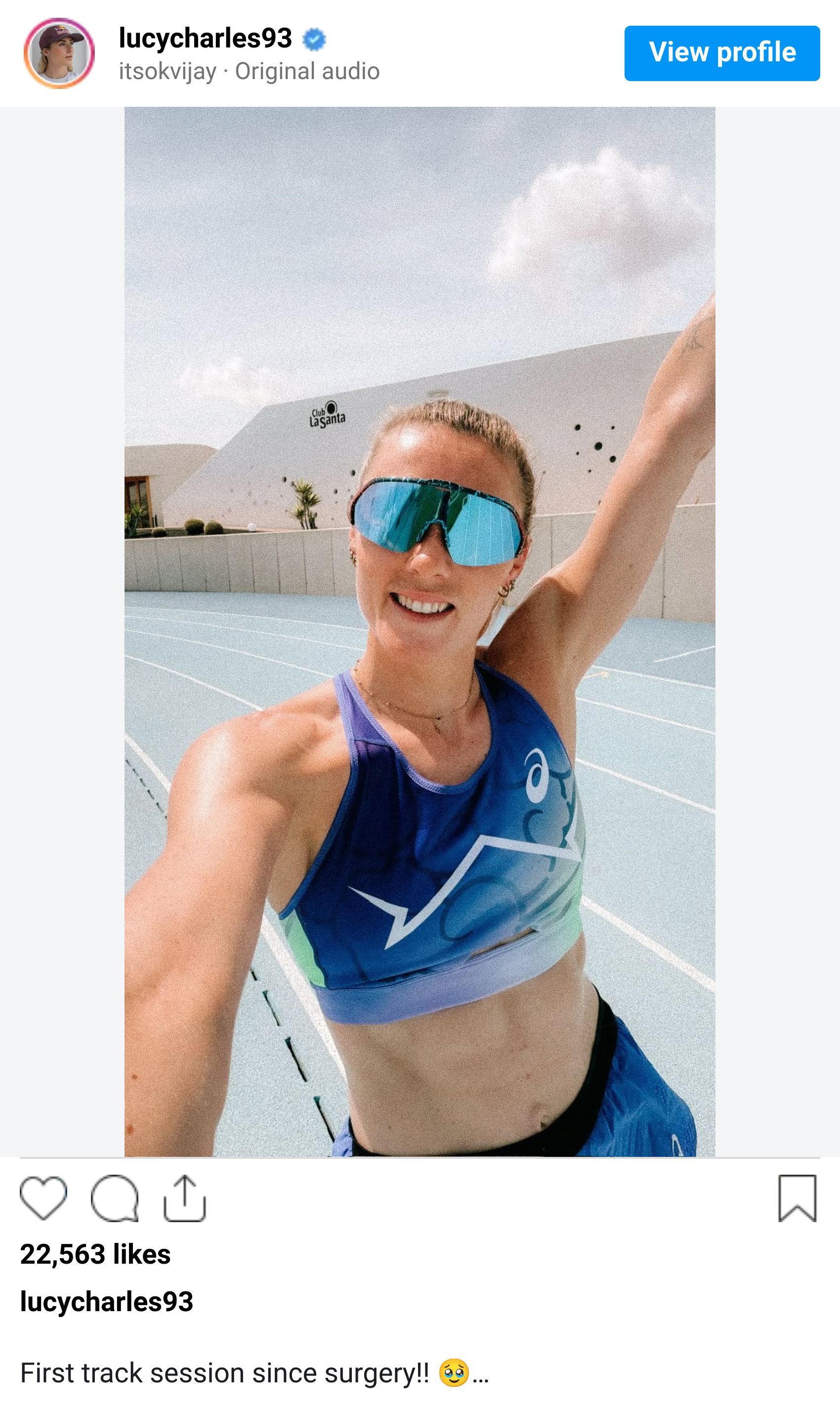
Lucy Charles-Barclay announced her return to professional competition this week as she signed up for IRONMAN Lanzarote and posted a video on her Instagram account, which shows the 70.3 world champ swapping her hospital boot for her trainers.
Having missed the start of the campaign through surgery on a tendon issue, the British superstar is now back in full training and seeking Kona qualification by racing on Spain’s little island in order to secure her place on the Big Island.
And we can’t wait to see you back in action, Lucy… 💪👏
⏱️ Coaches corner: How much sleep do runners really need?
Sleep is one of the most important recovery tools available to runners, yet it is often overlooked in favour of mileage, workouts, and nutrition. Training creates physical stress, but sleep is where much of the body’s actual repair and adaptation happens.
🤔 Why sleep matters:
Running causes repeated stress on muscles, tendons, joints, and the nervous system. During sleep, the body repairs tissues, restores energy, and regulates important recovery hormones.
Sleep supports:
Muscle repair
Hormonal balance
Immune function
Mental recovery
Energy restoration
Poor sleep limits how effectively the body adapts to training stress. This relationship between recovery and adaptation is also important in balancing training recovery and tapering effectively, where reducing fatigue improves overall performance.
⏰ How much sleep do runners need?
Most adult runners generally need 7 to 9 hours of sleep per night. However, athletes training at higher volumes or intensities often benefit from even more recovery. During demanding marathon blocks or heavy endurance training, some runners perform best closer to 8-10 hours consistently.
Sleep needs vary depending on:
Training load
Stress levels
Age
Recovery ability
Overall lifestyle demands
🥱 Endurance demands more sleep
Higher mileage and harder sessions increase recovery requirements significantly. Long runs, interval workouts, and heavy training blocks create deeper muscular and nervous system fatigue.
This means the body requires more recovery time to:
Repair tissue damage
Restore glycogen stores
Regulate inflammation
Recover mentally
As training volume rises, sleep becomes even more important for staying healthy and consistent. This becomes especially relevant in avoiding bonking in running, where recovery quality strongly affects injury risk.
❌ What happens if runners don’t get enough sleep?
Chronic sleep restriction affects both performance and recovery. Even if runners continue training consistently, lack of sleep often leads to a gradual performance decline over time.
Poor sleep may cause:
Persistent fatigue
Slower recovery
Reduced endurance
Higher injury risk
Poor mood and motivation
Difficulty maintaining pace

Quality sleep helps runners repair muscles, restore energy, and reduce the risk of injury and fatigue.
🤕 Injury risk is also heightened
One of the most overlooked effects of poor sleep is increased injury risk. Fatigued muscles and slower recovery reduce the body’s ability to tolerate repetitive impact stress.
Runners who sleep poorly often experience:
Heavier legs
Poor movement control
Delayed tissue repair
Higher fatigue accumulation
😴 How improving your sleep can help
Studies suggest that improving sleep duration and quality may improve endurance performance, reaction time, mood, and recovery markers. Short naps may also help runners recover during periods of heavy training or inadequate nighttime sleep.
Runners who consistently sleep well often notice:
Better workout quality
Improved pacing control
Lower fatigue levels
Better long-run recovery
🥱 What to look for if you are not sleeping
Some runners struggle with sleep because hard evening workouts increase nervous system stimulation too close to bedtime. When possible, finishing harder workouts earlier in the day often improves sleep quality.
High-intensity sessions late at night may lead to:
Difficulty falling asleep
Elevated heart rate
Restlessness
Recovery nutrition also influences sleep quality. Under-fueling or excessive caffeine intake late in the day may disrupt sleep patterns.
Proper fueling helps support:
Hormonal balance
Recovery quality
Energy regulation
Signs a Runner May Need More Sleep:
Constant fatigue
Difficulty recovering between runs
Mood changes
Persistent soreness
Reduced workout quality
Frequent illness
💤 Practical sleep tips for runners
Aim for 7 to 9 hours of sleep consistently
Increase recovery focus during heavy training weeks
Prioritise sleep after long runs and workouts
Limit caffeine late in the day
Use naps carefully when needed
Keep a regular sleep routine
💪 Outside edge of endurance
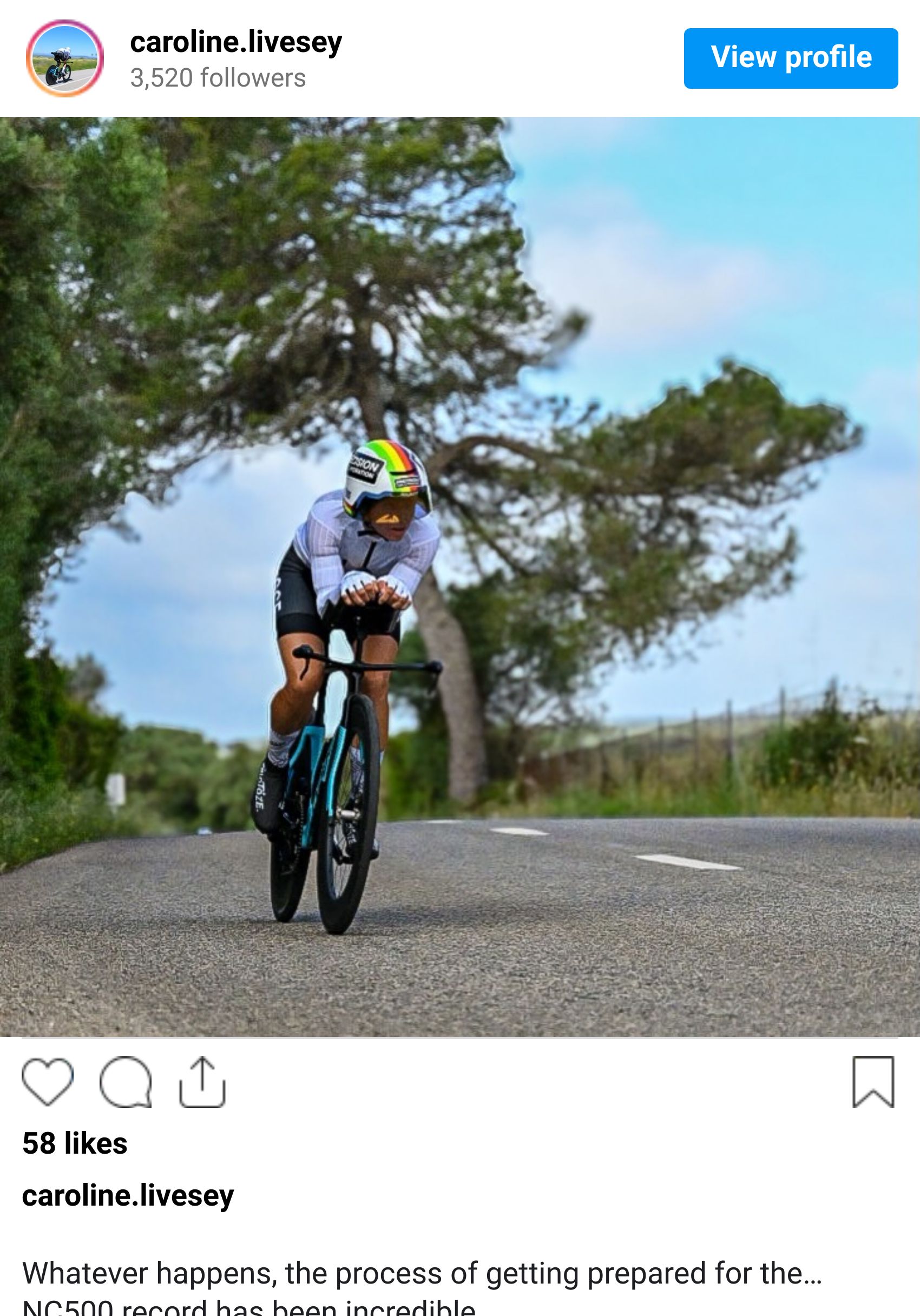
Caroline Livesey is no stranger to testing herself to the absolute limits of her endurance.
The triathlete, gravel cyclist and ultra competitor became the first woman to ever win the brutal Patagonman Xtri twice, while she has also bagged herself a number of big wins on the bike circuit as she seeks new challenges in her sporting career.
However, her latest effort could yet prove to be the toughest of them all… as the Scot bids to become the fastest supported woman to race the NC500 – an 830km (516 miles) non-stop challenge across the north coast of Great Britain.
To break the record, she needs to complete the route in under 35 hours, maintaining an average speed of 24kph (15mph) on what she fully accepts are some of the toughest roads – and potentially worst weather conditions – to ride in the UK.
Regarded as one of the world’s ultimate road trips, the route starts and finishes in the city of Inverness and takes in some truly stunning coastal scenery in places such as Applecross and Achmelvich in the west and Durness and Duncansby Head in the north on a clockwise tour of Great Britain’s most northerly regions.
It is a huge challenge, but one which is being driven by a desire to raise funds and awareness for her own Peak Education Nepal charity, which she founded with her husband, Mark, to provide children who cannot afford it with the opportunity to get an education.
You can read more about the Peak Education Nepal charity on their website, HERE.
We wish you well on your challenge, Caroline, and hope the weather and roads behave themselves!!!
What did you think of today's email?
That’s your Split. Until Next Time
Together, we go the distance. — @247_endurance 🏃♂️🚴♀️🏊♂️