


👋 Welcome back
How hot is too hot?
It’s a question that endurance athletes, race organisers and governing bodies are facing with increasing frequency as another summer of soaring temperatures grips Europe.
Nobody wants to see races cancelled, but nobody wants to see athletes collapsing either. So where do we draw the line? When does racing become a test of endurance, and when does it become an unnecessary risk?
In today’s newsletter, we take a closer look at the growing debate around competing in extreme heat, the different approaches taken by organisers, and whether endurance sport needs clearer, more consistent guidelines before the mercury rises again.
Here’s what we have lined up for you today…
LATEST: The endurance news headlines
REPORTS: News from Frankfurt and the Western States
CYCLING: Pogačar ready for Tour de France
ARCHIVE: The race where they crawled over the line
TIPS: How to hydrate yourself properly
🏃🏼 Quick splits

Lucy Charles-Barclay has signed up to race in this weekend’s Challenge Roth. [Challenge Family]
🙌 SURPRISE: Lucy Charles-Barclay has added her name to the Challenge Roth start list for this weekend’s hotly anticipated race. Read HERE.
😢 INJURED: LCB takes the place that was left vacant by German star Laura Philipp, who is now unable to compete through injury. Read HERE.
🍎 REVEALED: A new sprint cup will be held as part of this year’s Big Apple Triathlon, which makes a welcome return to New York in October. Read HERE.
❌ SWITCH: The IRONMAN 70.3 World Championships in 2028 and 2030 will no longer be held in Nice and will require a new home. Read HERE.
☀️ CANCELLED: The Hamburg half-marathon was cancelled on Sunday as organisers feared for the athletes’ safety in high temperatures. Read HERE.
🏁 Race news

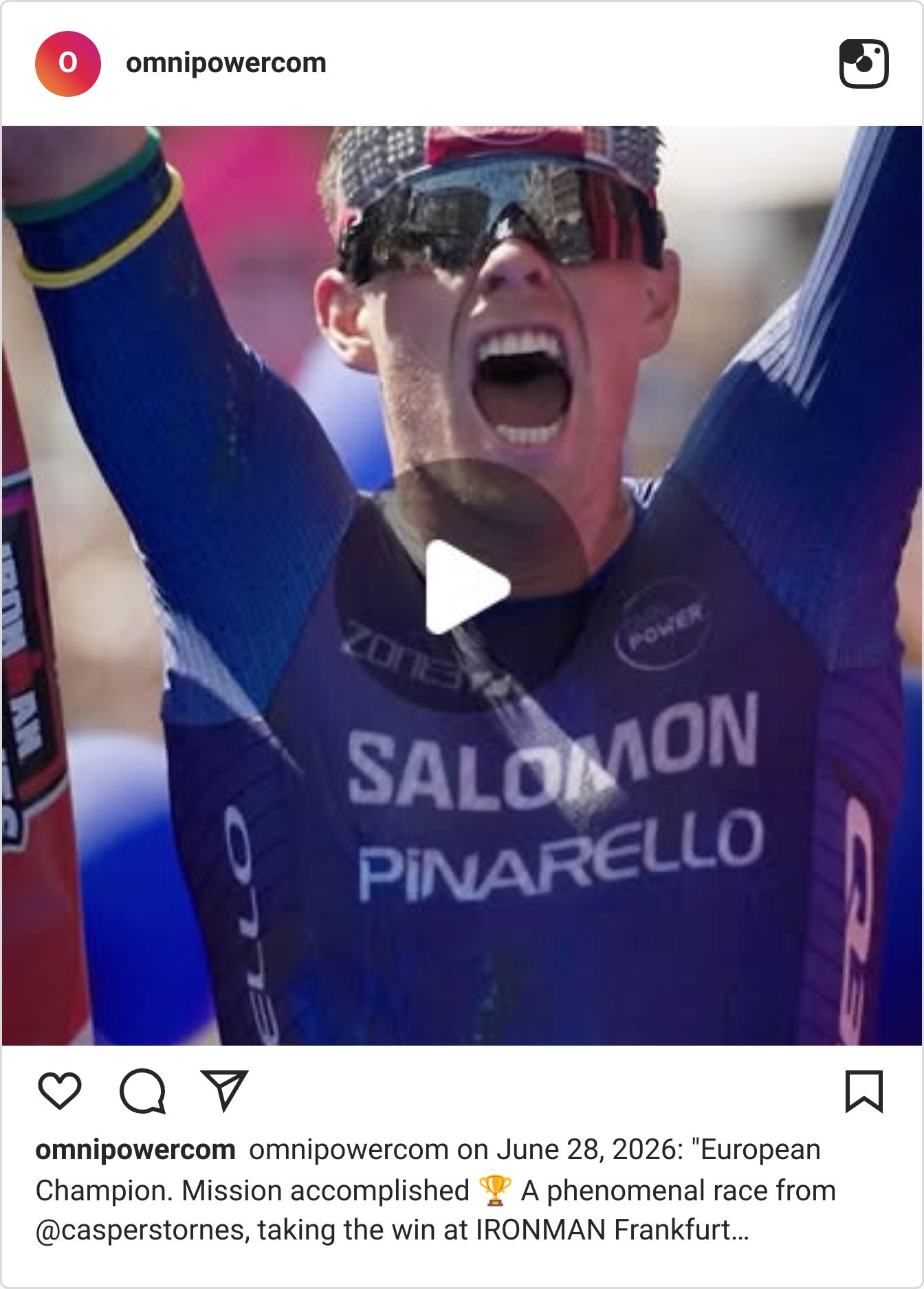
Casper Stornes took an emphatic victory at reduced IRONMAN Frankfurt on Sunday. [IRONMAN]
IRONMAN Frankfurt
Reigning IRONMAN World Champion Casper Stornes extended the Norwegian domination at IRONMAN Frankfurt with a hugely impressive victory over compatriot Gustav Iden, and Spain’s Antonio Benito Lopez, who rounded out the podium in third.
The race doubled up as the men-only European Championship, the women’s equivalent having been won earlier this month by another Norwegian in Solveig Løvseth.
The build-up to Frankfurt had been completely overshadowed by the searing hot weather currently covering much of Europe, and as a result the bike course was reduced from the usual 180km to 125km and the run cut to a half-marathon of 21.1km, with the measures in place for both age-group athletes and the pro men.
Stornes crossed the line in 4:50:23 to follow in the footsteps of Kristian Blummenfelt, the winner here in 2024 and 2025, with Iden taking second 2:31 back just as he had in that historic Norway 1-2-3 at the IRONMAN World Championship in Nice last year.
Results: (Revised distances of 3.8km swim – 125km bike – 21.1km run)
🥇 Casper Stornes (NOR) 49:32 – 2:43:03 – 1:12:19 = 4:50:23
🥈 Gustav Iden (NOR) 49:46 – 2:43:18 – 1:14:55 = 4:52:54
🥉 Antonio Benito López (ESP) 49:30 – 2:45:32 – 1:14:37 = 4:54:47
WTCS World Cup Tiszaújváros
Fanni Szalai underlined why she is one of triathlon’s brightest young talents with her first-ever World Cup win in Tiszaújváros.
And the Hungarian 18-year-old needed to beat one of the world’s best in the shape of American Taylor Knibb, racing her first World Cup event since 2019.
On a memorable day for Hungary, they netted a double as Csongor Lehmann made it six victories on the trot in his home-soil event by landing the men’s race once again.
Women’s results: (750m – 20km – 5km)
🥇 Fanni Szalai (HUN) 9:10 – 29:57 – 16:33 = 57:10
🥈 Taylor Knibb (USA) 9:07 – 29:58 – 17:19 = 58:00
🥉 Tara Sosinski (AUS) 9:07 – 30:01 – 18:03 = 58:37
Men’s results: (750m – 20km – 5km)
🥇 Csongor Lehmann (HUN) 8:28 – 27:43 – 14:46 = 52:11
🥈 Tom Lerno (FRA) 8:18 – 27:48 – 14:54 = 52:22
🥉 Pelayo González Turrez (ESP) 8:26 – 27:43 – 15:01 = 52:30
Challenge Kaiserwinkl-Walchsee
The setting was spectacular and the conditions tough at Challenge Kaiserwinkl-Walchsee, but ultimately it was Nina Derron (SUI) and Fabian Kraft (GER) who conquered not only the course, but also the heat to take the wins in 4:08:47 and 3:36:33 respectively.
Western States
Course records were smashed and history made as France’s Vincent Bouillard and America’s Jenn Lichter took the respective titles at the iconic Western States Endurance Run.
The world’s oldest 100-mile trail run takes athletes from Olympic Valley to Auburn in California, and with the third-coolest day in the race’s 53-year history, predictions beforehand suggested that record times could be under threat.
And that was the case as Bouillard joined a very select group of runners by adding a Western States title to his 2024 UTMB crown as he knocked more than 20 minutes off Jim Walmsley’s previous best time. He also became the first French men’s winner of Western States.
He crossed the line at the Placer High School track in 13 hours, 46 minutes and 15 seconds, the first person to go sub-14. And two more quickly followed as first Francesco Puppi in 13:51:08 and then Ryan Montgomery in 13:53:55 followed him home.
Meanwhile, Lichter was writing ultrarunning folklore of her own as she triumphed in what was her 100-mile debut. And what’s more, she went under the previous course record, set by the GOAT in Courtney Dauwalter, stopping the clock in 15:28:05.
🚴♂️ News from the saddle
UAE Team Emirates-XRG have announced the seven riders that will support Tadej Pogačar as he defends his title at this year’s Tour de France.
Isaac del Toro, Felix Großschartner, Brandon McNulty, Nils Politt, Florian Vermeersch, Tim Wellens, and Adam Yates will all join the Slovenian at the race, which begins this Saturday, 4 July in Barcelona, Spain.
Should Pogačar win the yellow jersey, he will equal the all-time record and join an exclusive club of five-time winners, alongside Jacques Anquetil, Eddy Merckx, Bernard Hinault and Miguel Induráin.
Read more on the Tour de France build-up on Cycling Weekly, HERE.

The weekend weather caused havoc in the world of endurance sport. [IRONMAN]
🔍 The BIG issue: Does triathlon need a mandatory heat policy?
With three races cancelled, one modified and another requiring additional cooling and hydration stations, it is fair to say that the heatwave currently gripping the continent of Europe had something of an impact on the world of endurance last weekend.
While IRONMAN Nice and its 70.3 brother joined the Hamburg half-marathon in being postponed due to the fierce temperatures expected across France and Germany, the big race in Frankfurt did still manage to go ahead… if slightly reduced in distance.
Challenge Kaiserwinkl-Walchsee also went ahead, with organisers of the middle-distance race ensuring there were more aid stations and on-course showers available for the athletes to combat such extreme conditions.
In terms of triathlon alone, the weekend’s three main events had managed to deliver three very different solutions to the problem; and so while those in the south of France were left kicking their heels, the ones in Germany were left to rue the fact that they were no longer racing a full IRONMAN.
The Challenge race, being held in the Austrian Alps, was able to go ahead without disruption, but the whole saga in the build-up to this past weekend has raised an important issue regarding triathlon and competing in extremely hot weather.
With no temperature threshold set for the sport, it is left to the individual race bodies to decide whether an event is safe to go ahead or not, and in the case of IRONMAN, that decision is left to the race directors, who are on the ground and very much in the best position to make such a huge call.
Negotiations will have taken place with city officials, emergency services and medical officials to decide whether it was safe to go ahead, whether more aid stations were required, and also whether the local hospitals and first-aid teams could cope should there be a sudden rush of people suffering from heat exhaustion.
Frankfurt clearly said yes, but with concessions over limited bike and run courses; in the case of Nice, it was the local officials – the Alpes-Maritimes Prefecture – who basically pulled the plug on both races due to fears over the impact it might have on their already stretched ‘emergency and healthcare services’.
It left many frustrated, and some irate age-groupers vented their opinions on social media – complaining about the wasted hours of training, the cost of transport and accommodation, and the agony of not being able to complete a full IRONMAN.
Such understandable emotions, however, were secondary to the need and responsibility of organisers and city officials to ensure the absolute safety of those thousands of age-groupers who had signed up to take part.
Yes, Kona is competed on an island where it is usually very hot and humid, but athletes must prove they are capable enough to qualify for that race; there are no first-timers as there would undoubtedly have been over the weekend.
While there are no heat restrictions in the sport, World Triathlon did come up with its own heat guidance which – born out of the Tokyo Olympics test event in 2019 – is designed to help organisers, medical teams and athletes manage heat risk.
The ‘Beat the Heat’ programme focuses on heat acclimation, hydration, cooling strategies, pacing and recognising heat illness by setting out a series of five categories using the universally acknowledged Wet Bulb Globe Temperature (WBGT) system.
Rather than simply measuring air temperature, WBGT combines air temperature, humidity, solar radiation and wind, making it a much better measure of heat stress, and is used by the ATP Tour and the Australian Open in tennis, world rowing and the UCI in cycling.
The scale looks like this…
🟢 – Green Flag (Low risk): Anything under 25.7C
🔵 – Blue Flag (Moderate): 25.7C-27.8C
🟠 – Orange Flag (High): 27.9C-30C
🔴 – Red Flag (Very High): 30.1C-32.2C
⚫️ – Black Flag (Extreme): Anything from 32.2C and above
It is designed so that organisations and athletes can decide whether they need to take action, such as:
Increasing medical staffing;
Providing additional cooling and hydration;
Adjusting race schedules or start times;
Shortening courses where appropriate;
And, in exceptional cases, modifying or cancelling the event if athlete safety cannot be assured.
Both Nice and Frankfurt would have been black-flagged at the weekend, justifying the decisions that were made by those officials who undoubtedly faced what must have been a frantic and agonising few hours last Friday.
And so, with global warming likely responsible for more such summers in the coming years, is it time to make the World Triathlon scale a more official standard? And even to add on one final category? A white flag for anything over 37C, which means the automatic cancellation of a race?
Would age-groupers be happier knowing that these regulations were in place so that they knew in advance what the criteria, and potential course of action, might be?
One thing is for sure: this is not going to be the final weekend when such issues are facing our race organisers, and some clarity and/or regulation might just be welcomed both by the race organisers and the athletes themselves.

The heat caused serious issues across the weekend in both Nice and Frankfurt. [IRONMAN]
Should new regulations be introduced regarding a temperature threshold for triathlon?
👩💻 Trending in triathlon
The Norwegian dominance of IRONMAN continued at the weekend as World Champion Casper Stornes and his compatriot Gustav Iden repeated their 1-2 finish from last year’s finals in Nice with a stunning display at a scorching Frankfurt.
Indeed, Stornes was so far ahead of the pack in this shortened race that he even had the opportunity to start his celebrations early – and in doing so, show his support for the Norwegian football team.
Norway, boosted by the goals of Erling Haaland, have made it through the group stages at the 2026 World Cup in the USA and will face the Ivory Coast tonight in the round of 32; and both Stornes and Iden are clearly backing their ‘Vikings’.
One of the most memorable moments at the World Cup in recent weeks has been the sight of Norway’s supporters doing the ‘Viking Row’ – a synchronised celebration in which the red-clad fans sit in large groups and mimic rowing a longboat.
The ‘Viking Row’ has been seen in stadiums and city squares, on trains and across the streets of America over recent weeks… and on Sunday it was witnessed in Frankfurt, as both Stornes and Iden paid homage to their sporting cousins by mimicking the row as they crossed the finish line.
While we can’t be certain of their footballing ability, one thing is for sure: Norway head coach Ståle Solbakken would love his squad to possess the energy, endurance and winning mentality of a Casper Stornes, a Gustav Iden, or even a Kristian Blummenfelt for that matter, as they chase glory at the FIFA World Cup.
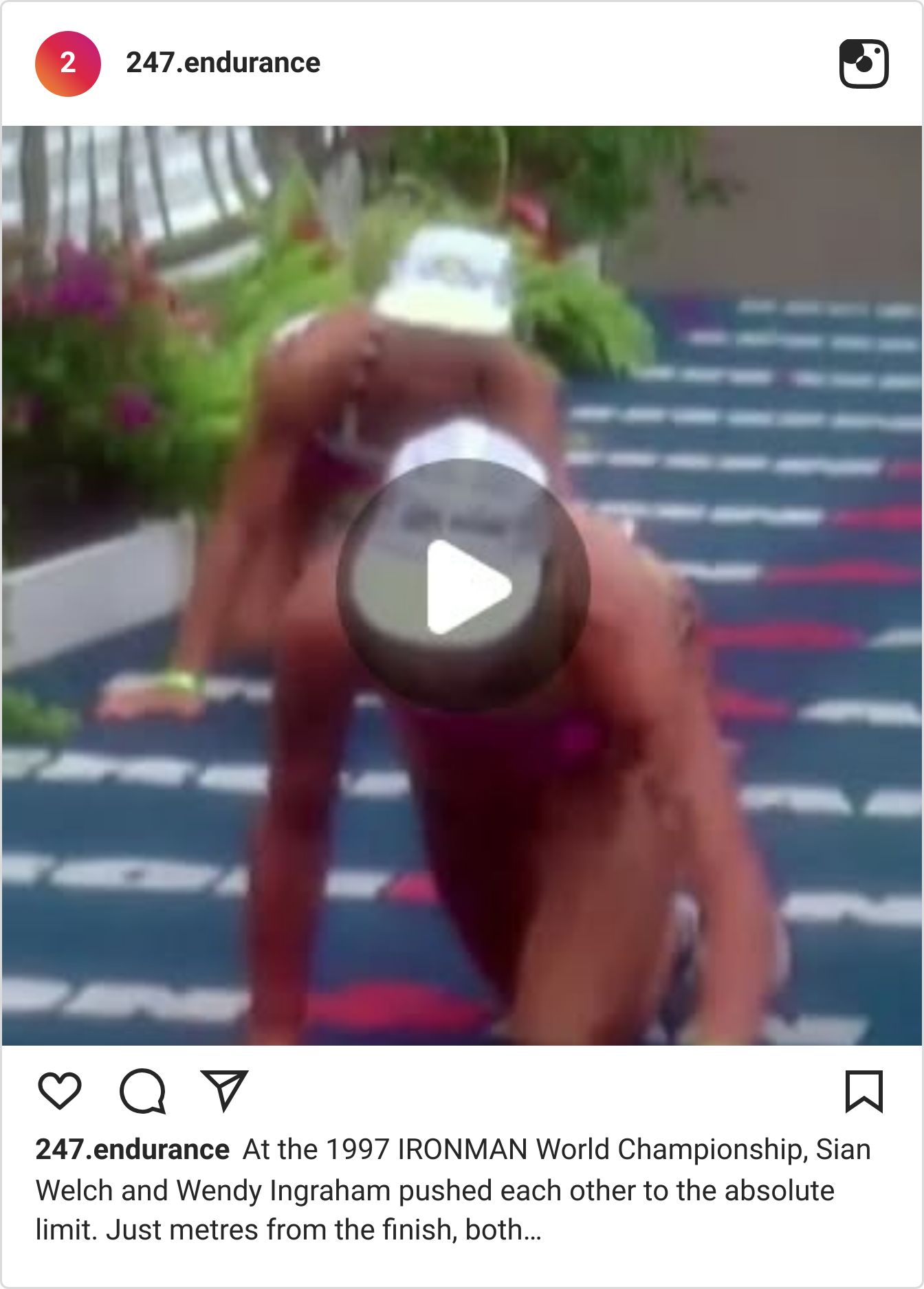
Some moments make history. Others become legends.
This week on the 247Endurance social media accounts, we cast our minds back to the IRONMAN World Championship of 1997… and that epic battle between Sian Welch and Wendy Ingraham.
Having pushed each other to the absolute limit, they had pretty much given it their all when, just metres from the finish line, both collapsed and crawled across the line in one of the most iconic moments in triathlon history.
It still takes your breath away watching it all these years later… A truly incredible show of endurance from two remarkable athletes. 👏👏👏
⏱️ Coaches corner: Hydration in training
Hydration in triathlon is about maintaining fluid balance to support performance across swim, bike, and run. It is not just about drinking more water; it is about replacing what you lose through sweat while avoiding both dehydration and overhydration.
And after the weather across Europe in recent weeks, we felt it was perhaps a good idea to walk you through some of our top hydration tips.
WHAT DOES HYDRATION MEAN?
Hydration is the process of maintaining optimal fluid levels in the body to support circulation, temperature regulation, and muscle function. During a triathlon, fluid loss occurs continuously through sweat, especially on the bike and run. If this loss is not managed, performance declines due to reduced blood volume and increased strain on the body.
Hydration must be planned, not reactive.
Even small levels of dehydration can reduce endurance performance.
Fluid loss increases heart rate, reduces cooling efficiency, and accelerates fatigue.
Overhydration, on the other hand, can dilute sodium levels and lead to imbalance.
The goal is to maintain equilibrium, replacing enough fluid to support performance without excess.
SWEAT RATE AND INDIVIDUAL NEEDS
Every triathlete has a different sweat rate.
Factors such as body size, intensity, and environmental conditions influence how much fluid you lose.
Understanding your sweat rate helps determine how much you need to drink during training and racing.
There is no universal hydration plan; individualisation is key.
HYDRATION STRATEGY BY RACE DISTANCE
Your hydration needs change significantly depending on race duration.
🏃♂️ Sprint Distance:
Short races require minimal hydration during the event.
Pre-race hydration is usually sufficient, with small fluid intake on the bike if needed.
🥇 Olympic Distance:
Moderate hydration is required, primarily during the bike leg.
Fluid intake should be steady but not excessive.
🎽 Half IRONMAN:
Hydration becomes critical.
Consistent intake throughout the bike and run is necessary to maintain performance.
💪 IRONMAN:
Hydration strategy becomes a major performance factor.
Fluid and electrolyte intake must be maintained over several hours to prevent fatigue and imbalance.
This is where structured planning becomes essential, especially where long-duration performance depends on consistent fueling and hydration.

Knowing how to hydrate is crucial to being able to complete your triathlon.
HYDRATION STRATEGY BY WEATHER CONDITIONS
Weather has a direct impact on hydration needs.
☀️ Hot:
Higher temperatures increase sweat rate and fluid loss.
More frequent intake is required to maintain balance.
Electrolytes become more important to replace sodium loss.
🥶 Cold:
Sweat loss still occurs, but thirst signals may be reduced.
Hydration is often neglected in cold weather, leading to gradual dehydration.
Maintaining consistent intake is still important.
🥵 Humid:
Humidity reduces the body’s ability to cool itself through sweat.
This increases fluid loss and stress on the body.
Hydration must be carefully managed to avoid overheating.
Adapting hydration strategies based on conditions is essential for maintaining performance.
ELECTROLYTES AND FLUID BALANCE
Hydration is not just about water. Electrolytes, especially sodium, help retain fluid and maintain balance.
Without electrolytes, fluid absorption is less effective.
This connection becomes critical when applying electrolytes for triathletes, where sodium intake supports hydration efficiency.
WHEN AND HOW TO DRINK
Hydration should begin early in the race and continue at regular intervals.
Small, consistent intake is more effective than large, infrequent drinking.
Waiting until you feel thirsty often means you are already dehydrated.
Structured timing improves consistency and performance.
HYDRATION ON THE BIKE VS THE RUN
The bike leg is the best opportunity to hydrate effectively.
You have easier access to fluids and a more stable effort level.
On the run, hydration becomes more challenging due to higher intensity and movement.
This makes early hydration on the bike even more important for overall performance.
💪 Outside edge of endurance
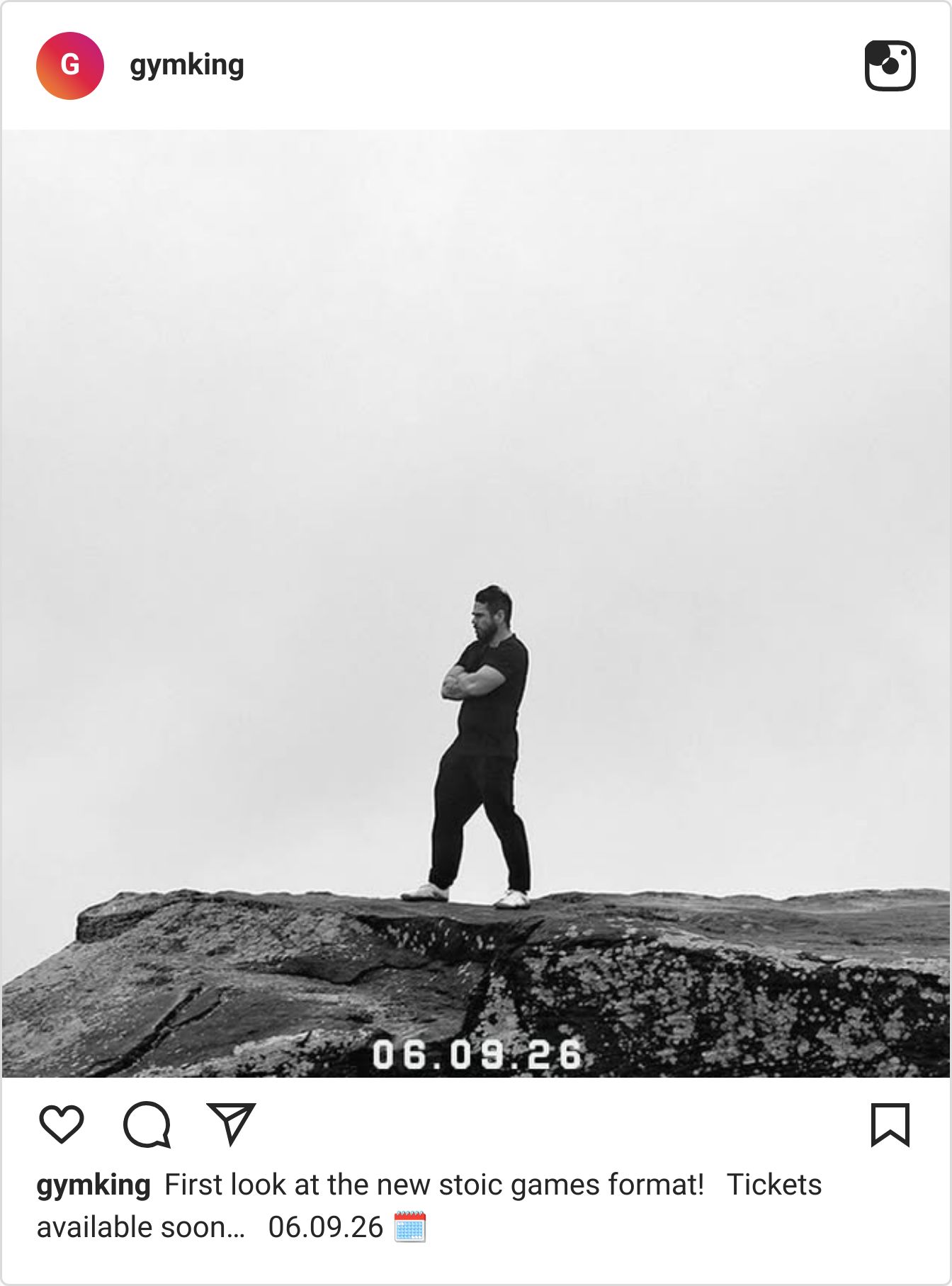
A new-look Stoic Games has been announced by co-creator and ultra-marathon athlete and author Ross Edgley – the man who not only completed the Icelandic Swim, but was also the very first person to swim around Great Britain.
The Stoic Games are a points-based endurance competition, where athletes earn points in disciplines such as deadlifts, press-ups, bleep tests, dead hangs and the gruelling final Stoic Stone carry.
Points are awarded for every kilogram lifted, the number of unbroken press-up reps, the total number of shuttle runs completed, the number of seconds you can hang for, and the distance you can carry the stone in metres.
The first Stoic Games were held in January of this year, and this slightly remodelled version will now be set for September 6, with ticket details released soon.
Ready to upgrade your open water game? We’ve teamed up with @sumarpo_official to give away two elite 2026 Sumarpo wetsuits!
🏆 What’s Up For Grabs?
• Winner #1: 2026 Sumarpo Vanguard Wetsuit
• Winner #2: 2026 Sumarpo Victory Wetsuit
What did you think of today's email?
That’s your Split. Until Next Time
Together, we go the distance. — @247_endurance 🏃♂️🚴♀️🏊♂️